
Recessed Lighting Installation in Wenham, MA
Most of the farmhouses and colonials scattered along Wenham’s back roads were built long before anyone thought about lighting a kitchen island or a low great room ceiling with cans. The service panels behind those walls were sized for a handful of lamps and a refrigerator, not a dozen LED fixtures on a dimmer. When a homeowner here decides to finally light a dark hallway or open up a dropped ceiling in a remodel, the wiring underneath usually needs a second look before the fixtures ever go in.
Recessed Lighting Installation in Wenham
Recessed lighting is one of the more requested upgrades Brandon sees on the North Shore, and Wenham brings its own version of the job. These are not tract houses with a shared floor plan. You’re working with post-and-beam framing, plaster ceilings, insulation that may or may not be up to code, and rooms that were never built with a lighting layout in mind. Getting cans installed cleanly here means understanding what’s actually above the ceiling before a single hole gets cut.
Why Wenham homes need this
Wenham is low density with large lots, long driveways, and a real share of properties still on well and septic. That rural character extends to the electrical systems too. A lot of these houses were wired in stages over decades, and it shows. It’s common to find 60 amp services still in place on older farmhouses, sometimes paired with Federal Pacific or Zinsco panels that stopped being installed decades ago for good reason. Cloth-insulated wiring and even old knob-and-tube sections still turn up in homes that haven’t been fully rewired.
Add recessed lighting into that mix and you can’t just tap into the nearest junction box. If the circuit is already carrying a septic pump, a well pump, or baseboard heat zones, there may not be capacity left for eight or ten new LED cans without pulling a new circuit. On estate-sized properties, the run from the panel to the room being lit is also longer than a typical suburban house, which affects wire gauge and voltage drop. This is exactly the kind of job where a licensed electrician looks at the whole system, not just the ceiling.

What the work involves
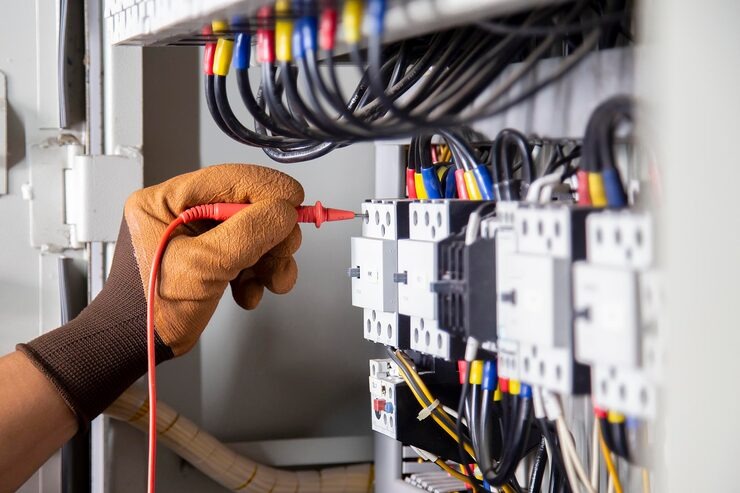
Brandon starts by shutting down the circuit that will feed the new fixtures, and confirms with a meter before cutting anything. Power to that circuit stays off for the working portion of the job, though the rest of the house typically stays live. For most rooms, that means the lights and outlets on that one circuit are down for a few hours, not the whole house.
From there, it’s cutting the ceiling openings to fixture spec, fishing new cable through joist bays or an accessible attic, and mounting IC-rated cans if insulation is present, which it usually is in Wenham’s older construction. Each fixture gets wired, boxed, and secured per code, then trimmed out and tested on a dimmer if that’s part of the plan. If the existing circuit doesn’t have room, Brandon runs a new dedicated circuit back to the panel, which is a separate but related piece of work he can scope at the same visit. National Grid or the local utility only gets involved if the service itself needs more capacity, not for a straightforward lighting circuit.
What It Costs
A straightforward recessed lighting job in Wenham, for a room with reasonable ceiling access and enough capacity on the circuit, generally lands between {PRICE_LOW} and {PRICE_HIGH}. That’s a range, not a quote, and a few things move it. The number of fixtures matters most. So does ceiling access – plaster and lath cuts differently than drywall, and a finished attic above the room makes fishing wire slower than an open one. If the existing circuit is maxed out and a new one needs to be run from the panel, that adds labor and material. Dimmer switches, smart controls, and higher-end trim kits also shift the total. Brandon gives a firm number after seeing the ceiling and the panel, not before.
How long it takes
A typical room of six to eight recessed lights usually takes a single day, start to finish, including cutting, wiring, and trim-out. Larger rooms, multiple rooms, or a job that turns up old wiring that needs to be addressed first can stretch to two days. If a new circuit has to be pulled from the panel, that adds time but is usually still handled within the same visit or a scheduled follow-up, not a separate project.
Permits and inspection
Recessed lighting installation is electrical work under the Massachusetts electrical code, and it requires a permit and inspection like any other wiring job. Brandon pulls the permit, and the work gets signed off by the local inspector before it’s considered finished. This is one of the clearest ways to tell licensed electrical work apart from a handyman job – a permitted install has a paper trail and a third party confirming the work meets code, not just a fixture that lights up on day one. [EXTERNAL LINK: Massachusetts Board of State Examiners of Electricians – licensing and code information, to show homeowners how to verify a licensed electrician]
Common Questions
Can my current wiring handle recessed lighting, or do I need a new circuit?
It depends on what's already on that circuit and how old the wiring is. Many Wenham homes have circuits shared with pumps, heat zones, or other fixtures with little room to spare. Brandon checks the panel and the existing circuit before recommending whether to tap in or run new wiring.
Will recessed lighting work in a plaster ceiling?
Yes. It takes more care than cutting drywall, and the openings are cut to fit the fixture without cracking surrounding plaster. It's common in Wenham's older housing stock and not a reason to avoid the upgrade.
Do I need a permit for recessed lighting installation?
Yes. It's electrical work under Massachusetts code, which means a permit and a town inspection are required. Brandon handles the permit as part of the job.
How many recessed lights can go on one circuit?
It depends on the wattage of the fixtures and what else is already on that circuit, not just a fixed number. A licensed electrician calculates the load before wiring anything, which is one reason DIY installs run into trouble.
What if my panel is a Federal Pacific or Zinsco model?
Those panels are still found in older North Shore homes and are known for reliability issues, including breakers that don't trip when they should. If your panel is one of these, it's worth discussing a replacement alongside the lighting project rather than adding new circuits to it.
Reach Out for Recessed Lighting Installation
Call {PHONE} to talk through the room, the ceiling, and what the panel can support. Belfiore Home Services is a Salem-based company, and we work across Wenham and the rest of the North Shore doing plumbing, heating, and electrical work under one licensed roof.
Contact information
Talk to Brandon
Brandon is the electrician half of this family business, licensed and doing the wiring himself rather than sending a crew he doesn’t know. If you’ve got a remodel coming up, a dark room that’s bothered you for years, or you just want an honest read on whether your panel can handle new circuits, that’s a conversation worth having before any drywall gets cut.