EV Charger Installation in Andover, MA
A lot of Andover’s housing stock was built with a 100 amp or 150 amp panel in mind, back when the biggest draw in the garage was a chest freezer and a shop light. Now you’re parking a car out there that wants 40 to 50 amps of its own, on top of the range, the dryer, central air and whatever’s been added in a kitchen remodel since. That gap between what the panel was built for and what the house actually runs is exactly where EV charger installs get complicated – or done wrong.
Why Andover Homes Need This
Andover splits pretty cleanly into two housing eras, and both create their own wiring questions. Around the historic center and older neighborhoods, you’ve got homes from the early-to-mid 1900s that may still carry cloth-insulated wiring or even knob and tube in sections that were never touched during later renovations. Some of these houses were upgraded decades ago to a 60 amp or 100 amp service and never revisited. A few still have Federal Pacific Stab-Lok or Zinsco panels, both of which have known breaker failure issues and get flagged by inspectors and insurers alike.
Then there’s the newer stock – post-war colonials and modern builds further from the center – usually sitting on 150 or 200 amp services that have more room to work with, but not always enough to add a Level 2 charger without doing the math first. Andover also sees steady kitchen and bath remodel work, and every time we’re in a panel for a remodel we’re seeing more requests to add EV charging capacity at the same time, which is often the smart way to do it.
Being straight with you: Andover sits at the far edge of the area we cover out of Salem. We still get out there regularly, but if you’re calling for something urgent same-day, factor in that drive time. For a planned install like this, it’s a non-issue – we schedule it like any other job.
What the Work Involves
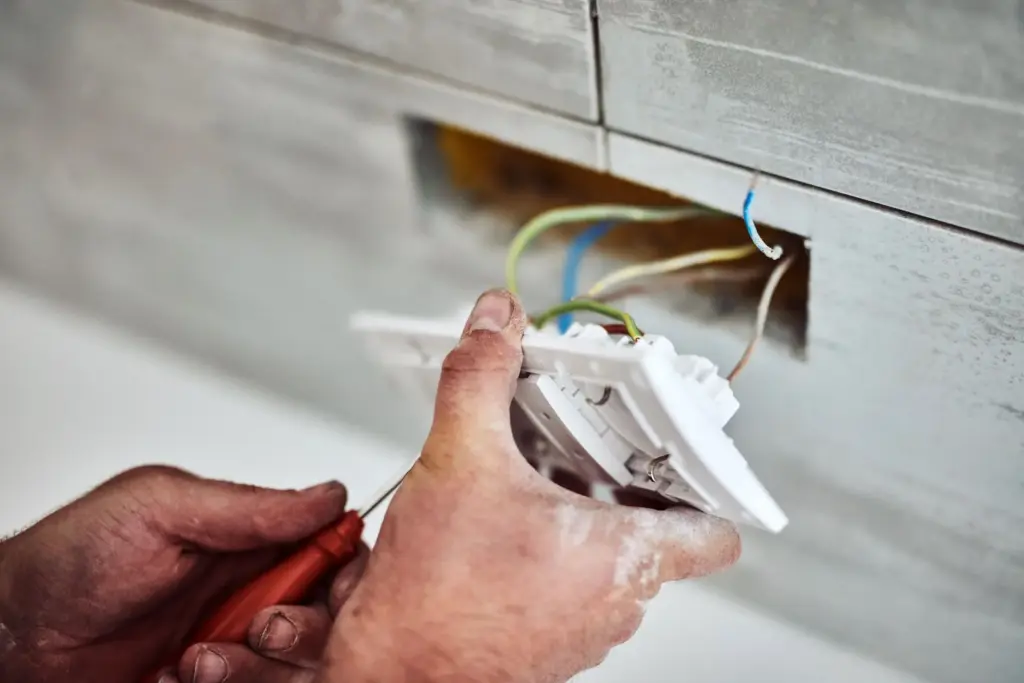
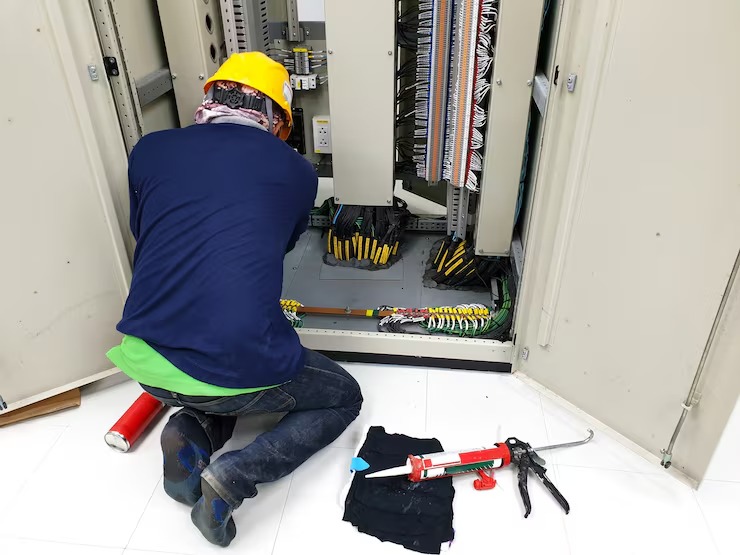
Every install starts with a look at your existing panel and service size. Brandon checks the panel’s rated amperage, how much of that capacity is already spoken for by existing circuits, and whether there’s physical room for a new double-pole breaker. On some jobs a load calculation shows the panel can handle a new 40 or 50 amp circuit outright. On others, the panel itself needs to be upgraded first, or a subpanel added, before charging capacity gets added.
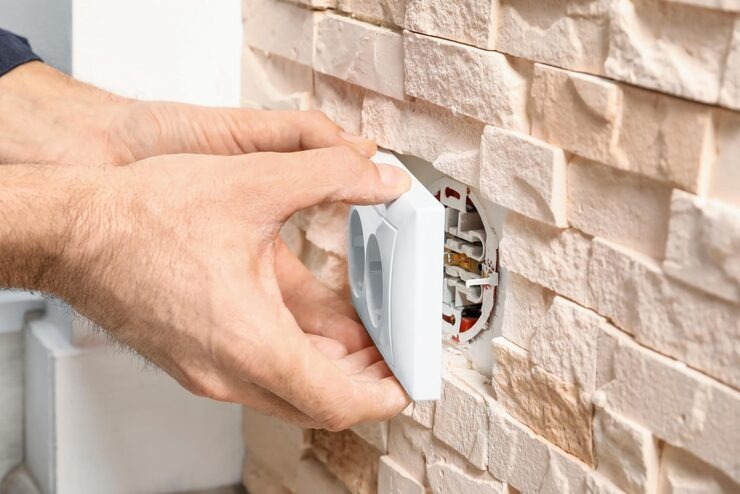
From there it’s a dedicated circuit run from the panel to the charger location, sized to the charger’s actual draw – typically 6-gauge or 8-gauge copper depending on amperage and run length, on its own breaker with nothing else sharing that circuit. If you’re going hardwired, that’s a straight run and termination at the unit. If you want a NEMA 14-50 outlet instead, for flexibility or a portable charger, that gets installed and tested to spec.
Power to your panel gets shut off for the portion of the job that involves working inside it – usually a short window, not an all-day outage. If the job requires the utility to upgrade your service entrance or meter capacity, that’s separate work on National Grid’s or your utility’s side, coordinated around our schedule, not done by us directly. Once everything’s landed and terminated, Brandon tests the circuit under load before calling it finished.
What It Costs
A straightforward install – existing panel has capacity, garage or driveway location is close to the panel, hardwired Level 2 unit – typically runs {PRICE_LOW} to {PRICE_HIGH}. What moves that number: distance from panel to charger location, whether you’re going through finished walls or an unfinished basement, whether you want a plug-in outlet versus hardwired connection, and whether the panel itself needs an upgrade first. A panel upgrade changes the scope and the price, and we’ll tell you upfront if that’s what your house needs rather than finding out halfway through.
We quote the job after Brandon’s seen the panel and the charger location in person. Guessing over the phone doesn’t do you any favors, and it’s not how we work.
How Long It Takes
A charger install on a panel with existing capacity is usually a one-day job, often a few hours depending on the wire run. If your panel needs to be upgraded first, that’s typically a separate day, sometimes back-to-back with the charger install if scheduling allows. If the utility needs to upgrade your service entrance, that timeline is on their end and can add days to weeks depending on their scheduling, not ours.
Permits and Inspection
EV charger circuits and any panel work are permitted through Andover’s building department and inspected under the Massachusetts Electrical Code before they’re signed off. We pull the permit, schedule the inspection, and stand there with the inspector. This isn’t optional paperwork – it’s what separates a licensed install from someone’s handyman running wire through the attic on a Saturday. It also matters when you sell the house or file an insurance claim down the road, since unpermitted electrical work is a common reason claims get denied. [EXTERNAL LINK: Massachusetts Board of State Examiners of Electricians – electrical code and licensing requirements, to show homeowners what licensed work is actually held to]
Common Questions
Can my current panel handle an EV charger without an upgrade?
It depends on the panel's rated amperage and how much capacity your existing circuits already use. Many 150 and 200 amp panels have room. Older 60 or 100 amp services often don't, especially with central air and an electric range already on the load. Brandon can tell you after a load calculation, which takes a short visit to your panel.
Do I need a permit for EV charger installation in Andover?
Yes. Any new circuit or panel work is permitted through Andover's building department and inspected under the Massachusetts Electrical Code. We handle the permit and the inspection as part of the job.
Should I get a plug-in outlet or a hardwired charger?
A NEMA 14-50 outlet gives you flexibility to swap chargers or unplug for a portable unit. Hardwiring is often preferred for higher amperage units and can be required by some manufacturers for full warranty coverage. We'll go over both options for your specific charger.
What if my house has a Federal Pacific or Zinsco panel?
How far out from Salem does Belfiore go for a job like this?
Reach Out for EV Charger Installation
If you’re in Andover and thinking about adding a charger, the first useful step is figuring out what your panel can actually support. Call {PHONE} and we’ll set up a time to look at it. No pressure to upgrade anything you don’t need – just a straight answer on what your house requires.
Contact information
Talk to Brandon
Brandon’s the electrician here – left the union to run the electrical side of this family business, and panel and load questions like this are exactly what he handles day to day. If you’ve got a specific charger in mind, a brand, an amperage, a distance from your panel, bring that to the conversation. It gets you a more accurate answer faster than a generic quote request.