Generator Installation and Connection in Lynnfield, MA
Generator Installation and Connection in Lynnfield
Most Lynnfield houses went up from the 1950s through the 1980s, on lots big enough that the power line to the house runs a long way from the road. That distance matters when a nor’easter takes down a limb three streets over. You are not on a tight urban grid with redundancy on every corner. You are on a longer radial feed, and when it goes out, it can stay out while crews work through a bigger area first.
A lot of those original 100 amp services were sized for a house with a furnace, a stove, and maybe central air added later. They were never sized to also run a sump pump, a refrigerator, a heat pump, and a home office through a multi-day outage. Generator work here is really two jobs in one: getting you backup power, and confirming the panel underneath it can actually support what you’re now asking it to do.
Why Lynnfield Homes Need This
Lynnfield sits far enough inland that you don’t get the flooding some coastal North Shore towns deal with, but you get the same wind and the same tree cover. Big lots mean big trees, and big trees mean limbs on lines every time a storm rolls through Essex County. That’s the demand driver here, plain and simple: outages that last a day or two, not an hour.
The housing stock adds a second layer. A good number of Lynnfield homes still have their original 100 amp panel, and some older sections of town have services closer to 60 amps that were never upgraded. If your house still has cloth-insulated wiring in parts of the basement, or a panel branded Federal Pacific or Zinsco, that’s worth flagging before we talk generator size. Those panels have known breaker problems, and a generator transfer switch is not something Brandon will tie into a panel he can’t trust to trip when it needs to.
On top of that, Lynnfield is adding EV chargers, heat pumps, and finished basements at a good clip. Every one of those loads competes with a generator for the same panel space. If you’re planning any of that, it changes what size standby unit makes sense and whether a panel upgrade needs to happen first.
What the Work Involves
A standby generator installation has three separate pieces of work, and only one of them is Brandon’s.
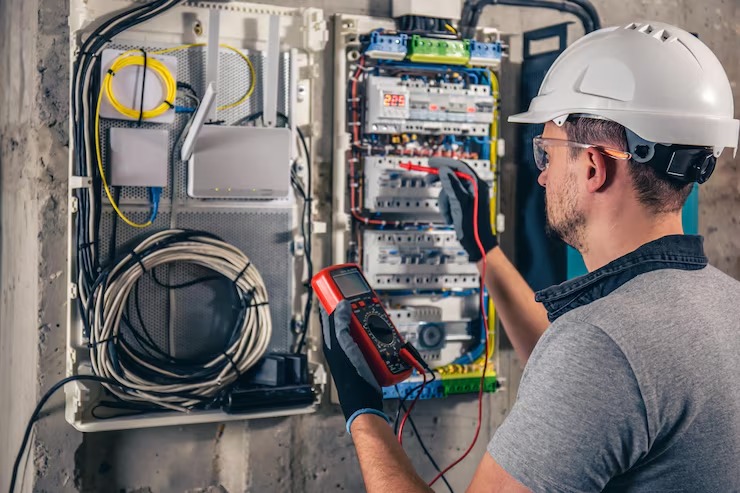
First, the electrical side: Brandon installs the automatic transfer switch next to your main panel, runs the generator feed, and sets the load management if the unit isn’t sized to run the whole house at once. This is where breaker types and circuit priorities get decided, which circuits are essential and which get shed automatically when the generator is under load.
Second, the gas side. Most whole-house units run on natural gas or propane. If you’re on natural gas, the gas line has to be sized correctly for the generator’s BTU draw, and that’s a separate piece of work from the electrical, sometimes done by a plumber, sometimes coordinated between trades. If you’re on propane, you need a tank sized to your run time expectations. Third, the utility. National Grid has to be notified of the interconnection before it goes live, and depending on your situation, they may need to inspect or approve the tie-in point. That’s a step Belfiore handles the paperwork for, but the utility’s own timeline is theirs, not ours.
Power to the house is out for a short window during the actual transfer switch tie-in, usually under a day, scheduled at a time that works for you, not during a storm.
What It Costs
A generator project in Lynnfield runs {PRICE_LOW} to {PRICE_HIGH} depending on generator size, panel condition, and how far the unit sits from the transfer switch. A smaller unit that covers essential circuits costs less than a whole-house unit sized to run central air and a heat pump at the same time.
What moves the number most is what we find at the panel. If your service is a clean 200 amp panel with room to work, the transfer switch installation is straightforward. If you’re still on 100 amps or the panel has breaker issues, an upgrade needs to happen first, and that’s additional work quoted separately, not folded into a generic generator price. Gas line sizing and propane tank costs are quoted by whoever handles that portion and aren’t part of Brandon’s electrical estimate.
How Long It Takes
The electrical installation itself, transfer switch and wiring, typically takes one to two days on site. Add time for permitting before the work starts and inspection after it’s done. Gas line work, if needed, is scheduled around the electrical piece so both are ready for the same inspection where possible.
Generator units themselves are sometimes on backorder, especially after a bad storm season when everyone on the North Shore has the same idea at once. Ordering ahead of the next winter, rather than during it, is the difference between a two-week timeline and a two-month one.
Permits and Inspection
Generator installation is permitted work in Massachusetts. Lynnfield’s building and wiring inspectors sign off on the transfer switch installation, the panel connection, and the gas or propane tie-in before the system goes live. This isn’t optional paperwork Brandon skips to save you time. It’s the difference between a licensed installation and the kind of unpermitted generator hookup that voids a homeowner’s insurance claim if something goes wrong.
[EXTERNAL LINK: Massachusetts Board of State Examiners of Electricians licensing and permit requirements, for homeowners who want to verify what’s required] shows what the state requires for electrical permits. Belfiore pulls the permit, schedules the inspection, and stands behind the work that gets inspected.
Common Questions
What size generator does a Lynnfield house typically need?
It depends on what you want to keep running. A smaller unit covers essentials like the furnace, sump pump, and refrigerator. A larger whole-house unit can also carry central air or a heat pump. Brandon sizes it off your actual panel load, not a general rule of thumb.
Can a generator be added to a 100 amp panel?
Often yes, but it depends on the panel's condition and how much room is left inside it. If the panel is older or already full of double-tapped breakers, an upgrade may need to happen before the transfer switch goes in.
Does the generator run on natural gas or propane?
Both are options in Lynnfield. Natural gas needs a properly sized gas line to the unit. Propane needs a tank sized to how long you want to run the generator during an extended outage. Either way, gas sizing is separate work from the electrical installation.
How is the generator connected to the house safely?
Through an automatic transfer switch installed next to your main panel. It disconnects the house from the utility line before the generator powers anything, which protects utility crews working on the lines outside and keeps you code compliant.
Does National Grid need to be involved?
Yes. The utility has to be notified of the interconnection, and depending on the setup, they may need to inspect the tie-in point. Belfiore handles that coordination as part of the installation.
Reach Out for Generator Installation
If you’ve been through one too many outages in Lynnfield, or you’re planning an EV charger or heat pump and want the panel sized right the first time, call Belfiore at {PHONE}. We’ll look at your service, talk through generator sizing, and give you a straight answer on what it takes to get your house running through the next storm.
Contact information
Talk to Brandon
Brandon is the electrician behind every generator connection Belfiore does. He’ll walk your panel with you, tell you honestly whether it can take a transfer switch as-is or needs work first, and size the generator to what you actually run during an outage, not what a sales sheet says a house your size should need.