
Dedicated Circuit Installation in Amesbury, MA
Amesbury’s older homes were wired for a handful of lamps and a radio, not a hot tub, a table saw, and a home office running off the same 15-amp breaker. When one of those breakers trips every time two things run at once, that’s not a fluke — it’s the panel telling you the circuit is doing more than it was ever built to do.
A dedicated circuit fixes that by giving one appliance or piece of equipment a line of its own, sized for exactly what it draws.
Why Amesbury Homes Need This
A lot of Amesbury’s housing stock — especially near the older neighborhoods around the downtown mill district — was built with panels that had just enough circuits for the era’s needs, and general-purpose wiring that got shared across a room or even a whole floor. That works fine for lamps and small electronics. It doesn’t work for a hot tub, an EV charger, a window air conditioner, a chest freezer, or workshop tools, all of which pull enough current on their own to overload a shared circuit or trip a breaker that’s also feeding half a hallway.
Homes with 60-amp or 100-amp services feel this the most, because there’s less headroom to begin with, and older cloth-insulated wiring wasn’t sized for sustained heavy loads in the first place. Even in newer Amesbury construction, additions like a hot tub, a garage workshop, or an EV charger are almost always installed after the original wiring plan was finalized, which means they’re competing for capacity the house wasn’t built to give them.
What the Work Involves
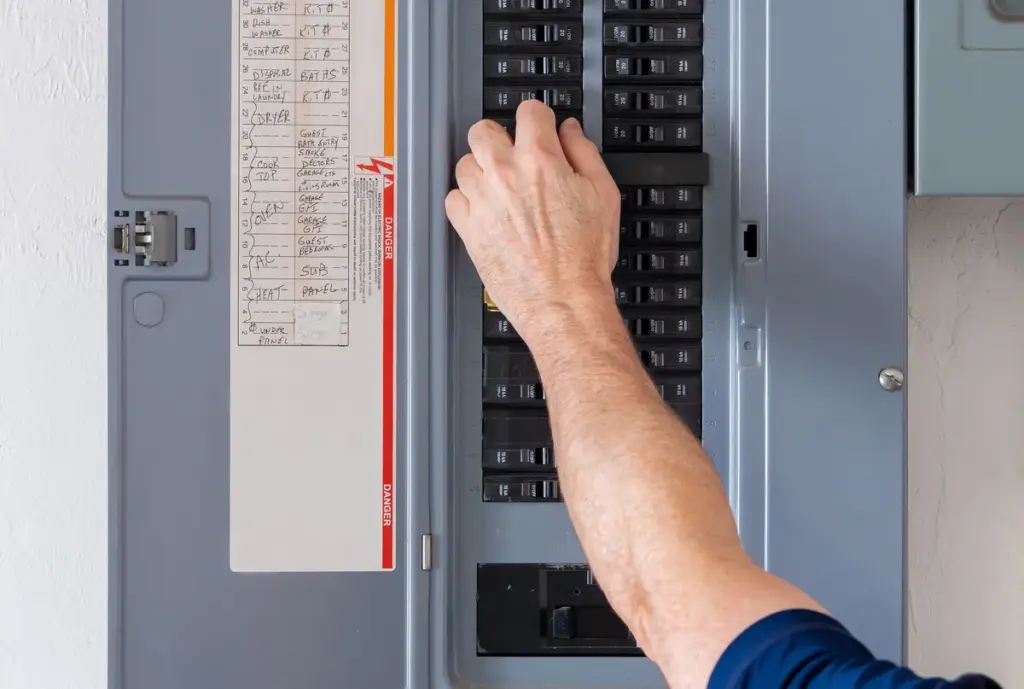
The first step is figuring out what the equipment actually draws — voltage, amperage, and whether it needs 120V or 240V — since that determines wire gauge, breaker size, and whether the existing panel has an open slot or needs one freed up. Power gets shut off at the main panel, confirmed dead with a meter, and a new breaker sized to the load is installed.
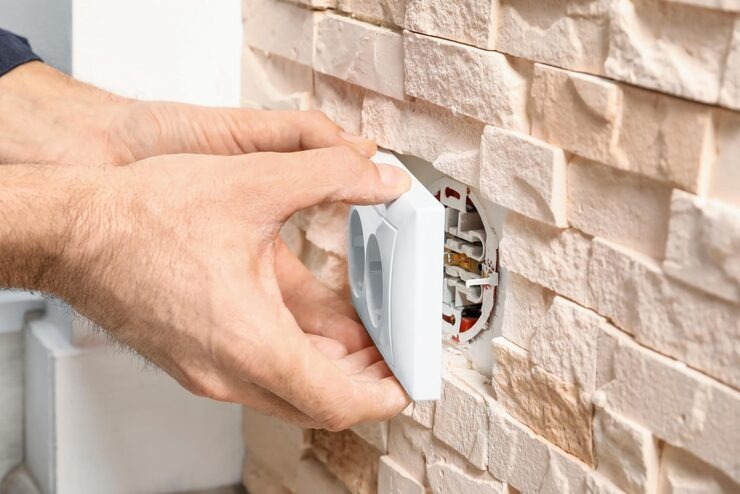
From there, wire gets run from the panel to the equipment location — inside conditioned space where possible, or through conduit if it’s an outdoor run to something like a hot tub or an EV charger. The circuit gets its own dedicated breaker and its own wire, not shared or spliced into an existing run, and it terminates directly at the appliance or a dedicated outlet rated for that load. If the panel is already full, that’s flagged before work starts, since it may mean a subpanel or panel upgrade is part of the job rather than an afterthought.
Power to the rest of the house generally stays on during the work, since it’s isolated to the one new circuit; only the main panel is briefly de-energized while the new breaker goes in.
What It Costs
Dedicated circuit installation in Amesbury can vary in cost depending on the electrical load being served, the distance from the panel to where the circuit terminates, whether the run is indoors or requires conduit outdoors, and whether the existing electrical panel has available capacity. A short indoor run for a dedicated appliance circuit is generally a more straightforward installation. A longer run for equipment such as a hot tub or EV charger, especially when additional panel work is needed, may require more labor and materials and therefore a higher overall investment.
How Long It Takes
A straightforward indoor circuit with an open panel slot is usually a half-day job. Outdoor runs, longer distances, or panel work needed to make room for the new breaker can push it to a full day. Anything requiring a subpanel is scheduled separately once that scope is confirmed.
Permits and Inspection
New circuit installation is permitted and inspected work under Massachusetts electrical code — it isn’t something a homeowner should be doing themselves or having done without a permit, particularly with 240V loads like hot tubs and EV chargers where an undersized wire or an unrated breaker is a real fire risk. NFPA 70, National Electrical Code, Article 210 on branch circuits — shown here so homeowners can see the actual standard dedicated circuits are held to. A permit means the wire gauge, breaker size, and termination all get checked by an inspector before the circuit goes into regular use.
Common Questions
How do I know if I need a dedicated circuit?
Can this be added without upgrading my whole panel?
Does every major appliance need its own circuit?
Talk to Brandon
If a breaker keeps tripping or you’re planning to add a hot tub, EV charger, or workshop equipment, Brandon can look at what the panel has to offer and tell you plainly what’s needed before anything gets opened up. Call 978-637-5418 to get on the schedule.
Contact information
Reach Out for Dedicated Circuit Installation
Call us at 978-637-5418 or contact us for your free quote.