
Electrical Troubleshooting and Repair in Danvers, MA
A lot of Danvers houses started life with a 60 amp fuse panel and knob and tube wiring running through the attic and walls, built for a house with a few lamps and a radio. Now that same house has central air, a couple of window units, a home office, and an EV in the driveway, and the wiring is telling on itself with flickering lights, warm outlets, and breakers that trip for no obvious reason.
Why Danvers Homes Need This
Danvers has a deep stock of homes built before 1940, plus the two and three family conversions that came later when houses near the square and along Route 1 got split into rental units. Both patterns create the same electrical problems. Original 60 amp services were never sized for modern loads. Knob and tube wiring, when it’s still live behind the plaster, has cloth insulation that’s brittle and was never meant to share a junction box with insulation or a modern fixture. Some of these homes also picked up a Federal Pacific Stab-Lok or Zinsco panel at some point in a 1970s or 80s update, and both of those panel brands have documented breaker failures where the breaker doesn’t trip when it should. Conversions add another layer: a triplex re-wired piecemeal over fifty years often has mismatched circuits, shared neutrals that were never labeled, and a meter panel that doesn’t match what’s actually behind the walls anymore. When Brandon gets called out to a flickering light or a dead outlet in a Danvers home, the fix is rarely just that one outlet. It’s usually a symptom of the service or the panel behind it.
What the Work Involves
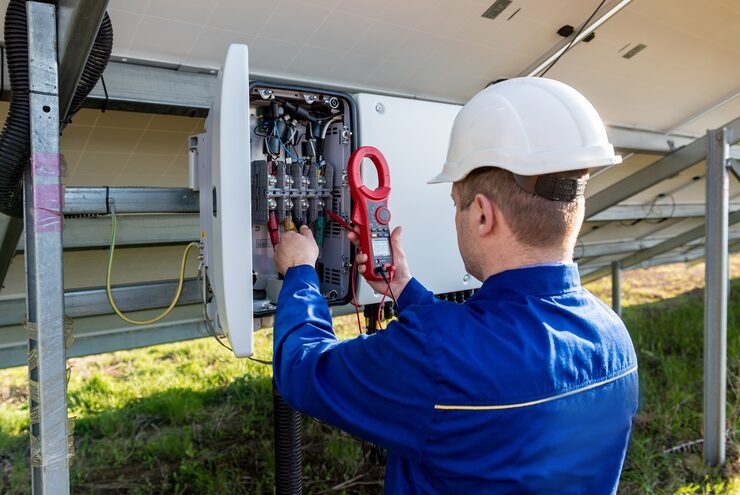
Troubleshooting starts with tracing the circuit, not guessing at it. Brandon uses a meter to check voltage drop, find opens and shorts, and confirm whether a breaker is actually protecting the wire it’s connected to. That can mean pulling outlets and switches to check connections, checking the panel for scorched or loose lugs, and testing GFCI and AFCI protection where it’s supposed to exist and doesn’t.
If the fix requires killing power to make a repair safe, that’s usually limited to the circuit in question, sometimes twenty minutes, sometimes the better part of an hour depending on how buried the problem is. A full panel swap is different: that requires the utility to pull the meter, and you can expect the house to be without power for most of a working day while the old panel comes out and the new one goes in. The utility handles the meter and the service drop connection. Brandon handles everything from the meter socket inward, including the panel, breakers, grounding, and bonding.
Every job gets checked with a load test on the circuits touched, and any panel or service work gets photographed before the walls or covers go back on, so there’s a record of what’s behind them.
What It Costs
A single circuit diagnosis and repair in Danvers typically runs {PRICE_LOW} to {PRICE_HIGH}. What moves that number is how much of the house has to be opened up to trace the problem, whether the issue is isolated or points to a bigger service or panel problem, and whether knob and tube has to be spliced out rather than repaired in place, since code doesn’t allow patching knob and tube into modern wiring. Brandon gives you the number before anything gets opened up, and if the diagnosis turns up something bigger, like a panel that needs replacing, you’ll hear that as a separate conversation with its own price, not a surprise on the invoice.
How Long It Takes
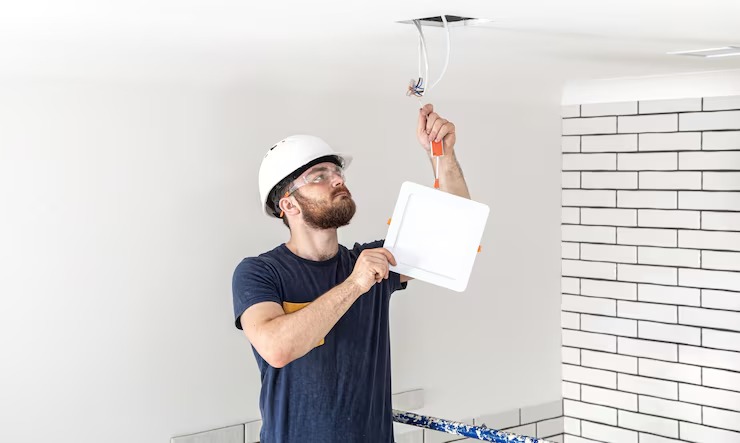
Most troubleshooting calls in Danvers wrap up in two to four hours, including the time it takes to trace a circuit that isn’t behaving. A repair confined to one circuit, an outlet, or a switch is usually done same visit. Anything that turns into a panel or service issue gets scheduled separately, since that work needs a utility shutoff and a permit pulled ahead of time, not squeezed into a same-day visit.
Permits and Inspection
Electrical repair work in Massachusetts that goes beyond a simple like-for-like device swap requires a permit, and panel work always does. Brandon pulls the permit, the work gets inspected by the local wiring inspector, and you get a signed-off inspection record for your file. That paperwork matters more than people think. It’s what separates a licensed electrician from someone working off a truck with no license, and it’s what an insurer or a buyer’s inspector will ask for down the road. [EXTERNAL LINK: Massachusetts Board of State Examiners of Electricians licensing and permit info, since it’s the official source homeowners can verify a license against]
Common Questions
Is knob and tube wiring illegal in Massachusetts?
It's not automatically illegal, but it can't be extended, spliced into modern wiring, or covered with insulation. Many insurers won't cover a home with active knob and tube, which is often what pushes homeowners to have it removed.
Why does my breaker trip without an obvious overload?
It can mean the breaker itself is worn out, the circuit has a loose connection generating heat, or the panel is an older brand like Federal Pacific or Zinsco with a known history of breakers not tripping reliably. A diagnosis on-site will tell you which.
Can you fix just one outlet without opening up my whole panel?
Often yes. Most single-outlet or single-switch problems are isolated to that circuit. Panel work only comes into play if the diagnosis traces back to the panel itself.
Do I need a permit for an electrical repair?
Simple device replacements usually don't require one, but most troubleshooting repairs, and any panel work, do. Brandon will tell you upfront if your job needs a permit and will pull it.
How old does a Danvers home have to be to still have knob and tube?
Most homes built before the 1940s could still have some original knob and tube in the attic or wall cavities, even if parts of the house were rewired later. It's common to find both systems mixed together in older Danvers homes.
Reach Out for Electrical Repair
If you’ve got a breaker that trips on its own, an outlet that’s warm to the touch, or lights that dim when the fridge kicks on, that’s worth a call before it becomes a bigger problem. Reach out to Belfiore at {PHONE} and we’ll get Brandon out to your Danvers home to trace it down and give you a straight answer.
Contact information
Talk to Brandon
Brandon left union work to run the electrical side of this family business, and troubleshooting old wiring in North Shore housing is a big part of what he does every week. He’ll walk the affected circuits with you, explain what’s original and what’s been touched by someone else over the years, and tell you straight whether you’re looking at a repair or a bigger service conversation. No pressure to upgrade anything that isn’t actually a problem yet.