
Water Heater Repair in Newburyport, MA
A lot of Newburyport homes are still running on old steam or hot water boilers with a water heater that was sized for a smaller household decades ago. If you’re on well water anywhere outside the downtown core, sediment and mineral buildup shorten a tank’s life faster than most people expect. Both of those things show up as the same complaint: not enough hot water, or none at all.
Water Heater Repair in Newburyport
When a water heater in Newburyport starts acting up, the cause is usually one of a short list of things: a failed heating element, a bad thermostat, a dying pilot assembly, a leaking tank, or sediment that’s built up enough to insulate the burner from the water above it. Chris and the crew go through that list in order before anyone talks about a new unit. A lot of calls that start as “my water heater is broken” end with a part swap and a working system by the end of the visit.
What Newburyport Homes Typically Have
Downtown Newburyport is federal-era housing, tight lots, older wiring and plumbing runs that were never meant to carry today’s load. A lot of these houses are still on oil, especially the ones that haven’t been touched since a 1980s or 1990s renovation, though natural gas is available on many downtown streets now and more homeowners are switching when a system fails rather than patching an old oil-fired unit again.
Move out toward the Route 1 corridor, Bromfield Street, or the newer development off Low Street, and you’ll find more homes on natural gas already, mixed in with some that are still oil. Town water covers most of the city, but there are pockets, particularly toward the Newburyport line, where private wells are common. On well water, a tank or tankless unit works harder and scales up faster, so filtration isn’t an add-on sale here, it’s what keeps the heater running its expected life.
What the Work Involves
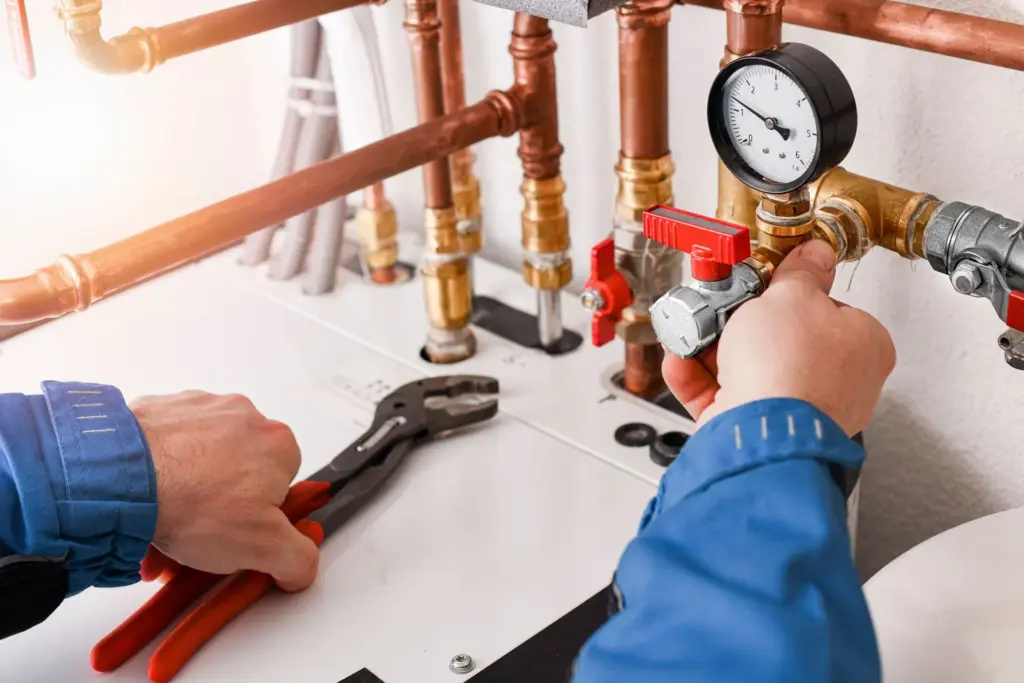
A standard repair call starts with draining the tank partway to get a look at the anode rod and the bottom of the tank for sediment or rust-through. If it’s a gas unit, Chris checks the thermocouple or pilot assembly and confirms the burner is drawing clean flame, not the lazy yellow flame that signals a venting or gas supply problem. Gas sizing matters here too. A lot of these older Newburyport houses had a water heater added onto an existing gas line that was undersized for a furnace or boiler running at the same time, and that shows up as inconsistent hot water rather than an obvious failure.
Electric units get a different check: the upper and lower heating elements, both thermostats, and the breaker itself. A tripped or corroded breaker connection can mimic a failed element, so that gets ruled out before anything gets replaced. For venting, older atmospheric-vent water heaters sharing a flue with an oil boiler need that shared vent checked too, since a water heater that’s short-cycling can sometimes be a symptom of poor draft rather than a heater problem at all.
Most repairs are done same day, with the house without hot water for a few hours at most while parts are swapped and the tank is refilled and tested.
Repair or Replace
Here’s the honest version. If your water heater is under about eight years old, has a intact tank with no active leak, and the failure is a part like a thermocouple, heating element, or thermostat, repair is the right call almost every time. Those parts are inexpensive relative to a full replacement and the fix typically lasts years.
Replacement becomes the better answer once the tank itself is leaking, once you’re on your second or third repair in a couple of years, or once the unit is past the age where manufacturers expect it to hold up. A leaking tank can’t be repaired, only replaced, no matter how new the rest of the unit looks. If your water heater is original to a Newburyport home built or last renovated in the 1990s, age alone is often the deciding factor even if it’s still limping along.
Chris will tell you straight when a repair makes sense, because most of the time it does, and that’s the call that gets made first.
What It Costs
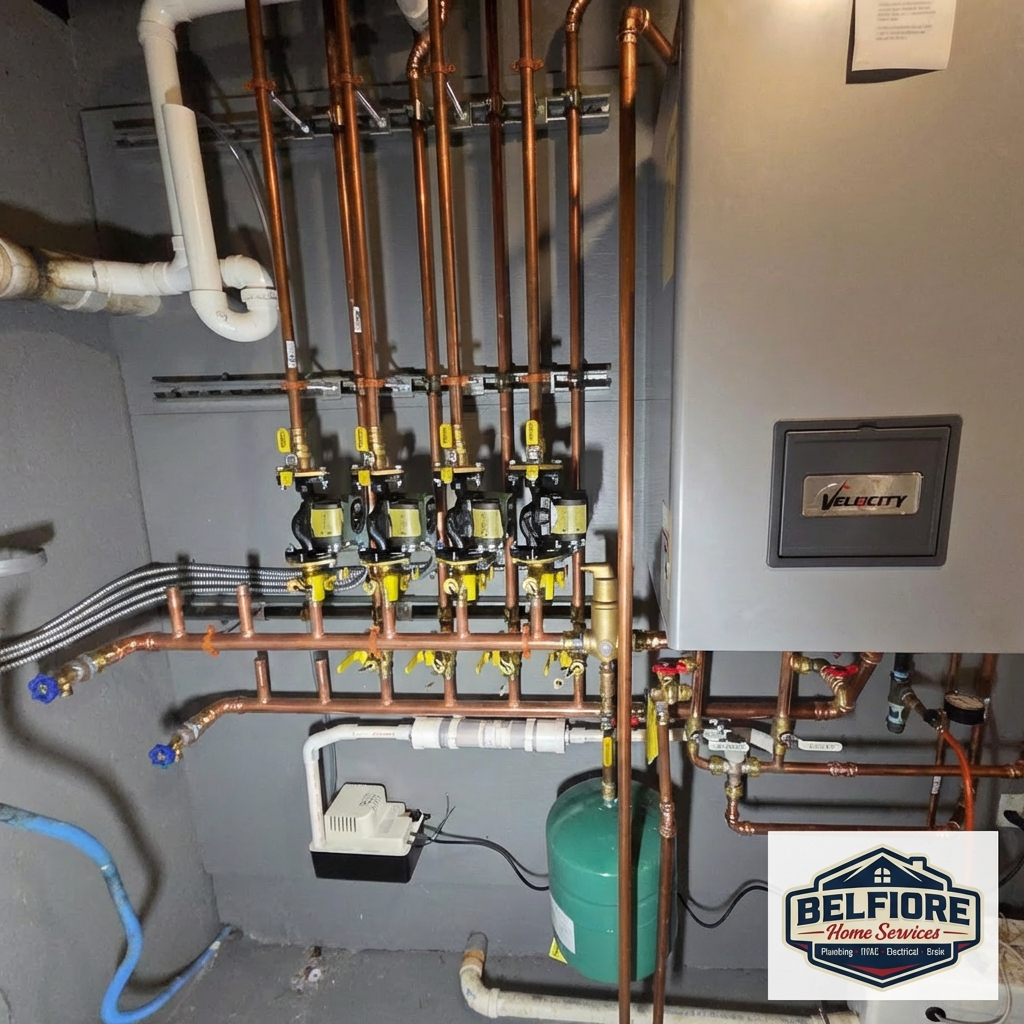
Repair costs depend on the part and the fuel type. A thermocouple or thermostat swap is on the lower end. A heating element replacement on an electric unit is similarly modest. Gas control valve replacement runs higher, and if venting or gas line work is needed alongside the repair, that adds to the visit. {PRICE} gives you the range for the most common Newburyport calls, and Chris will always quote the job before starting, not after.
How Long It Takes
Most water heater repairs in Newburyport are a single visit, typically an hour or two once the part is identified and on the truck. If a part needs to be sourced, especially for an older or less common unit still found in some of the downtown houses, that can push the job to a second short visit. Either way, you’re not usually without hot water for more than a day.
Common Questions
Is it worth repairing an old water heater instead of replacing it?
Often yes, if the tank isn't leaking and the unit isn't ancient. A failed thermocouple, heating element, or thermostat is a straightforward, inexpensive fix that can add years to the unit's life. Chris checks the tank condition and age before recommending anything.
Why does my hot water run out faster than it used to?
Sediment buildup at the bottom of the tank is the most common cause, especially on well water, which is common outside downtown Newburyport. It insulates the burner or lower element from the water, so the unit works harder and delivers less.
Do you work on both gas and electric water heaters?
Yes. Chris handles both, along with oil-fired systems, which are still common in older Newburyport homes that haven't converted to gas.
Is my house on gas or oil?
It depends on where you are in Newburyport. Many downtown streets have gas available now, but plenty of homes, especially ones untouched since the 1980s or 1990s, are still on oil. If you're not sure, Chris can usually tell from your current setup.
How do I know if I need filtration for my water heater?
Reach Out for Water Heater Repair
If your hot water is inconsistent, running out fast, or the tank looks like it’s rusting at the base, call {PHONE}. Belfiore is a Salem-based company working across Newburyport and the rest of the North Shore, and we can usually get someone out to look at it quickly.
Contact information
Talk to Chris
Chris runs the plumbing side of Belfiore and takes these calls directly. Tell him what the water heater is doing, whether it’s gas or electric, and roughly how old it is, and he can usually tell you over the phone whether it sounds like a repair or something bigger. No pressure toward a new system if the old one just needs a part.