
Outlet and GFCI Installation and Repair in Reading, MA
Most of Reading was built out in waves after World War II, with another push through the 60s and 70s as the town filled in around the commuter rail. Those houses came with a handful of outlets per room, two-prong in the older sections, and zero GFCI protection anywhere near water. Fifty or sixty years later, those same walls are being asked to run air fryers, space heaters, home offices, and EV chargers off wiring that was sized for lamps and a radio.
Outlet and GFCI Installation and Repair in Reading
Belfiore handles outlet and GFCI work across Reading the way we handle every electrical call: assess what’s actually there, tell you what it will take to bring it up to code, and do the work clean. That might mean swapping a handful of two-prong outlets for grounded three-prong receptacles, adding GFCI protection in a kitchen or bath that’s never had it, or running new outlets into a basement that’s finally getting finished. Brandon’s the one doing the work or overseeing the crew, and he’s licensed for it, which matters more on outlet jobs than people think, because bad grounding and mis-wired GFCIs are two of the more common things we find on service calls that started as something else.
Why Reading homes need this
Reading’s housing stock splits into a few eras, and each one brings its own outlet problems. The older colonials and capes near the center of town can still have knob and tube wiring or early cloth-insulated cable feeding a handful of rooms, with a 60 amp service that was never meant to carry a modern kitchen, let alone a heat pump or EV charger. The postwar ranches and split-levels that make up a lot of the housing stock going up Franklin Street and out toward Birch Meadow often have ungrounded two-prong outlets throughout, which is a real problem the day you try to plug in anything with a three-prong plug, including most appliances and power tools.
Then there’s the panel question. Some Reading homes from the 60s and 70s still have Federal Pacific Stab-Lok or Zinsco panels, both of which have a documented history of breakers that don’t trip when they should. If you’re adding GFCI protection or new outlet circuits off one of those panels, that’s worth flagging before we even start, because the panel itself may need to come first. Add in the newer demand, finished basements, home offices, EV chargers, heat pump systems, and you’ve got houses where the electrical panel and the outlet count both need attention at the same time.
What the work involves
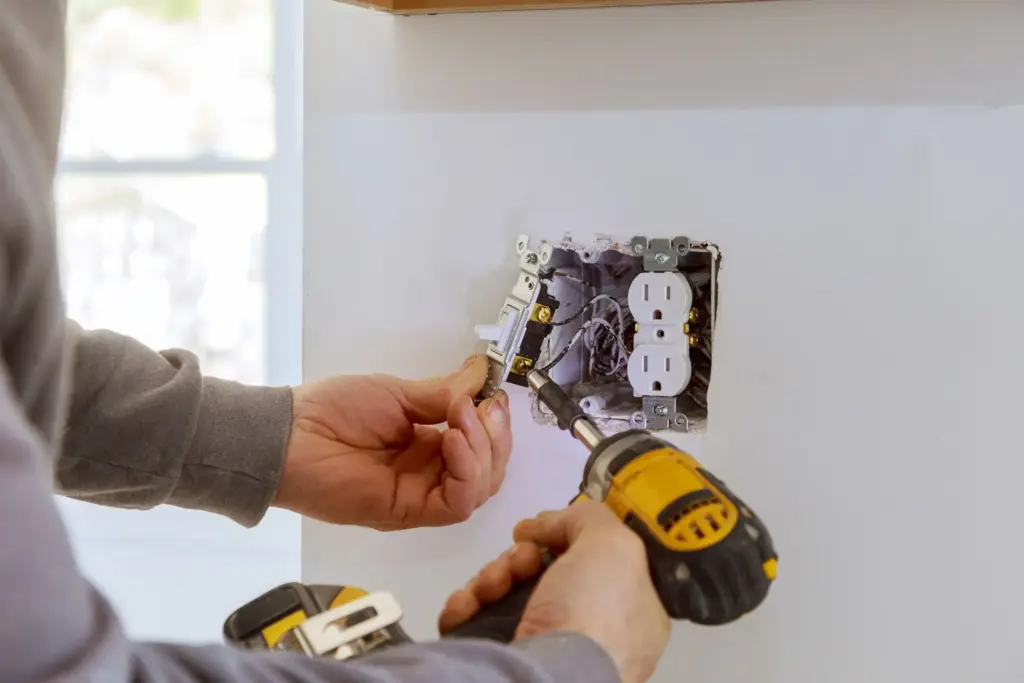
A straightforward outlet swap or GFCI install is a single-circuit job. We shut off the breaker feeding that circuit at the panel, not the whole house, so the rest of your electrical stays live while we work. For a bathroom or kitchen GFCI, that’s usually under an hour of actual downtime on that circuit. Adding a new outlet where there isn’t one means running new cable, typically 12 or 14 gauge copper depending on the circuit’s amperage, from the nearest accessible point back to the panel or an existing junction box, fishing it through finished walls where needed, and terminating it properly at both ends.
If the job involves upgrading two-prong to three-prong outlets, we test each one to confirm what’s actually behind the wall. Sometimes there’s a ground path available and it’s a straightforward swap. Other times the only correct fix is a new grounded circuit, and we’ll tell you that rather than install a grounded-looking outlet with no actual ground behind it, which is a shortcut some contractors take and it’s not code-compliant or safe. National Electrical Code requires GFCI protection in kitchens, bathrooms, garages, unfinished basements, and outdoor outlets, and if your house predates that requirement, retrofitting it is usually the single best safety upgrade you can make for the money.

What It Costs
A single GFCI outlet installation or swap in Reading runs {PRICE_LOW} to {PRICE_HIGH} in most cases. Multiple outlets in one visit bring the per-outlet cost down since we’re already on site and the panel’s already open. What moves the number: how many outlets, whether new wire needs to be run or fished through finished walls and how far, whether the circuit needs to be split off from an overloaded one, and what condition the panel’s in. A house with knob and tube feeding the circuit or a Federal Pacific panel behind it will cost more to do right than a newer home with copper wiring and a modern panel, because there’s more to correct before the outlet itself goes in.
How long it takes
Most single-outlet or single-GFCI jobs are done in an hour or two, start to finish, including testing. A whole-house two-prong to three-prong conversion, or adding several new circuits for a finished basement, is more often a full day or spread across two visits depending on how much wall access we need. We’ll give you a time estimate before we start based on what we find, not a generic number.
Permits and inspection
Outlet and GFCI work in Massachusetts requires a permit and a licensed electrician, full stop. New circuits and grounding upgrades get inspected by the town’s electrical inspector before they’re closed up behind drywall. We pull the permit, schedule the inspection, and stand behind the work if the inspector has questions. This is the difference between a licensed electrician and someone doing side work with a truck and a business card: the paperwork exists so somebody besides us checks that the wiring is safe. If you’re ever evaluating a quote and permits aren’t mentioned, ask why. [EXTERNAL LINK: Massachusetts Board of State Examiners of Electricians, for licensing verification and permit requirements]
Common Questions
Do all outlets in an older Reading home need to be replaced at once?
No. You can do it room by room or prioritize kitchens, bathrooms, and anywhere near water first, since those are the GFCI-required areas. Whole-house conversions are common but not required to happen in one visit.
Can I just install a GFCI outlet myself?
You can buy one at a hardware store, but installing it correctly means confirming there's an actual ground path, wiring line and load correctly if it's protecting downstream outlets, and testing it. Miswired GFCIs are one of the more common things we find on inspection, and they don't protect you if they're wrong.
What's the difference between a GFCI outlet and a regular outlet?
A GFCI outlet monitors the current going out versus coming back and trips instantly if it senses a leak, which is what protects you from shock near water. A standard outlet has no monitoring at all.
My outlets are warm to the touch. Is that a GFCI issue?
Warm outlets usually point to a loose connection, an overloaded circuit, or old, brittle wiring rather than a GFCI problem specifically. That's worth a call regardless of what's causing it, since it's a fire risk sign.
Will adding new outlets require upgrading my panel?
Reach Out for Outlet and GFCI Installation and Repair
Whether it’s one GFCI outlet in a bathroom that’s never had one, or a whole first floor of two-prong outlets that need to come out, Belfiore covers it across Reading. We’re a Salem-based company working the North Shore, licensed for the electrical side of the house, and we’ll tell you straight what your outlets actually need. Reach out at {PHONE}.
Contact information
Talk to Brandon
If you’re not sure whether your outlets need a simple swap or something bigger, the fastest way to find out is to have Brandon look at it directly. He’ll test what’s there, tell you honestly what’s needed now versus what can wait, and give you a number before any work starts. Call {PHONE} to get on the schedule.