
Generator Installation and Connection in Hamilton, MA
Generator Installation and Connection in Hamilton
A lot of Hamilton homes sit at the end of a long line, on a couple of acres, well back from the road. When the power goes out here, it tends to stay out longer than it does in denser parts of the North Shore, because the utility works its way out from the substation and your line is one of the last ones fixed. Add a well pump that stops moving water the second the lights go out, and a standby generator stops being a comfort item and starts being the thing that keeps the house running.
Why Hamilton Homes Need This
Hamilton is low density, with big lots, long driveways, and a real share of homes on private well and septic. That combination is the whole reason generator demand runs higher here than almost anywhere else Belfiore works. A well pump needs power. A septic pump system often needs power too. Lose the grid for two days after a nor’easter and you don’t just lose lights, you lose water pressure and, in some cases, the ability to flush.
The other factor is the housing stock itself. Plenty of Hamilton’s older farmhouses and estate-style properties were built or last rewired decades ago, when a 60 amp or 100 amp service was considered plenty. Some of these homes still have cloth-insulated wiring or knob and tube in sections that were never touched during a later remodel. A few still run on Federal Pacific or Zinsco panels, both of which have documented breaker failure issues and neither of which should carry a generator interlock or transfer switch without a hard look first. Before we talk generator size, we look at what the house is actually built on.
What the Work Involves
The visible part of a generator installation is small. The panel work behind it is not. Here’s roughly how it goes:
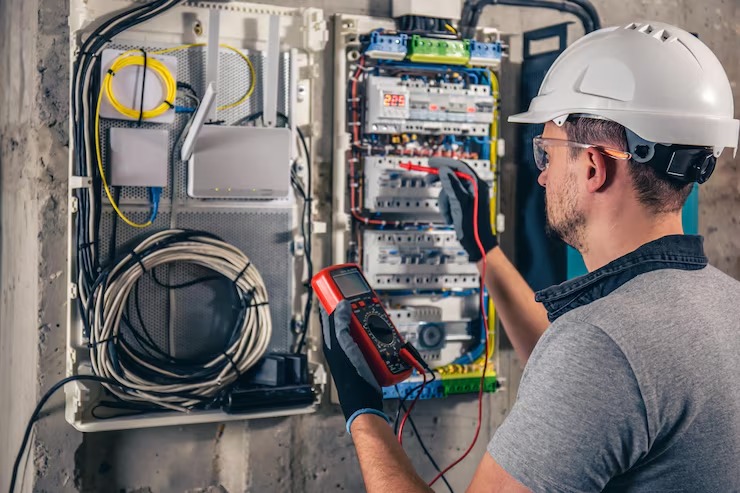
- Load and site assessment. Brandon walks the property, checks your existing service size, panel condition, and gas or propane availability, and figures out what the generator actually needs to carry – well pump, septic pump, heating system, refrigeration, a few circuits, or the whole house.
- Panel and transfer switch work. Most installs use either an automatic transfer switch wired into your main panel or a manual interlock kit, depending on the generator size and what you want automated. If your panel is older, undersized, or one of the recalled brands mentioned above, this is usually where a panel upgrade gets folded into the job.
- Utility coordination. The utility has to install or verify the meter setup on their end. That part is outside our control and can add lead time, especially after a storm when every electrician on the North Shore is calling in the same request.
- Fuel and pad setup. Standby units run on natural gas or propane and sit on a concrete or composite pad outside the house, with clearances from windows, doors, and property lines set by code.
- Power-down window. Expect the power to be off in the house for a few hours during the final tie-in, not days. We schedule that part for when it works for you.
- Startup and inspection. Once it’s wired, we test the automatic or manual transfer, confirm the generator picks up the right circuits, and get it ready for inspection.
What It Costs
Generator installation in Hamilton generally runs {PRICE_LOW} to {PRICE_HIGH}, and the spread is wide because the variables are real. A manual interlock kit on a healthy 200 amp panel is a different job from an automatic transfer switch tied into a knob and tube service that needs upgrading first. Other things that move the number: whether you’re running natural gas or need a propane tank set, how far the generator sits from the panel, whether the well pump and septic system are on their own dedicated circuits already or need new ones, and generator size itself, since a unit sized to run the whole house costs more than one sized to cover essentials.
We don’t quote a generator job over the phone with a flat number. Brandon looks at the panel and the property first, because on older Hamilton homes the panel condition usually drives the price more than the generator does.
How Long It Takes
A straightforward installation on a modern panel, with the generator already sited and permits pulled, typically takes one to two days of on-site work. Add panel replacement, new dedicated circuits for the well and septic pumps, or a propane tank installation, and you’re looking at closer to three to five days spread across a couple of visits, with utility scheduling and inspection timing in between. None of that time is spent with your whole house dark. The main outage window is a few hours during final connection.
Permits and Inspection
Generator installation is permitted electrical work in Massachusetts, full stop. It requires a permit, a licensed electrician’s stamp, and a town inspection before the transfer switch goes into service. This is one of those jobs where the difference between licensed and unlicensed work actually shows up on paper – an inspector checks the transfer switch wiring, grounding, and clearances, and signs off. If you ever sell the house, that inspection record is what protects you. Belfiore pulls the permit and schedules the inspection as part of the job, not as an afterthought.
Common Questions
Do I need a permit for a standby generator in Hamilton?
Yes. Generator installation is permitted electrical work in Massachusetts. It requires a permit, a licensed electrician, and a town inspection of the transfer switch and wiring before the system goes into regular use.
Can a generator run my well pump and septic system?
Yes, and on Hamilton properties that's usually the whole point. We size the transfer switch and generator to carry the well pump, septic pump, and heating system along with the circuits you want, based on your actual load, not a generic package size.
My house still has a Federal Pacific or Zinsco panel. Can I still add a generator?
We'd look at the panel first. Both of those panel brands have documented breaker failure issues, and we generally recommend replacing them before tying in a transfer switch, rather than adding a generator connection to a panel with a known problem.
How long will my power be off during the installation?
Usually a few hours during the final tie-in to your main panel, not days. Most of the installation work happens with the house still on grid power.
Automatic transfer switch or manual interlock, which is better for my house?
It depends on the generator size and how much you want automated. An automatic transfer switch kicks in on its own during an outage. A manual interlock costs less but requires you to start the generator and flip it over yourself. Brandon can walk you through which fits your situation.
Reach Out for Generator Installation
If you’re in Hamilton and tired of losing water pressure every time a storm knocks out the grid, call {PHONE}. We’ll look at your panel, your well and septic setup, and your property, and give you a straight answer on what a generator installation actually involves for your house.
Contact information
Talk to Brandon
Brandon is the electrician here, and he’s the one who walks the panel before any generator gets ordered. On a property with an older service or a panel brand with known issues, that walkthrough matters more than the generator brand you end up buying. He’ll tell you straight if your panel needs work first, and what that adds to the job.