
EV Charger Installation in Peabody, MA
A lot of Peabody’s housing stock went up between the 1900s and the 1950s, back when a house needed enough power to run a refrigerator, a radio, and some lights. Those homes were wired for 60 or 100 amps, not for a Level 2 charger pulling 40 or 50 amps on top of everything else already running. If you just bought a Tesla, an Ioniq, or an F-150 Lightning and you’re looking at the panel in your basement or your converted two-family’s electrical closet, you already know something has to change before that charger goes in.
Why Peabody Homes Need This
Peabody has a lot of older single-families and two and three-family conversions, especially around the downtown core and the streets off Lowell Street and Central Street. Houses from that era were built with panels sized for a much smaller electrical load than a modern household carries. It’s common for us to open a panel here and find a 100 amp service, sometimes still 60 amp, with the original knob and tube wiring still live in parts of the house, or an old Federal Pacific or Zinsco panel that hasn’t been touched since the last owner.
None of that was built with a car charger in mind. A Level 2 charger draws a steady, heavy load for hours at a time, which is a different animal than a dryer or a range that cycles on and off. On a panel that’s already near capacity, adding a 40 or 50 amp circuit without checking the math first is how you trip breakers or, worse, overheat wiring that was never rated for that kind of continuous draw. Before Brandon runs a single wire, he’s calculating your existing load against what the charger needs, because in a lot of Peabody’s older homes that’s the real question, not the charger itself.
What the Work Involves
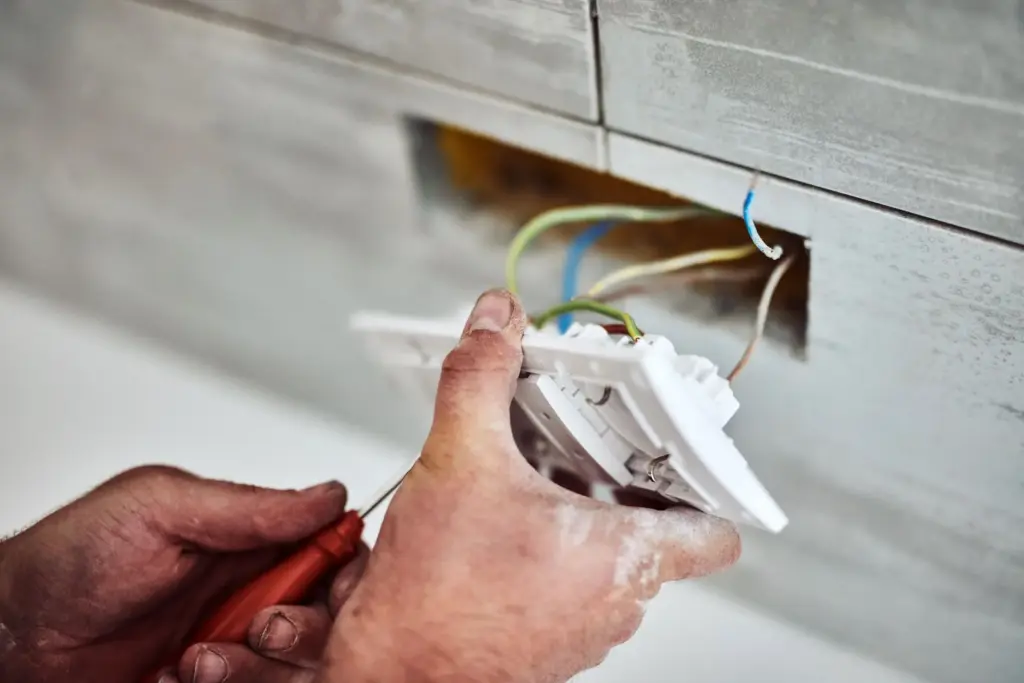
The job starts with a load calculation. Brandon looks at your panel’s rated capacity, what’s already on it, and what the new charger circuit will add. If the panel has room, it’s a matter of running a dedicated circuit, usually 6 or 8 gauge copper depending on the charger’s amperage, to a new double-pole breaker sized for that load, typically 40, 50, or 60 amps depending on the charger you bought.
If the panel doesn’t have room, or if it’s an older 100 amp service already carrying a lot of the house, the conversation shifts to a panel upgrade or a service upgrade before the charger circuit gets added. That’s a bigger job and it means coordinating with National Grid, since they own the meter and the service drop into your house. The utility handles anything on their side of the meter. Brandon handles everything downstream of it, from the new panel to the final connection point in your garage or driveway.
Power to the house is out for part of a day when a panel or service is involved, since the main breaker has to be pulled and the connection made safely. For a straightforward dedicated circuit on a panel with capacity to spare, the rest of the house stays powered the whole time and only that one circuit is affected while it’s being run.
What It Costs
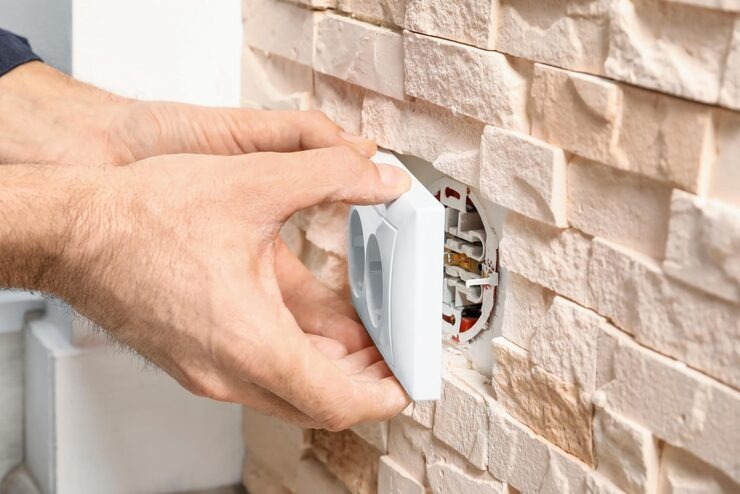
A straightforward 240 volt circuit to an existing panel with room to spare runs {PRICE_LOW} to {PRICE_HIGH} in most cases. That range moves based on the distance from your panel to where the charger mounts, whether the run is through finished walls or an open basement, and whether you need a subpanel because the main panel is full. If a panel or service upgrade turns out to be necessary first, that’s priced separately and Brandon will tell you before any work starts, not after the wall’s already open. He’ll also walk you through whether your specific charger brand needs a NEMA outlet or a hardwired connection, since that changes the parts list.
How Long It Takes
A dedicated circuit installation on a panel that already has capacity is usually a one-day job, start to finish. If a panel upgrade is part of the picture, plan on a full day for that alone, plus scheduling around when National Grid can send someone out to handle their portion of the service work. Older Peabody homes with finished basements or plaster walls sometimes take a bit longer if the run has to be fished through rather than run exposed, and Brandon will tell you which situation you’re in during the initial look at the panel.
Permits and Inspection
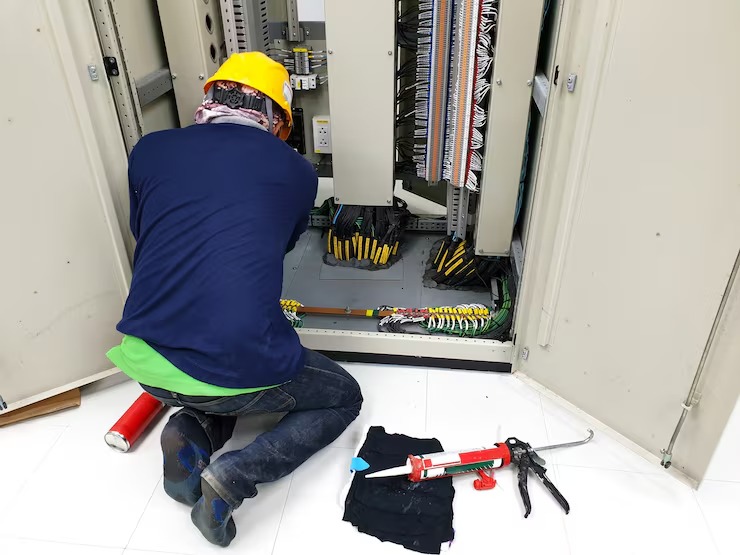
EV charger circuits and any panel work that goes with them require a permit in Massachusetts, and the finished work gets inspected by the local wiring inspector before it’s signed off. This isn’t optional paperwork. It’s what separates a licensed electrician’s work from a handyman running wire off the books. Brandon pulls the permit, schedules the inspection, and stands behind the work because his license is the one on the paperwork. [EXTERNAL LINK: Massachusetts Electrical Code (527 CMR 12) reference from the Board of State Examiners of Electricians, for homeowners who want to see the actual code requirements]
Common Questions
Can my current panel handle an EV charger?
It depends on the panel's rated amperage and what else is already on it. Many Peabody homes have 100 amp services, and depending on the rest of the house's load, that can be enough or it can mean a subpanel or upgrade is needed. A load calculation during the initial visit answers this directly.
Do I need a permit for a home EV charger in Massachusetts?
Yes. Any new circuit or panel work is permitted and inspected under Massachusetts electrical code. Brandon handles the permit and schedules the inspection as part of the job.
Does the charger brand matter for the installation?
It affects the connection type. Some chargers need a NEMA 14-50 outlet, others are hardwired. Brandon will confirm which your specific charger needs before the circuit is run.
What amperage circuit does a Level 2 charger need?
Will the power go out during installation?
Reach Out for EV Charger Installation
If you’re in Peabody and ready to add a charger, or you just want an honest read on whether your panel can handle one, call {PHONE}. We work across Peabody and the rest of the North Shore, and we can usually get a look at your panel scheduled within a few days.
Contact information
Talk to Brandon
Brandon is the electrician half of Belfiore. He left union work to run the electrical side of the family business, and panel and service questions like this are the kind of thing he’d rather walk you through in person than guess at over text. Send him a photo of your panel and the charger you’re looking at, and he can usually tell you right away whether it’s a simple circuit or a bigger job.