Electrical Panel Upgrades in Wenham, MA
A lot of the housing stock in Wenham dates back to a time when a home ran on a stove, a furnace, and a handful of lamps. That’s a 60 or 100 amp panel doing a job it was never built for. Now the same house has a heat pump in the addition, a hot tub out back, and someone wants a generator hookup for the next time the power goes out on a long rural line. The panel is the bottleneck, and it’s usually the reason your electrician starts talking about a capacity upgrade before anything else on the project can move forward.
Why Wenham Homes Need This
Wenham is low density with big lots, long driveways, and a real share of properties on private well and septic. That changes the math on outages. When the grid goes down at the end of a rural feeder line, it can stay down longer here than it would in a tighter, more urban part of the North Shore. That’s the single biggest driver of panel upgrade calls in this town: people want a panel sized correctly for a whole-house or partial-house generator, and the panel they have won’t support it.
Then there’s the housing stock itself. Wenham has a meaningful number of older farmhouses and estate-era properties, and that means we still run into cloth-insulated wiring, knob and tube in sections of the house that were never touched during a renovation, and 60 amp services that predate central air, electric ranges, and anything resembling modern load. Some of these homes still have Federal Pacific Stab-Lok or Zinsco panels in the basement or an old barn conversion. Both brands have a documented history of breakers that fail to trip under fault conditions, and neither is something Brandon will patch around. If we find one during an upgrade estimate, we’ll tell you plainly and explain the replacement path.
Add in what people are building now: pool equipment, EV chargers in a detached garage, a heat pump replacing an oil furnace, a home office wing with its own subpanel. None of that was on the drawing board when the original 100 amp service went in, and a panel upgrade is usually the first domino that has to fall before the rest of the project can proceed.
What the Work Involves
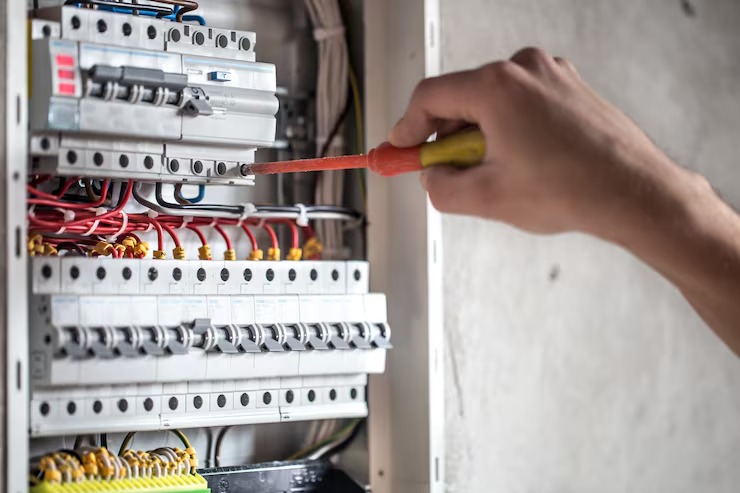
On a straightforward job, Brandon pulls the panel cover, checks the existing service size, bus rating, and grounding, then maps out the new circuit count you actually need. If you’re going from 100 amp to 200 amp, that’s a new panel, new main breaker, and often a new meter socket, plus coordination with the utility for the service drop or lateral. On a property with a long driveway or a detached structure, that coordination can take longer than the panel swap itself.
The power has to come off for the changeover. On most Wenham jobs that’s a matter of hours, not a full day, but if the utility has to schedule a crew to reset the drop or upgrade the transformer tap, that adds time outside our control. We’ll walk you through what’s ours to do and what’s theirs before we schedule anything.
Once the new panel is in, every circuit gets landed, labeled, and tested. AFCI and GFCI protection gets added where current code requires it, which on an older Wenham home is often most of the panel, not just the kitchen and bath circuits. If knob and tube or cloth wiring is feeding into the new panel from parts of the house that weren’t touched, we’ll flag that as a separate conversation, because a new panel doesn’t fix old wire downstream of it.
What It Costs
A panel upgrade in Wenham typically runs between {PRICE_LOW} and {PRICE_HIGH}. What moves the number: whether the utility needs to upsize the drop or transformer, whether you’re going to 200 amp or larger for a generator and EV charger combined, how many circuits need to be relocated or relabeled, and how much of the existing wiring is salvageable versus in need of replacement. A detached garage or barn adds distance and conduit runs that a straightforward in-house swap doesn’t have. We give you a number after we’ve actually looked at the panel, not off a phone call.
How Long It Takes
Most straightforward panel upgrades are a one-day job on-site. The power outage window during the swap is usually a few hours. What extends the timeline is the utility side and the town side: scheduling the utility for a drop or meter change can take longer than the electrical work itself, and permit turnaround with Wenham’s building department adds days before we’re allowed to start. We build that into the schedule up front so there are no surprises.
Permits and Inspection
Panel work in Massachusetts requires a permit and a licensed electrician, full stop. Brandon pulls the permit, does the work to the Massachusetts Electrical Code, and the job gets inspected by the town before it’s signed off. That inspection matters more than most people think. It’s the check that catches an undersized ground, a wrong breaker type, or a panel that isn’t actually rated for what just got installed. If someone offers to do this work without a permit, that’s a reason to walk away, not a reason to save money.
Common Questions
How do I know if my panel needs an upgrade?
If you're adding a generator, EV charger, heat pump, or any large new appliance and your panel is rated 60 or 100 amps, it's worth having checked. Warning signs include breakers that trip often, a panel with no room for new circuits, or visible rust or scorch marks inside the panel cover.
Do I need to upgrade my panel for a generator?
In most cases, yes, especially in Wenham where long outages on rural lines make whole-house or large partial-house generators common. A 60 or 100 amp panel usually can't support a generator interlock or transfer switch sized for real backup power.
Is Federal Pacific or Zinsco panel replacement urgent?
These panel brands have a documented history of breakers not tripping properly under fault conditions. If you have one, it's worth addressing sooner rather than later, whether or not you're planning any other electrical work.
Will the power be out all day during the upgrade?
Does this work require a permit in Wenham?
Reach Out for Electrical Panel Upgrades
If your Wenham home is still running on a 60 or 100 amp panel and you’re adding load, the smart move is to have it looked at before you buy the equipment that needs it. Call {PHONE} and we’ll set up a time to look at your panel and give you a straight answer on what it’ll take.
Contact information
Talk to Brandon
Brandon is the electrician on this side of the business. He left union work to run electrical for Belfiore full time, and panel upgrades are a big part of what he does across the North Shore. If you’re not sure whether your panel can handle a generator, an EV charger, or a heat pump you’re planning to add, that’s exactly the kind of question worth a call before you commit to a bigger project.