
Water Filtration and Water Softener Installation in Swampscott, MA
Swampscott has a lot of housing stock that predates modern plumbing codes, and that shows up in the water. Older galvanized supply lines, hard water off the shared aquifer, and salt-heavy air that eats through anything metal on the outside of a house all push filtration and softening from a nice-to-have into something worth doing properly.
Water Filtration and Water Softener Installation in Swampscott
Chris handles the plumbing side of Belfiore, and water treatment is one of the jobs he gets called out for most in Swampscott. Some of it is straightforward: a whole-house sediment or carbon filter ahead of the water heater to knock down chlorine taste and grit. Some of it is bigger, a full softener loop with a bypass valve, brine tank, and a resin bed sized to the house’s actual water usage. The right system depends on what’s actually in your water and what you’re trying to protect, not a one-size answer.
What Swampscott Homes Typically Have
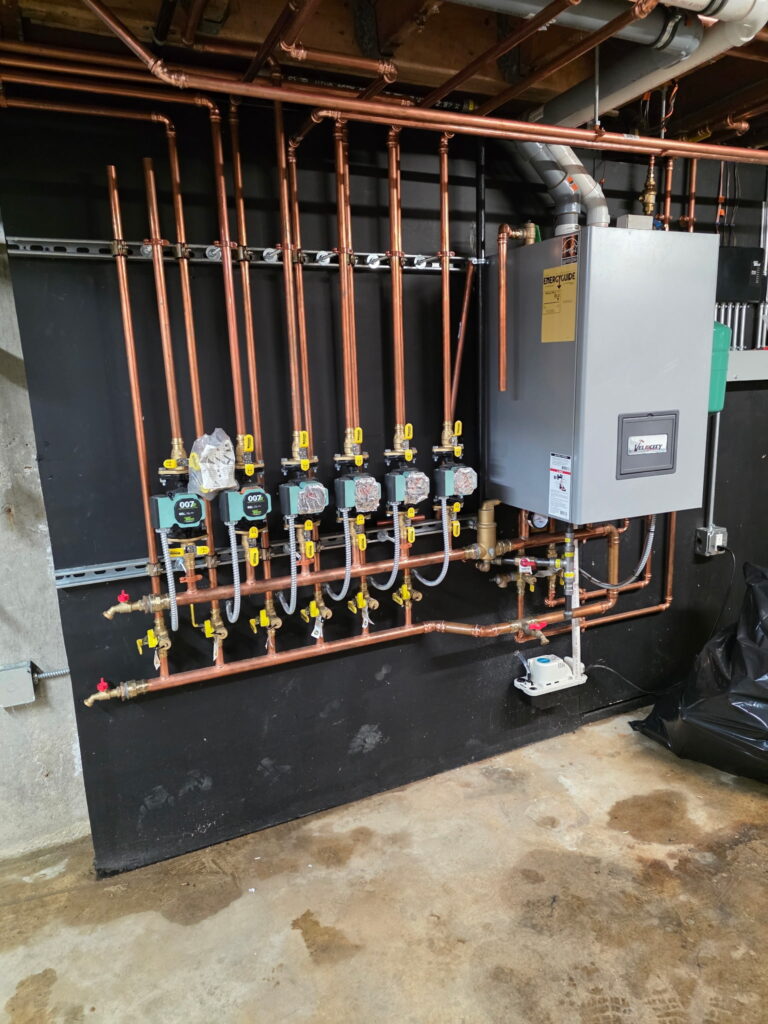
A good share of Swampscott’s housing dates from the early to mid 1900s, with pockets of older colonial-era homes closer to the water. Heating in these houses is a mix of steam boilers, older hot water baseboard systems, and a growing number of newer high-efficiency units where owners have already replaced the original equipment. Most of the town is on municipal water, so well-water filtration isn’t the driving need here the way it is further inland. What is common in Swampscott is hard water scale on fixtures, water heaters, and boiler heat exchangers, plus the corrosive effect of salt air on any exposed copper or galvanized piping near the coast. Gas service is available on most streets in town, which matters when you’re pairing a filtration system with a tankless water heater or a new boiler, since gas sizing affects both.
What the Work Involves
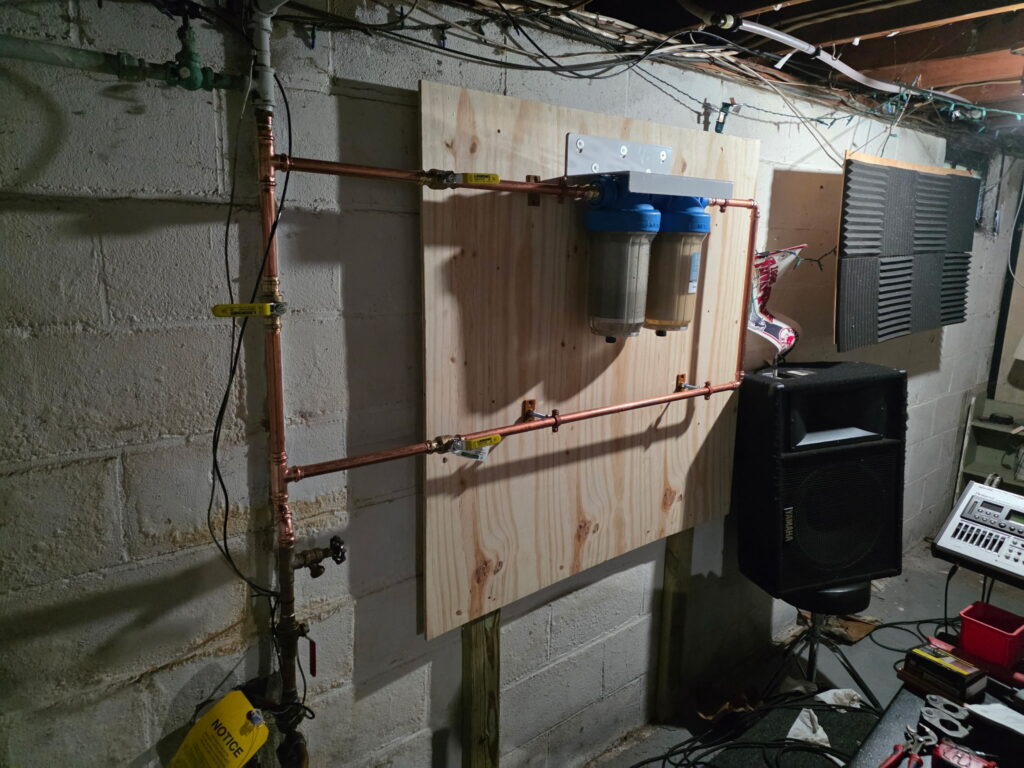
Installing a whole-house filter or softener means tying into the main line, usually right after the water meter and before it branches to the water heater and fixtures. For a softener, that includes running a drain line for the brine discharge, setting the bypass valve so you can service the unit without shutting off water to the whole house, and programming the control head to your actual water hardness and household size. If you’re on a well, we also test for iron and manganese before recommending a system, since those need a different media than a straight softener resin. Most installs take a few hours and the water is only off for a short window while we make the connection. No part of this job touches drains beyond the softener’s own discharge line.
Repair or replace
Not every softener or filter problem means a new system. If your unit is a few years old and it’s just not regenerating on schedule, that’s often a control head or a valve issue, not a reason to replace the whole thing. Salt bridging in the brine tank, a stuck injector, or a worn O-ring are common, cheap fixes. Where replacement makes sense is when the resin bed itself has fouled from iron, when the tank has cracked from age, or when a system was undersized for the house from day one and has been working overtime for years. Chris will tell you straight when a repair gets you another few good years out of the unit versus when you’re throwing money at something that’s done. That’s the call we’d make in our own house.
What it costs
Cost depends on whether you need a basic sediment or carbon filter, a full softener loop, or a combination system with iron removal. It also depends on access. Swampscott’s tight lots and older basements sometimes mean more labor just to get equipment into place and plumbed correctly. We’ll give you a firm number after seeing the install location and testing your water, not a phone-quote guess. Ask about {PRICE} when we’re on site so you know exactly what you’re paying for and why.
How long it takes
A straightforward whole-house filter install typically takes half a day. A full softener system with a new drain line and bypass setup runs closer to a full day, longer if we’re also correcting old piping to make the connection work cleanly. Well water systems with iron filtration media on top of softening take a bit more time to plumb and set up correctly. In every case, we walk you through the settings before we leave so you’re not guessing at salt levels or regeneration schedules on your own.
Common Questions
Is Swampscott's water hard enough to need a softener?
Most of the town runs on municipal water with noticeable hardness. It's not extreme, but scale buildup on fixtures, showerheads, and water heaters over a few years is common enough that a lot of homeowners decide it's worth addressing.
Will a softener hurt my boiler or water heater?
No, it helps. Softened water reduces scale buildup inside heat exchangers and tanks, which is one of the main things that shortens the life of both steam boilers and standard water heaters in this area.
Do I need a permit for a whole-house filtration system in Swampscott?
Plumbing work tying into your main supply line generally requires a permit and inspection. We handle that as part of the job so you're not left chasing paperwork after the fact.
Can you install a filter and softener together?
Yes, that's a common setup. The filter usually goes first to handle sediment or chlorine, followed by the softener to address hardness, so each component isn't doing the other's job.
What if I'm not sure whether I need filtration at all?
Reach Out for Water Filtration and Water Softener Installation
Belfiore is a Salem-based company working across Swampscott and the rest of the North Shore. Call {PHONE} to talk through your water, get a straight answer on filter versus softener, and get a firm quote for the work.
Contact information
Talk to Chris
Chris looks at the water itself before he recommends anything. Hardness, iron, chlorine, pH, whatever’s actually going on gets tested first. That’s the difference between a system that solves your actual problem and one that’s just expensive. If you’ve got scale building up on fixtures, a boiler that’s scaling faster than it should, or water that just doesn’t taste right, that’s worth a real conversation.