
Ceiling Fan and Light Fixture Installation in Middleton, MA
Most of Middleton was built out on larger lots with room to add on, and a lot of homeowners here have taken advantage of that over the years with finished basements, sunrooms, and additions that never existed when the house was wired. A ceiling fan swap sounds simple until you pull the old fixture down and find a box that was never rated to hold the weight, or a run of wire with no ground. That is the part of this job that actually matters.
Why Middleton Homes Need This
Middleton’s housing stock runs from older farmhouses and capes near the town center to the ranches and colonials built out through the postwar decades and the larger new-construction homes that have gone up on the town’s bigger parcels more recently. Each era brings a different problem when you want to hang a fan or add a fixture.
In the older homes, we still find cloth-insulated wiring, ungrounded two-wire circuits, and boxes that were only ever meant to hold a flush-mount light, not the ongoing weight and vibration of a fan. Some of these houses are still running on 60 or 100 amp services, which was plenty for a house with a furnace and a few lamps, but not for a home that has since added central air, a heat pump, or an EV charger in the garage. If your panel is a Federal Pacific Stab-Lok or an older Zinsco, that is worth a conversation on its own, separate from the fan.
In the newer construction around town, the wiring is usually fine, but builders often install the cheapest ceiling box on the market, rated for a light fixture only. Add a fan and you have created a hazard the original electrician never intended. Either way, the fix starts with what is already in the ceiling, not with the fan you picked out.
What the Work Involves
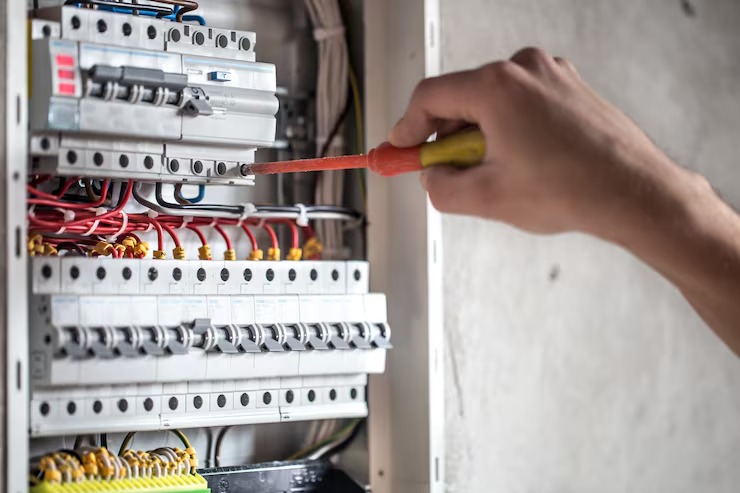
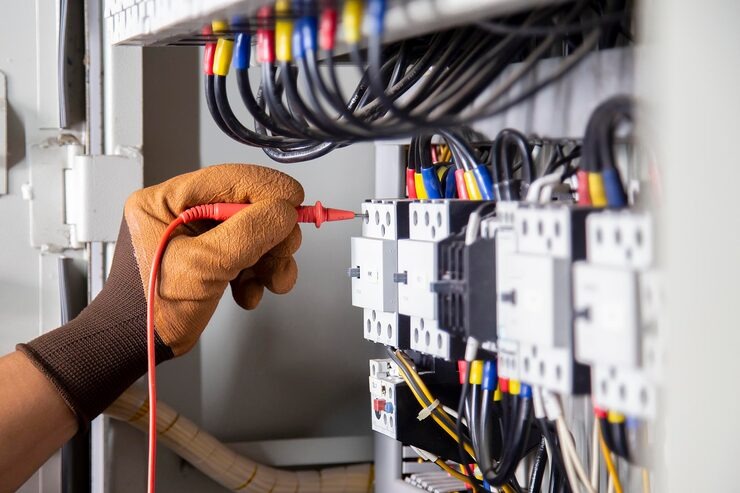
Brandon starts by killing power to the circuit at the panel, not just flipping the wall switch, and confirms it dead with a meter before anything gets touched. For a straightforward swap where the existing box is fan-rated and properly grounded, the fixture comes down, the new fan or light goes up, and the circuit is back on within an hour or two.
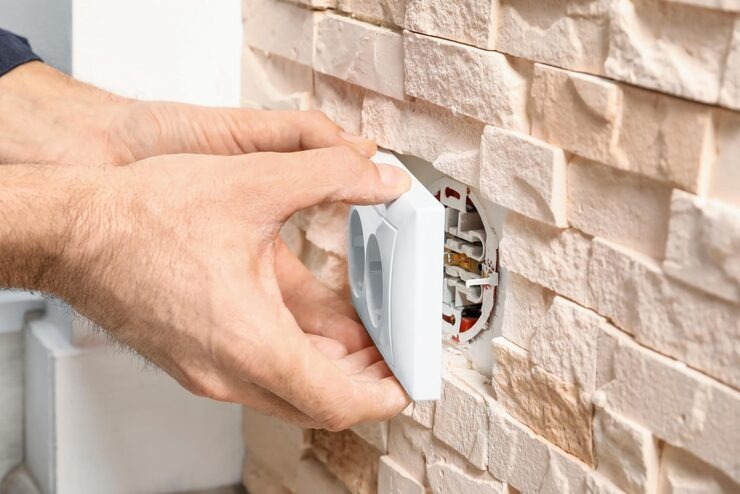
Where the existing box is not rated for a fan, we install a proper fan-rated electrical box, brace it to the framing above so it can carry the fan’s weight and movement, and confirm the circuit has a ground conductor before we connect anything. If the run turns out to be ungrounded knob and tube or cloth wire that has become brittle, that section gets replaced back to a sound splice point, not just wrapped and reused.
None of this involves the utility. National Grid only gets called in if the job requires a service change, which is rare for a fan or fixture job on its own. Everything from the breaker to the fixture is Brandon’s work, and everything on the pole and the meter stays the utility’s.
What It Costs
A standard fan or fixture swap on an existing, fan-rated box runs in the range of {PRICE_LOW} to {PRICE_HIGH}. What moves that number is whether we are installing a new fan-rated box and brace, whether the existing wiring needs to be replaced or grounded, ceiling height and access, and whether you are having multiple fixtures done in one visit, which brings the per-unit cost down. A remote or smart-control fan with a separate light kit takes a bit more wiring than a basic pull-chain model, and that gets factored in before we start, not after.
How Long It Takes
A single fan or fixture replacement on a sound, properly rated box typically takes one to two hours from power-down to power-back-on. If we are installing a new box, adding a brace, or replacing a section of old wiring, plan on closer to half a day. Multiple fixtures in one visit add time per unit but save you the cost of a separate service call for each one.
Permits and Inspection
Electrical work in Massachusetts requires a permit pulled by a licensed electrician, and ceiling fan or fixture work that involves new wiring, a new box, or grounding an ungrounded circuit falls under that requirement. Brandon pulls the permit, does the work to the Massachusetts Electrical Code, and the town’s electrical inspector signs off before the job is closed out. That inspection step is the difference between a licensed electrician’s work and a handyman’s, and it is the reason we do not skip it even on a job as small as a single fan.
Common Questions
Can any electrician install a ceiling fan, or does it need to be a specific type of box?
It needs a fan-rated electrical box, braced to the framing. A standard light fixture box is not built to handle the weight and vibration of a running fan, and using one is a common shortcut that shows up as a wobble or worse down the line.
My house still has the original wiring from the 1960s or earlier. Is that a problem for a fan install?
It can be. Cloth-insulated wiring and ungrounded circuits are common in Middleton's older homes, and a fan needs a solid ground. We check this before quoting so there are no surprises once the ceiling is open.
Do I need a permit just to swap a light fixture for a ceiling fan?
Yes, when the work involves new wiring, a new box, or grounding, which is most fan installs. Massachusetts requires a licensed electrician pull the permit and have the work inspected.
How long will my power be off during the install?
I'm also thinking about an EV charger or a finished basement. Should I mention that during a fan quote?
Reach Out for Ceiling Fan and Light Fixture Installation
Call {PHONE} to get a fan or fixture installed the right way, with the box, the wiring, and the ground checked before anything gets hung. We work across Middleton, and if a fan job uncovers something bigger in your panel or your wiring, we will tell you plainly what it is and what your options are, no pressure attached.
Contact information
Reach Out for Ceiling Fan and Light Fixture Installation
A ceiling fan is a small job, but it is also the first time a lot of homeowners let an electrician into their attic space or their panel. It is a fair way to find out what shape your house’s electrical system is actually in, well before you are standing in a driveway wondering if it can handle an EV charger too.
Talk to Brandon
Brandon is the electrician behind every job Belfiore does, and he is the one who will look at your box, your wiring, and your panel before quoting the work. If your house is in that older Middleton stock with knob and tube or a Federal Pacific panel, or if you are planning to add a fan while you are already thinking about an EV charger or a finished basement, it is worth mentioning that up front so he can look at the whole circuit, not just the fixture. [EXTERNAL LINK: Massachusetts electrical code reference, to show the standard the work is held to]