
Electrical Remodeling in Danvers, MA
A lot of Danvers housing went up between the 1900s and the 1950s, back when a house ran on a handful of lights and maybe a radio. That original wiring, and often the panel behind it, was never sized for a kitchen remodel with a microwave, a dishwasher, a disposal and an induction range all on at once. When you open up walls for a renovation, you find out fast what the house was actually built with.

Why Danvers Homes Need This
Danvers has a good mix of older single-families and converted two and three families, plus newer additions bolted onto much older cores. Inside the walls of the older section, it is common to find knob and tube wiring or early cloth-insulated cable, a 60 or 100 amp service that was adequate in 1955 and is not now, and in some cases an old Federal Pacific or Zinsco panel that trips inconsistently or does not trip when it should. None of that is unusual for this area. It just means a remodel is the right time to deal with it rather than build a new kitchen on top of it.
The other pattern we see in Danvers specifically is additions and finished basements added over the years without updating the main service. You end up with a house that has three or four sub-panels fed off a single 100 amp main, which was fine for the original load and is not fine once you add central air, an electric range and a home office.
What the Work Involves
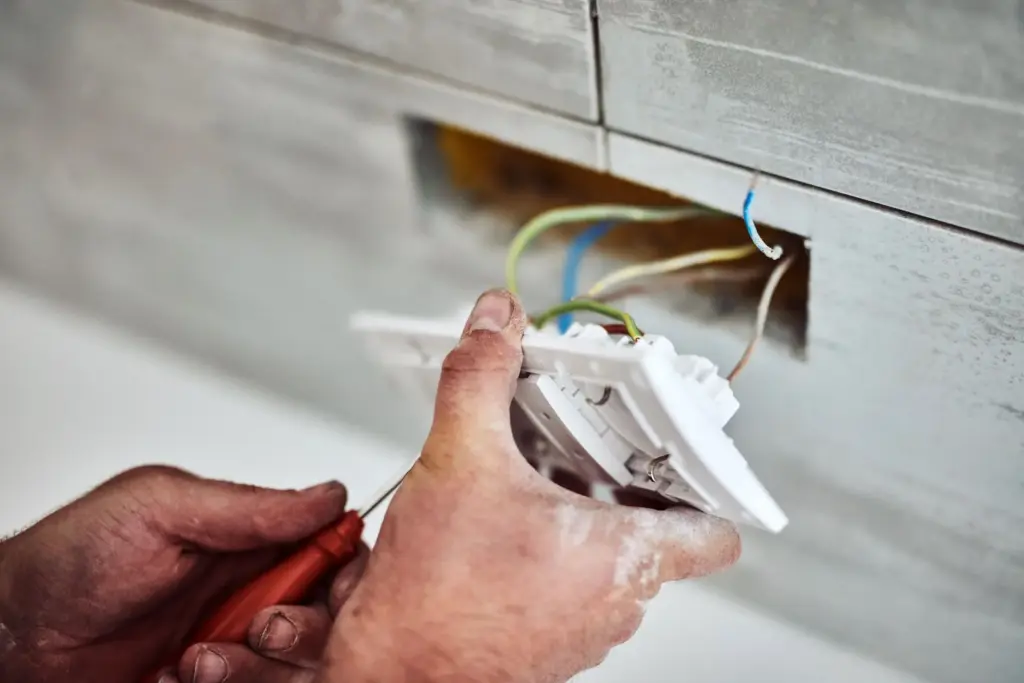
Remodel electrical work depends on what you are opening up, but the sequence is usually similar. Brandon walks the space with you and the contractor before demo, so wiring decisions get made before drywall goes back up, not after. Power to the work area gets shut off at the panel for the duration of rough-in, and depending on the scope that can be a few hours or most of a day. The rest of the house usually stays live unless the panel itself is being swapped.
From there it is new circuits run to code for the new layout: dedicated 20 amp circuits for kitchen counters, a dedicated circuit for the range or oven, GFCI and often AFCI protection where the code calls for it, and new boxes and switches set to match the finish plan. If the existing service can not carry the added load, that gets addressed as part of the job rather than left for later. Anything touching the utility’s meter or service drop involves a call to the utility, which handles the connection itself while we handle everything on the house side of the meter.
Rough-in gets inspected before walls close up. That is not optional and it is not a formality. It is the point where a licensed inspector confirms the wire gauge, box fill, grounding and circuit protection are correct before they get covered by drywall.
What It Costs
A single-room update, like rewiring a bathroom during a renovation, tends to run toward the lower end, roughly {PRICE_LOW}. A full kitchen remodel with new dedicated circuits, updated lighting and possibly a panel change moves toward {PRICE_HIGH} or beyond. What moves the number: how much of the house is old wiring versus already up to code, whether the panel needs to be replaced or just supplemented, how many new circuits the kitchen or bath plan calls for, and whether walls are already open or need to be opened for access. Brandon gives you a number after he has actually looked at the panel and the space, not off a phone call.
How Long It Takes
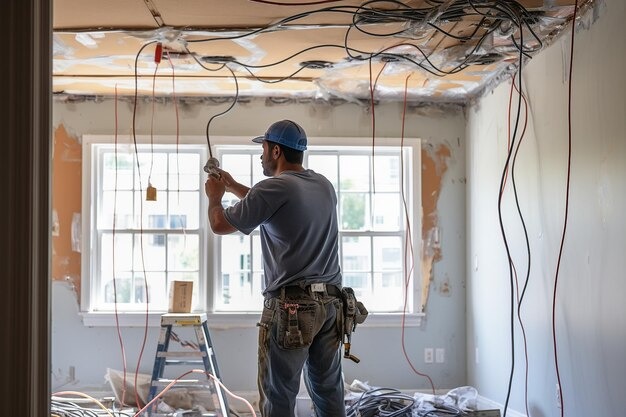
A bathroom rewire during a gut renovation is usually a one to two day job for the electrical portion. A full kitchen remodel, especially one that includes a panel upgrade, typically runs three to five days of electrical work spread across the rough-in and finish stages of the overall project. Add a day or two if the inspection needs to be scheduled and passed before the next trade can move in, since most towns will not let drywall close over uninspected wiring.
Permits and Inspection
Electrical work in Massachusetts requires a permit pulled by a licensed electrician, and it gets inspected by the town before it is closed up. That applies to remodel work the same as new construction. It is a real check, not paperwork for its own sake, and it is the difference between hiring a licensed electrician and hiring someone off a classifieds ad who is not pulling permits at all. Brandon pulls the permit and schedules the inspection as part of the job, so you are not left tracking that down yourself mid-project.
For the specifics of what the Massachusetts code requires on circuit spacing, GFCI and AFCI protection, the Massachusetts electrical code page lays out the current amendments to the National Electrical Code the state has adopted. [EXTERNAL LINK: Mass.gov electrical code reference, useful for homeowners who want to see the actual requirement rather than take our word for it]
Common Questions
Do I need an electrician for a small remodel, like a single bathroom?
If you are adding or moving circuits, outlets, or GFCI protection, yes, that is licensed electrical work and it gets permitted and inspected regardless of the size of the room.
Will my power be off during the whole remodel?
No. We shut off power to the specific work area during rough-in. The rest of the house usually stays live, unless the main panel itself is being replaced.
What if the remodel uncovers knob and tube wiring?
It is common in Danvers' older housing stock. We assess how much of the house is affected and give you options for replacing it in the areas being opened up, versus a fuller rewire if the panel and service need to come up anyway.
Can my existing panel handle a new kitchen?
Depends on the panel size and what else is on it. A 60 or 100 amp panel already feeding several sub-panels often can not take a new range circuit and central air without an upgrade. Brandon checks this on the walkthrough.
Who handles the permit?
We do. As the licensed electrician on the job, Brandon pulls the permit and schedules the town inspection as part of the work, not as a separate step you have to manage.
Reach Out for Electrical Remodeling
If you are planning a kitchen, bath or addition in Danvers, get the electrical piece looked at before demo starts, not after. Call {PHONE} to set up a walkthrough. We will tell you what the current wiring and panel can support and what it will take to bring it up to the new plan.
Contact information
Talk to Brandon
Brandon is the electrician half of Belfiore. He is the one who walks the space with you before demo, tells you honestly whether the existing panel and service can carry the new plan or need to come up, and pulls the permit for the job. If you are mid-renovation and just found knob and tube behind a wall you did not expect, that is a normal call to get, not an unusual one for this part of Danvers.