Electrical Service Upgrades in North Reading, MA
A lot of North Reading was built or expanded during the ranch and colonial boom of the 1950s through 1970s, on lots big enough that additions and garages got tacked on for decades after. Those houses came standard with 60 or 100 amp electrical service, and nobody wiring a 1965 ranch was thinking about an EV charger in the driveway or a heat pump condenser out back.
Now those are exactly the things homeowners here are trying to add, and the original panel and service drop were never sized for it.
Why North Reading Homes Need This
The lot sizes in North Reading are part of what makes this town a strong candidate for service upgrades. Bigger lots mean garages, sheds, pole barns, and detached workshops that all want their own circuits. Bigger lots also mean driveways long enough that homeowners are installing Level 2 EV chargers, which alone can call for a dedicated 40 or 50 amp circuit that a 100 amp panel has no room for once you add central air, an electric range, and a finished basement.
We still find 60 amp fused services on some of the older streets in town, sometimes paired with cloth-insulated wiring or knob and tube in sections that were never touched during a remodel. We also run into Federal Pacific Stab-Lok and Zinsco panels here, both of which have documented breaker failure issues and are worth replacing on their own merits, separate from any capacity question. If your panel is a Federal Pacific or Zinsco, that’s a condition issue and it’s its own conversation – a service upgrade addresses amperage, not a failing panel, though the two jobs often happen together.
Add a heat pump for supplemental heating or cooling, an EV charger, or a finished basement with its own subpanel, and a 100 amp service starts feeling thin fast. Most of what we’re asked to look at in North Reading is a jump from 100 to 200 amps, sometimes from an original 60 amp service that’s decades overdue.
What the Work Involves
A service upgrade touches two things: the utility’s side and the electrician’s side, and it’s worth knowing where one stops and the other starts.
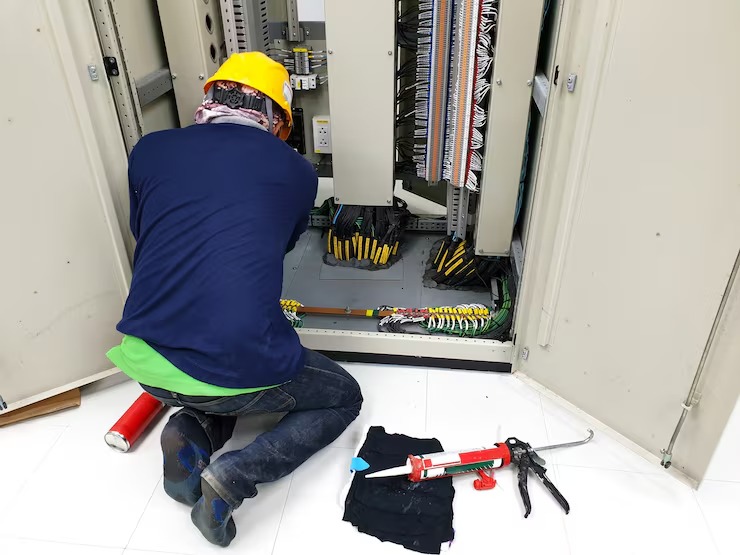
The utility owns the drop – the wire running from the pole or transformer to your house – and the meter itself. Brandon coordinates with the utility to schedule the disconnect and reconnect, since only the utility can pull the meter and re-energize the new service. On our side, we install the new meter base if it needs replacing, run new service entrance conductors sized for 100, 150, or 200 amps, mount the mast if the point of attachment needs to move or get taller, and set the new panel with breakers sized to your actual loads.
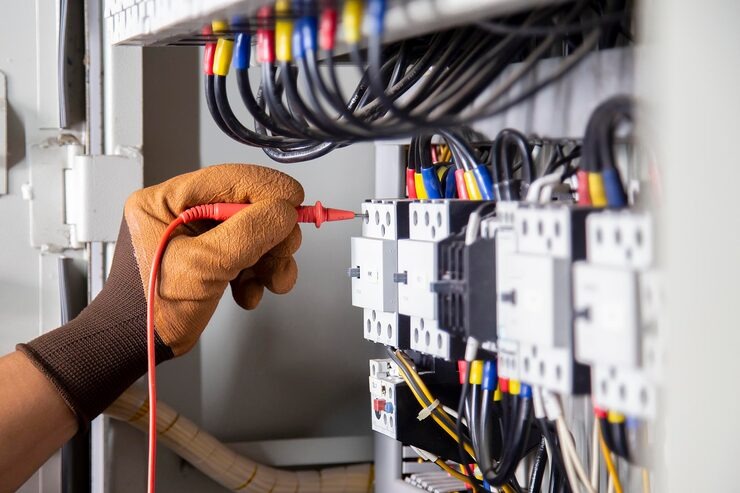
Power is out for the house during the swap, typically for most of a working day once the utility disconnect is scheduled, though the utility’s own timeline for scheduling that disconnect is usually the longer wait, not the physical work itself. We size the new panel around what you actually run – a 200 amp panel with a 50 amp EV charger circuit, a 30 or 40 amp circuit for a heat pump condenser, and dedicated 20 amp circuits for kitchen and laundry loads, following the ampacity and wire gauge tables in the National Electrical Code rather than guessing.
Everything gets inspected before the utility gives final approval to re-energize, which is your assurance that the work meets code, not just that it looks finished.
What It Costs
A straightforward 100 to 200 amp upgrade in North Reading runs {PRICE_LOW} to {PRICE_HIGH}, and a few things move that number. Whether the mast and weatherhead need to be relocated or raised, how far the meter base is from the new panel location, whether the house has old cloth wiring or knob and tube that complicates the connection, and whether the utility requires trenching for an underground service instead of overhead all affect the final price. A Federal Pacific or Zinsco panel swap done at the same time as the service upgrade adds to the job but often saves a second mobilization later.
We give you a firm number after Brandon looks at your panel, your meter location, and what you’re trying to power, not a phone estimate.
How Long It Takes
The physical upgrade – new service entrance conductors, meter base, panel, and breakers – typically takes one day once the utility disconnect is scheduled. The longer variable in North Reading is usually the utility’s own queue for scheduling that disconnect and reconnect, which can run anywhere from a few days to a couple of weeks depending on the season. We build the permit and inspection into that same timeline so nothing sits waiting once the electrical work is done.
Permits and Inspection
Electrical service upgrades require a permit in Massachusetts, and North Reading’s inspection has to sign off before the utility will energize the new service. This isn’t optional paperwork – it’s the state’s way of confirming that the conductors, grounding, and panel meet the requirements in the Massachusetts Electrical Code, which is based on the National Electrical Code with state amendments [EXTERNAL LINK: Massachusetts Board of State Examiners of Electricians, electrical code and licensing information]. Brandon pulls the permit, schedules the inspection, and handles the utility coordination as part of the job. If someone offers to do a service upgrade in North Reading without pulling a permit, that’s a sign to walk away, because an unpermitted service change can hold up a home sale and won’t be covered if something goes wrong.
Common Questions
How do I know if my house needs a service upgrade instead of just a panel upgrade?
If your panel itself is in good condition but you're out of amperage for what you want to add – an EV charger, a heat pump, a subpanel for a finished basement – that's a service upgrade question. If the panel is a Federal Pacific Stab-Lok or Zinsco, or breakers are tripping or failing regardless of load, that's a condition problem and it's a separate conversation about panel replacement.
Will I lose power during the upgrade?
Yes, for most of a working day once the utility has scheduled the disconnect and reconnect. The utility's scheduling window is often the longer wait, not the actual work.
Do I need a permit for a service upgrade in North Reading?
Yes. Massachusetts requires a permit and inspection for any service upgrade, and the utility will not energize the new service until it passes inspection.
Can I go straight to 200 amps even if I only need 150 now?
Often yes, and it's worth discussing. If you're adding an EV charger and a heat pump over the next few years, sizing for 200 amps now can save you from doing this twice.
What's the difference between a service upgrade and a panel upgrade?
A service upgrade covers the utility side – the drop, meter, and mast – and typically involves moving to a larger overall service like 200 amps. A panel upgrade is about the breaker box itself having enough capacity and slots for your circuits. They often happen together but they're not the same job.
Reach Out for Electrical Service Upgrades
If you’re planning an EV charger, a heat pump, or a finished basement in North Reading and you’re not sure your panel can handle it, call Belfiore at {PHONE}. Brandon can look at your existing service, tell you whether 100 to 200 amps is the right move, and walk you through what the utility coordination looks like for your street.
Contact information
Talk to Brandon
Brandon left union electrical work to run the electrical side of Belfiore, and service upgrades are some of the most straightforward jobs he does precisely because the diagnosis is usually obvious – either your panel doesn’t have the amperage for what you’re adding, or it’s a Federal Pacific or Zinsco panel that needs to go regardless. He’ll tell you plainly which one applies to your house, and if it’s neither, he’ll say so.