
Dedicated Circuit Installation in Ipswich, MA
A lot of Ipswich houses were built long before anyone plugged in a range hood, a tankless water heater, or a car. Some go back to the First Period, plenty more are old colonials with a 60 or 100 amp service added decades after the fact, and none of that original wiring was sized for what a modern kitchen or garage actually draws. When you add a hot tub, a shop full of tools, or a heat pump, you’re not just plugging into what’s there. You’re asking a circuit that was never meant to carry that load to do a job it can’t safely do.
Why Ipswich Homes Need This
The North Shore has an unusually old housing stock, and Ipswich sits at the older end of that range. We still find knob and tube wiring behind plaster walls, cloth-insulated conductors from mid-century rewires, and panels that were state of the art in 1975 and are now a liability. Federal Pacific Stab-Lok panels and Zinsco panels both show up on service calls here, and both have documented breaker failures that keep them from tripping when they should. A 60 amp service was normal for a house with an oil burner and a couple of lamps. It is not enough once you add central air, an EV charger, and a well pump.
Because so much of Ipswich is on well and septic, homes here often already run more electrical equipment than a comparable house on town water and sewer. A well pump pulls a dedicated 240 volt circuit of its own, and if that circuit is sharing a breaker or aging wire with anything else, you’ll see nuisance trips right when you need water most. Add the same long-outage risk the rest of the estate towns deal with – trees down, lines out for days – and a generator transfer switch on its own dedicated circuit stops being a luxury and starts being basic planning.
What the Work Involves
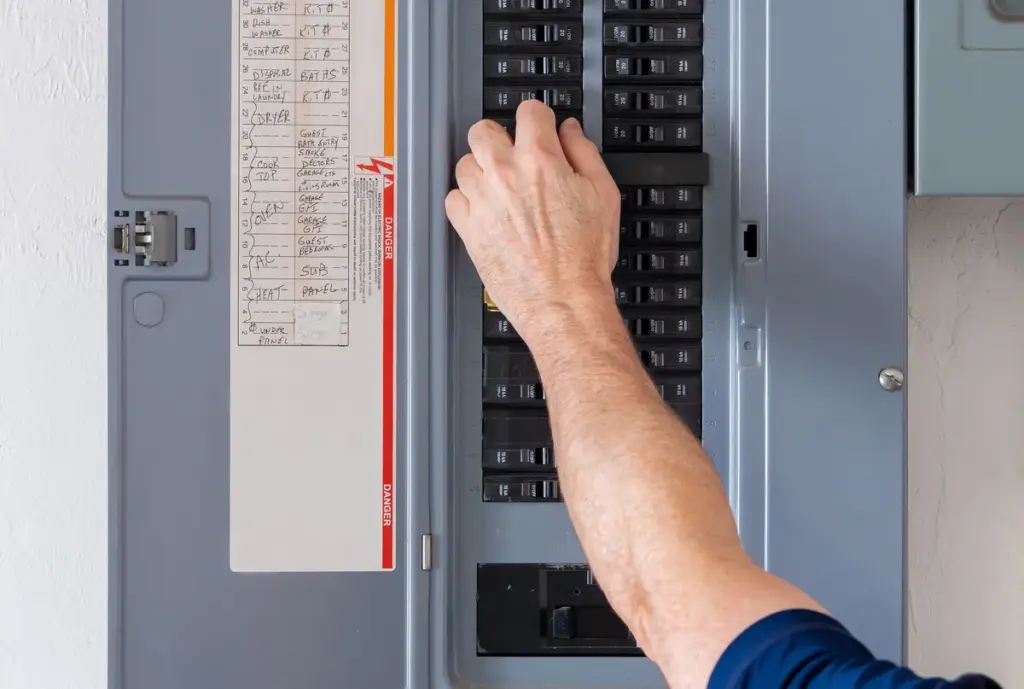
A dedicated circuit means one breaker, one wire run, and one outlet or hookup feeding exactly one appliance or piece of equipment. No sharing, no downstream outlets, nothing else on that line. Brandon starts by checking what’s actually available at your panel. If there’s open capacity, he runs new wire sized to the load – 12 gauge for a standard 20 amp circuit, 10 gauge or heavier for a 30 amp range or dryer circuit, and larger still for an EV charger or a well pump, matched to the correct breaker type.
Power to the panel gets shut off while the new breaker and wiring are connected, which usually means an outage of an hour or two for the whole house, not longer. If the panel itself is out of room or out of amperage – which is common in a house still running on a 60 or 100 amp service – that’s a separate conversation about a panel upgrade before we can add anything new. The utility only gets involved if the service size itself needs to change; a standard dedicated circuit added to an existing panel with room to spare doesn’t require National Grid to do anything at your meter.
What It Costs
A single dedicated circuit for something straightforward, like a microwave, a garbage disposal, or a window AC, typically runs {PRICE_LOW} to {PRICE_HIGH}. What moves that number is wire run length, whether Brandon is fishing wire through finished plaster walls versus an open basement joist bay, the amperage and breaker type required, and whether the panel has room or needs work first. A well pump circuit, a hot tub, or an EV charger sits toward the higher end because of the wire gauge and breaker size involved. We’ll give you a firm number after Brandon sees the panel and the run, not a phone estimate.
How Long It Takes
Most single dedicated circuits are a same-day job, typically two to four hours depending on how far the wire has to travel and whether it’s an open basement run or a finished wall that needs patching. Older Ipswich houses with plaster and lath sometimes take longer simply because fishing wire through original wall cavities is a slower, more careful process than snapping a line through modern drywall. If the job also requires a panel upgrade, that adds its own separate time and, in most cases, its own scheduled outage with the utility.
Permits and Inspection
Dedicated circuit work is permitted and inspected in Massachusetts, full stop. Brandon pulls the electrical permit with the Town of Ipswich before work starts, and the finished circuit gets signed off by a local inspector once it’s done. This isn’t paperwork for its own sake. It’s the difference between work a licensed electrician stands behind and work an unlicensed handyman hopes nobody checks. If you’re ever selling the house, an unpermitted circuit is exactly the kind of thing a home inspector flags and a buyer’s attorney asks about.
Common Questions
Can my existing panel handle a new dedicated circuit?
It depends on available breaker slots and total amperage. Many Ipswich homes are still on 60 or 100 amp services, which often have little to no room left once central air, a well pump, and normal household load are accounted for. Brandon checks the panel's actual capacity before promising anything.
Do I need a dedicated circuit for an EV charger?
Yes. Level 2 EV chargers need their own 240 volt circuit sized to the charger's amperage draw, separate from every other circuit in the house. This is one of the most common reasons Ipswich homeowners call us.
Is a permit really required for one new circuit?
Yes. Massachusetts requires a permit and inspection for electrical circuit work regardless of how small the job looks. Brandon handles the permit filing with the Town of Ipswich as part of the job.
What's the difference between a dedicated circuit and a regular outlet?
My house still has knob and tube wiring. Can you add a circuit off it?
Reach Out for Dedicated Circuit Installation
If you’re adding a range, a heat pump, an EV charger, a hot tub, or a generator transfer switch anywhere in Ipswich, call {PHONE} and describe what you’re installing. Brandon will tell you what the panel can support and what the permit and inspection process looks like before he ever picks up a tool.
Contact information
Talk to Brandon
Brandon is the electrician half of Belfiore. He left union work to run the electrical side of the family business, and he’s the one who’ll walk your panel, tell you honestly whether it has room for what you’re adding, and explain what a 60 amp service actually limits you to versus what a 100 or 200 amp upgrade opens up. No sales pitch, just what your house needs and why.