
Boiler Repair in Andover, MA
Andover has a lot of older steam and hot water boilers still doing honest work in basements built decades before anyone thought about combi units. When one of those systems goes cold, or starts short-cycling, or leaks from a fitting that’s been dripping quietly for months, you need someone who can tell you what’s actually wrong before quoting you a new system. That’s the job.
Boiler Repair in Andover
We work across Andover on both steam and hot water boilers, gas and oil-fired. Chris runs the plumbing and heating side of Belfiore, and he’s the one who’ll walk your basement, look at the boiler, and tell you plainly whether it needs a part or a replacement. Andover sits at the western edge of the territory we cover out of Salem, so we’re upfront about scheduling. We’re not a five-minute-away outfit for this town, but we do run service here regularly and we plan the day so we’re not rushing a diagnosis just to get to the next job.
What Andover homes typically have
Andover’s housing stock is a mix. The historic center and older neighborhoods near downtown have a fair number of homes with original or early-replacement steam boilers, cast iron radiators, and piping that was never designed around today’s insulation standards. Out toward the newer subdivisions and the post-war and modern construction that makes up a lot of the town, you’ll see hot water boilers feeding baseboard or radiant zones, often installed or upgraded during a remodel.
Gas availability varies street to street here more than people expect. Much of Andover is on natural gas, but there are pockets, especially on the outskirts, still running on oil or propane. Town water covers most of the town, though some outlying properties are on private wells, which matters for the water heater and any boiler with an indirect tank tied into it. If you’re on a well, mineral content and sediment are real considerations for how long a boiler’s heat exchanger or aquastat lasts, not an add-on sale.
What the work involves
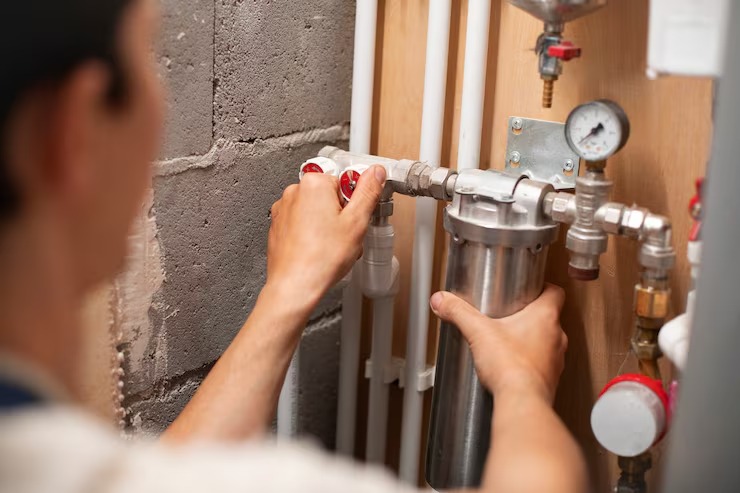
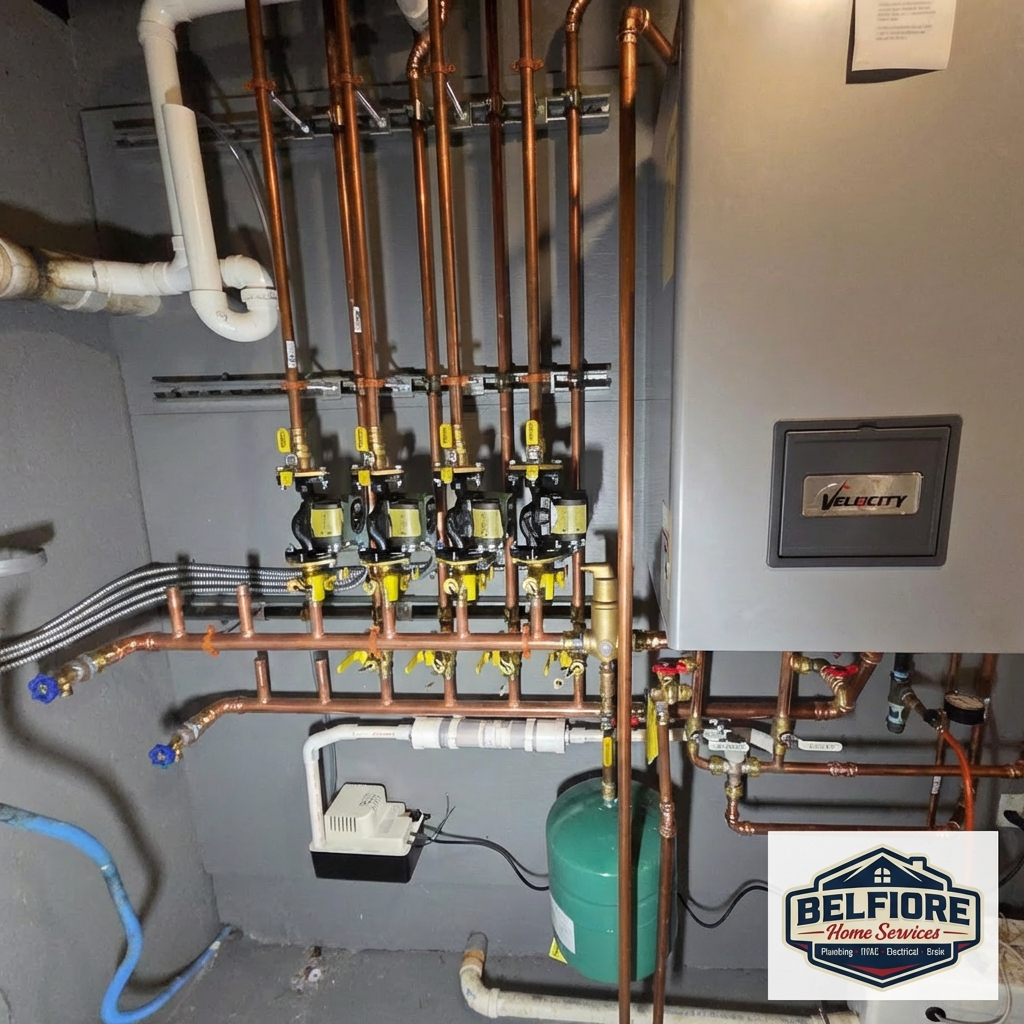
A boiler repair call starts with isolating the problem, not swapping parts and hoping. We check the aquastat or boiler control, the circulator pump, the zone valves, the pressure relief valve, and the expansion tank. On steam systems we’re looking at the low water cutoff, the pigtail, and whether the boiler is short-cycling because of a bad probe or float. On gas units we check the gas valve, the igniter or pilot assembly, and confirm the gas line is sized correctly for the BTU input, especially on older systems where a boiler swap happened without anyone rechecking the line.
If the boiler needs to be drained to replace a component like a circulator or a zone valve, most of Andover’s homes are back on heat within the same visit. Full repairs rarely take the house down for more than a few hours. If a part has to be ordered, we’ll tell you that up front, and we’ll talk about temporary options if it’s cold out and the wait is more than a day or two.
Repair or replace
This is the part most companies skip past on their way to a sales pitch, and it’s the part we won’t skip. If your boiler is ten or fifteen years old, the heat exchanger is sound, and the problem is a failed circulator, a bad zone valve, or a control board issue, that’s a repair. Full stop. We’ll fix it and tell you what to keep an eye on going forward.
Replacement gets talked about honestly when the boiler is leaking from the block itself, when the heat exchanger is cracked, when you’re on your third or fourth service call in two winters for unrelated failures, or when the unit is old enough that parts are getting hard to source. Age alone isn’t the deciding factor. A well-maintained boiler from the 1990s can still be a smart repair. A newer unit with a cracked exchanger usually isn’t. We’ll walk you through both sides and let you make the call, not the other way around.
What it costs
Boiler repair costs depend on what’s actually failed, so we’re not going to throw a number at you before we’ve seen the unit. A circulator pump replacement is a different job than a zone valve, and both are different from diagnosing an intermittent ignition fault. What we will tell you is that the diagnosis comes with a clear explanation of what’s wrong and what the repair involves before any work starts, so you’re not signing off on a guess. Chris quotes the job after he’s seen it, not off a phone description.
How long it takes
Most straightforward repairs, a bad circulator, a failed zone valve, a control board swap, are done in a single visit, usually a couple of hours once the part is on hand. Steam system issues involving the low water cutoff or pigtail can sometimes be quicker. If a part isn’t something we carry on the truck, and that happens more with older or less common boiler models, we’ll give you a realistic timeline rather than a guess, and we’ll talk through keeping the house warm in the meantime.
Common Questions
Is it worth repairing an old boiler in Andover?
Often, yes. Age isn't the deciding factor. If the heat exchanger is sound and the failure is a part like a circulator or zone valve, a repair makes sense even on an older unit. We'll tell you plainly if we think replacement is the smarter move instead.
Do you work on both steam and hot water boilers?
Yes. Andover has a good mix of both, especially older steam systems in the historic center and hot water systems in newer construction. Chris diagnoses and repairs both types.
My boiler is oil-fired. Can you still service it?
Yes. Some parts of Andover, particularly outlying areas, are still on oil rather than natural gas. We service oil-fired boilers alongside gas units.
How fast can you get to Andover for a no-heat call?
Andover is on the western edge of the area we cover out of Salem, so we schedule realistically rather than promising an impossible response window. Call and we'll give you a straight answer on timing.
Does a well versus town water connection affect my boiler?
Reach Out for Boiler Repair
No heat is not something to sit on through an Andover winter. Call Belfiore at {PHONE} and tell us what the boiler is doing, or isn’t doing. We’ll get you scheduled and give you an honest read on repair versus replacement once we’re on site.
Contact information
Talk to Chris
Chris has been in enough Andover basements to know the difference between a boiler that needs a $200 part and one that needs to be retired. If your heat is out or acting up, call and describe what’s happening. He’ll tell you what he thinks it is before anyone shows up, and he’ll give you a straight answer once he’s seen it in person.