
Water Filtration and Water Softener Installation in Peabody, MA
A lot of Peabody’s housing predates 1940, and the plumbing behind the walls usually shows it. Old galvanized supply lines corrode from the inside and dump rust and sediment into your water. Homes on the edges of town, especially near West Peabody and out toward Lynnfield, are more likely to be on private wells, where iron, manganese, and hardness minerals are a daily problem instead of an occasional annoyance.
Water Filtration and Water Softener Installation in Peabody
Chris handles filtration and softener installs the same way he handles any plumbing job: figure out what’s actually in the water before recommending equipment. A whole-house sediment filter solves a different problem than a water softener, and a softener solves a different problem than a carbon or iron filtration system. Selling someone a softener when their real issue is sediment from old galvanized pipe doesn’t fix anything, it just adds a tank in the basement.
Most of the calls we get in Peabody fall into two camps: town water customers dealing with hardness and chlorine taste, and well water customers dealing with iron staining, sulfur smell, or sediment. Both are fixable, but the equipment and the install are different, and it’s worth getting a straight answer before you spend money.
What Peabody Homes Typically Have
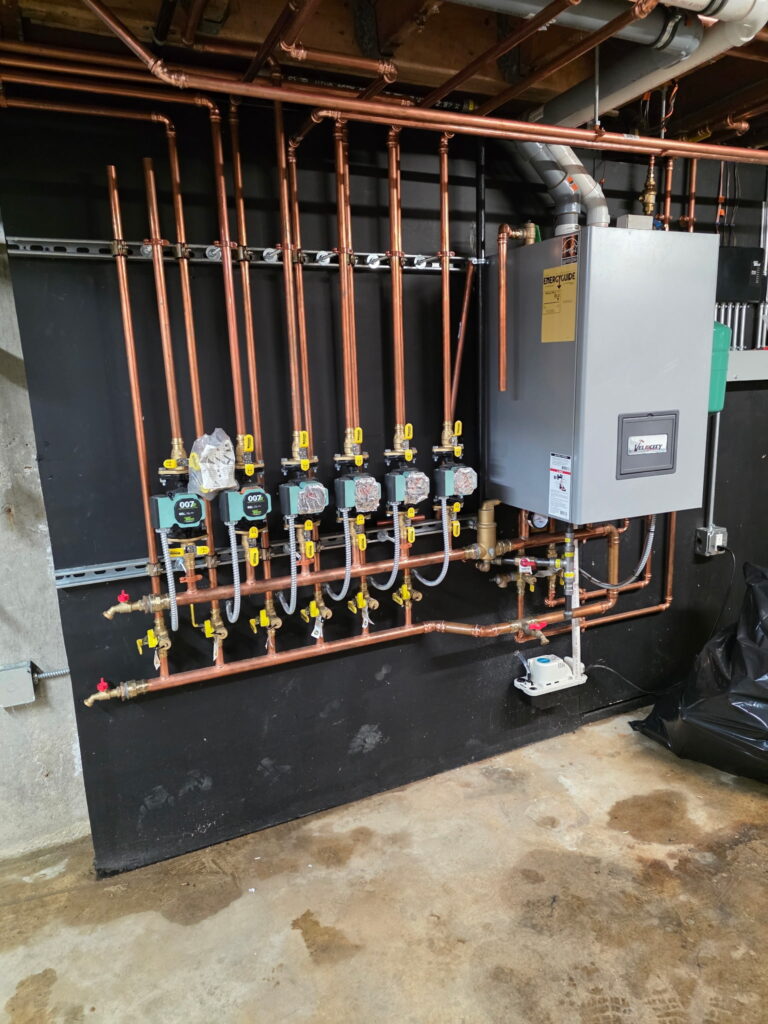
Peabody’s building stock runs older, a mix of single families from the early 1900s through the postwar boom, plus a fair number of two and three family conversions near downtown and along Lowell Street. Heating is a split between older steam boilers in the oldest housing and hot water boilers in homes built or updated from the 1950s on. Gas service is available on most streets in the denser parts of town, but some outlying sections still run on oil, which matters when we’re talking about equipment that ties into a boiler’s domestic hot water setup.
Water source is the bigger variable for this page. Most of Peabody is on municipal water, which means hardness and chlorine taste are the main complaints, not contamination. But there are pockets, particularly toward the Middleton and Lynnfield lines, where private wells are still common. Well water here often runs high in iron and manganese, which shows up as orange staining in tubs and toilets and a metallic taste. That’s a filtration problem, not a softening problem, and the two get confused a lot.
What the Work Involves
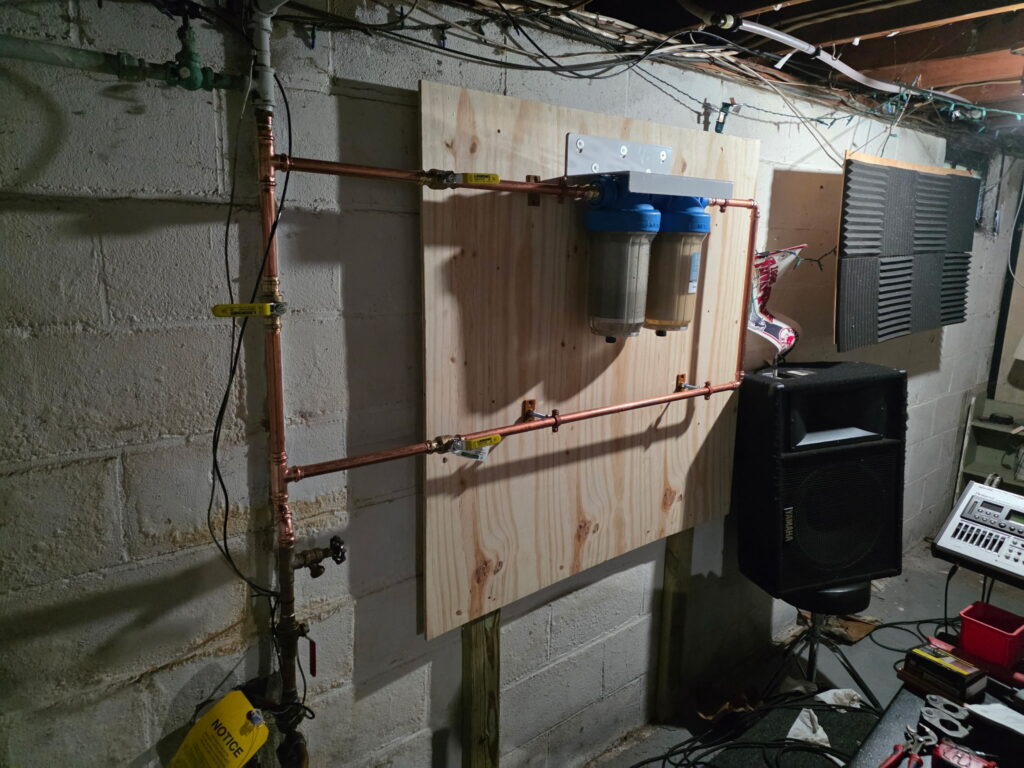
A whole-house filtration or softener install starts at the main water line, usually right where it enters the basement, before it splits off to the water heater and the rest of the house. We shut the water down, cut into the main, and plumb in the equipment with isolation valves and a bypass so the system can be serviced or bypassed later without draining the whole house.
For a softener, that means a brine tank and a resin tank, plus a drain line run to a floor drain or standpipe for the backwash cycle. For iron or sediment filtration on well water, we’re often looking at a pre-filter stage ahead of the softener, sometimes with an air injection or oxidizing system if iron levels are high enough that a standard filter can’t keep up. If there’s a whole-house carbon filter going in for chlorine or taste issues on town water, that’s a simpler single-tank setup.
Most installs also need a dedicated electrical outlet nearby for the control head, which is a quick add if the panel has room. Water is off for a few hours during the cutover, not the whole day.
Repair or Replace
Not every hard water complaint means new equipment. If you already have a softener and it’s not regenerating properly, half the time it’s a bad control valve, a clogged injector, or a resin bed that needs cleaning, not a system that needs replacing. Chris will tell you straight when a repair gets you another several years out of a unit that’s otherwise sound.
Where replacement makes sense: the resin tank has failed and is leaking, the unit is old enough that parts are no longer available, or the system was undersized for the house from day one and has never actually kept up with demand. If you’re on well water and dealing with iron for the first time, that’s usually a new install, not a repair, since older Peabody homes on wells frequently never had filtration in the first place.
What It Costs
Cost depends on what you’re actually installing. A basic water softener for a town water home with average hardness is the simplest job. Add iron filtration, a carbon stage, or a UV system for well water, and the price goes up because you’re plumbing in more equipment and more valves. Chris will look at a water test, walk you through what’s actually needed, and give you a number for {PRICE} before any work starts, not after.
How Long It Takes
A straightforward single-tank softener or filter install usually runs a few hours from shutoff to water back on. Multi-stage setups for well water with iron and sediment issues take longer, usually most of a day, since there’s more plumbing and more testing involved to make sure each stage is working before we close things up. Either way, you’re not without water overnight.
Common Questions
Is my water filtration issue from the town supply or my own pipes?
If you're on Peabody's municipal water, hardness and chlorine taste are usually supply-side and affect the whole street. Staining or metallic taste that only your house has often points to old galvanized pipe corroding internally, which a filter alone won't fully fix.
Do I need a water test before installing a softener?
Yes. Hardness level and whether there's iron, manganese, or sediment in the water changes what equipment actually solves the problem. A test takes the guesswork out and keeps you from buying more system than you need.
Will a water softener fix orange staining from well water?
Usually not on its own. Orange staining is typically iron, which needs a filtration stage, sometimes with an oxidizer, ahead of or instead of a standard softener.
Can a softener be installed without a floor drain nearby?
It needs somewhere for the backwash water to go, either a floor drain, a standpipe, or in some cases a sump pump setup. Chris will check what's available in your basement before recommending a system.
How often does a water softener need salt?
Reach Out for Water Filtration and Water Softener Installation
Belfiore is a Salem-based company working across Peabody and the rest of the North Shore. Call {PHONE} to talk through what your water is doing and what it’ll take to fix it. No pressure to buy more equipment than the problem calls for.
Contact information
Talk to Chris
Chris runs the plumbing side of Belfiore and looks at water quality issues across Peabody regularly, from downtown two-families on town water to well houses out past Lowell Street. If you’ve got staining, scale buildup on fixtures, or water that just tastes off, call and describe what you’re seeing. He can usually tell you over the phone whether you’re looking at a filter, a softener, or both, and what a fair path forward looks like.