Generator Installation and Connection in Danvers, MA
Generator Installation and Connection in Danvers
Danvers loses power the way most of the North Shore does: a nor’easter comes off the water, a tree comes down on a line somewhere between Route 128 and the harbor, and a whole neighborhood is dark for a day or two while the utility works through its list. If your house is on well water, has an oil or gas boiler that needs an electric igniter and circulator pump, or you’re just tired of losing the contents of the fridge every winter, a properly connected generator solves that. This page covers what that job actually looks like in Danvers, what it costs, and what gets inspected.
Why Danvers Homes Need This
A lot of Danvers housing stock goes back to the early and mid-1900s, with plenty of two and three family conversions mixed in among the older single families. Homes from that era were built with electrical services sized for a much smaller load than what’s running through them now – 60 amp and 100 amp services were normal then, and some of them are still in the walls. Add central air, an electric range, a heat pump, and a couple of computers running all day, and that panel is already working hard before a generator ever enters the picture.
That matters for this job specifically. A generator, whether it’s a portable you connect through an inlet or a permanent standby unit, needs to tie into a panel that can actually support a transfer switch and the loads you want to keep alive during an outage. On an older 60 amp service, that conversation often starts with the panel itself, not the generator. Storm frequency along the coast is the demand driver here, but the age of the electrical system underneath is what decides how straightforward the installation is.
What the Work Involves
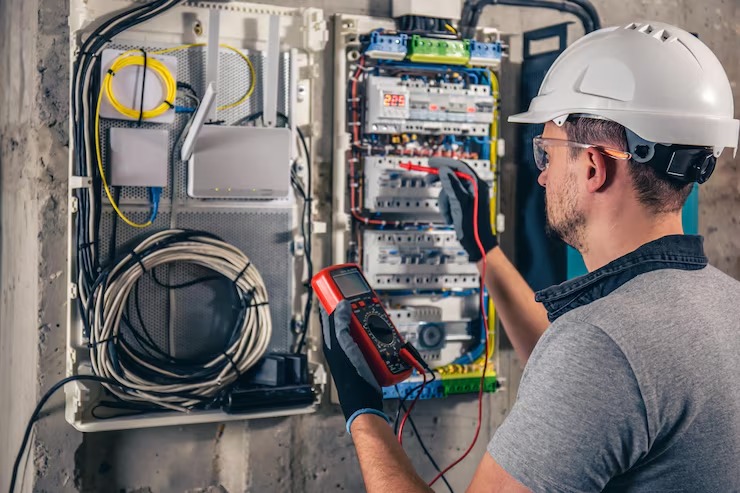
For a portable generator, the job is a manual transfer switch: a small subpanel next to your main panel with breakers for the circuits you want to run – furnace, sump pump, fridge, a few lights and outlets. You plug the generator in outside through a locking inlet, flip the transfer switch, and those circuits run off the generator instead of the grid. No permanent generator sits outside.
For a standby generator, the scope is bigger. Brandon runs a dedicated circuit and wiring from the generator’s pad location to an automatic transfer switch installed next to your main panel. That transfer switch senses a utility outage, signals the generator to start, and switches your house load over automatically, usually within seconds. The generator itself needs a gas line sized correctly if it’s running on natural gas or propane, which is coordination with a plumber – Chris handles that piece when it’s part of the same job.
Either way, your power gets shut off briefly while the transfer switch ties into the main panel – typically under an hour, and it’s scheduled, not a surprise. The utility owns the meter and the service drop; Brandon’s work starts at the meter and covers everything from there, including the transfer switch, wiring, and generator connection.
What It Costs
A manual transfer switch setup with a locking inlet, sized for a handful of circuits, generally runs {PRICE_LOW} to {PRICE_HIGH} installed. A full automatic standby system costs more, and where it lands in that range depends on the size of the generator, the distance between the pad location and your panel, whether your existing panel needs upgrading first, and whether a new gas line or larger meter is part of the scope. An older 100 amp panel that needs to go to 200 amp before it can carry a transfer switch adds a real cost, and it’s better to know that before the generator shows up than after.
How Long It Takes
A manual transfer switch install is usually a single day. A standby generator installation, including the pad, the transfer switch, wiring, and any gas work, typically takes one to two days of on-site labor. That doesn’t include the town permit and inspection timeline, which adds days to weeks depending on scheduling – plan ahead of storm season rather than during it, because that’s when every electrician on the North Shore gets the same call at once.
Permits and Inspection
Generator installations are permitted work in Massachusetts, full stop. Brandon pulls the electrical permit for the transfer switch and wiring, the Town of Danvers inspects it, and if there’s gas involved, that piece gets its own permit and inspection too. This is exactly the kind of job where skipping the permit is a bad idea – an uninspected transfer switch that backfeeds into the grid incorrectly is a genuine hazard to utility workers, and it’s also the first thing an insurance adjuster asks about if there’s ever a fire claim involving the panel. [EXTERNAL LINK: Massachusetts Board of State Examiners of Electricians licensing and permit requirements, to show homeowners this is licensed, inspected work]
Common Questions
Can I install a generator without upgrading my panel?
Sometimes. If your panel is a modern 200 amp service with room for a transfer switch, no upgrade is needed. If you're on an older 60 or 100 amp service, or the panel is already full, an upgrade usually has to happen first or at the same time.
Do I need a permit for a portable generator's transfer switch?
Yes. Any transfer switch, manual or automatic, is electrical work that requires a permit and inspection in Massachusetts, the same as a standby system.
How big a generator do I actually need?
It depends on what you want running during an outage. A furnace, sump pump, fridge, and some lights is a smaller unit than a house trying to keep central air and an electric range going too. Brandon can size it based on a load calculation of your actual circuits.
Can a generator run on the same gas line as my boiler?
Sometimes, if the line is sized for the combined load. Often it needs its own line or the existing line needs upsizing. That's a plumbing question Chris handles as part of the same job when gas is involved.
Reach Out for Generator Installation
If you’re weighing a generator before next winter’s storms, call Belfiore at {PHONE}. We work across Danvers and the rest of the North Shore, and we’ll tell you plainly what your panel needs before we tell you what generator to buy.
Contact information
Talk to Brandon
Brandon is the licensed electrician on the team. He’ll look at your existing panel, walk the property for a generator location that makes sense for noise, clearance, and gas or electrical routing, and give you a straight answer on whether a manual switch covers what you need or whether a standby system is worth the jump. If Chris needs to be involved for a gas line, that’s one phone call, not two separate companies trying to coordinate a schedule.