
Electrical Service Upgrades in Topsfield, MA
A lot of Topsfield homes were built when a 60 amp fuse box was plenty, back before anyone had a heat pump, a well pump, a hot tub, and a generator all pulling from the same panel. Now the house has all four, plus an EV in the driveway, and the original service into the house was never sized for any of it.
Why Topsfield Homes Need This
Topsfield is low density with big lots, long driveways, and a lot of well and septic systems instead of town water and sewer. That matters for electrical load in a way it doesn’t in a denser town. A well pump alone can add a real draw, and when the power goes out at the end of a rural line, it tends to stay out longer than it would closer to a substation. That’s the biggest reason Topsfield has the highest generator demand of any town we work in – when the lines come down, you’re waiting.
The housing stock backs this up. Older farmhouses and estate-style properties around town still carry knob and tube wiring in sections that were never fully updated, cloth-insulated conductors from a mid-century renovation, and original 60 amp fuse panels that were adequate in 1965 and are not adequate now. Some houses have Federal Pacific Stab-Lok or Zinsco panels installed decades ago – both are known for breakers that don’t trip reliably under fault conditions, and both come up often enough in this town that insurance companies ask about them by name. When a house like that adds central air, a heat pump, or a generator transfer switch, the service almost always needs to come up before the new load can go on safely.
What the Work Involves
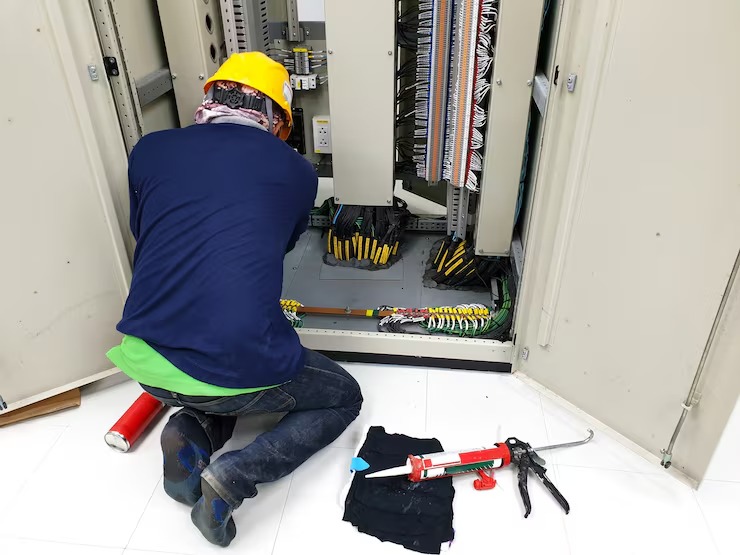
A service upgrade touches everything between the utility pole and your breaker panel. Brandon starts with a load calculation – adding up what the house actually runs, including anything you’re planning to add, like an EV charger or a generator interlock – to size the new service correctly, usually to 100 or 200 amps.
The utility owns the drop and the meter itself, so they schedule the disconnect and the eventual reconnect. Brandon’s crew handles everything in between: pulling the old meter socket and mast if it’s undersized or corroded, running new service entrance cable, setting a new panel rated for the calculated load, and landing every circuit correctly with breakers sized to the wire gauge feeding them – 15 amp on 14 gauge, 20 amp on 12 gauge, and so on up through any larger circuits for a range, dryer, or well pump. Power is out for the whole property while this happens, since the main disconnect is what’s being replaced.
What It Costs
A straightforward 100 to 200 amp service upgrade on a house with reasonable access typically runs {PRICE_LOW} to {PRICE_HIGH}. What moves that number: whether the mast and drop need full replacement or just the panel and meter socket, how far the run is from the utility connection to where the new panel lives, whether there’s knob and tube or aluminum branch wiring that needs addressing at the same time, and whether you’re adding a generator interlock, EV circuit, or subpanel while the walls are already open. Brandon gives you the number after he’s actually looked at the panel and the drop, not before.
How Long It Takes
The physical swap – old panel and meter out, new equipment in, everything landed and tested – usually takes a full working day. Power is off from disconnect to reconnect, so plan for the house to be without electricity from morning into the afternoon. The bigger variable is scheduling: the utility has to disconnect and reconnect on their own timeline, and the town inspection has to happen in between, so the full process from the day you call to the day it’s live can run one to three weeks depending on utility and inspector availability.
Permits and Inspection
This work is permitted and inspected under the Massachusetts Electrical Code, no exceptions. Brandon pulls the permit before the job starts, the town’s electrical inspector reviews the finished work, and the utility won’t reconnect service until that inspection is signed off. That sequence exists for a reason – it’s the difference between a licensed electrician doing the job and someone doing it off the books, and it’s the paperwork you’ll want on hand if you ever sell the house or file an insurance claim.
Common Questions
Do I need a permit for a service upgrade in Topsfield?
Yes. A service upgrade changes the utility connection, the meter, and the main panel, and every part of that is permitted work in Massachusetts. Brandon pulls the permit, the town inspector signs off, and you get a paper trail that matters when you sell the house.
How do I know if my house needs 100 amp or 200 amp service?
It depends on what you're running. A house with electric heat, a heat pump, a generator, an EV charger, or a well pump on top of normal loads usually needs 200 amp. A smaller home with gas heat and no big additions planned can sometimes stay at 100 amp, but most Topsfield upgrades land on 200 amp because the properties and the load lists are bigger.
Will I lose power during the upgrade?
Yes, for part of the day. The utility has to disconnect service at the drop before Brandon can pull the old panel and meter socket, and it doesn't come back on until the new equipment passes inspection and the utility reconnects. Plan for the power to be out from morning into the afternoon.
What's the difference between a service upgrade and a panel upgrade?
A panel upgrade swaps the breaker box for one with more capacity but the utility drop, meter, and mast usually stay as-is if they can handle the new size. A service upgrade goes further and replaces the drop, meter socket, and often the mast too, because the whole feed into the house is undersized, not just the panel.
Can I keep my generator hookup during and after the upgrade?
Brandon can wire the new panel with a generator interlock or transfer switch as part of the job, or add one later. Given how many Topsfield homes already run a generator, it's worth deciding before the panel goes in rather than opening the wall again in a year.
Reach Out for Electrical Service Upgrades
Call {PHONE} to get Brandon out to look at your panel and your drop. He’ll walk the property, check what the utility connection can actually support, and give you a straight answer on whether you need 100 amp, 200 amp, or something in between – and what it’ll take to get there.
Contact information
Talk to Brandon
Brandon left union electrical work to run the electrical side of his family’s plumbing and electrical company, and service upgrades are some of the most technical work he does – reading an old panel correctly, sizing a new service to what a house actually needs, and doing it in a way that passes inspection the first time. If you’ve got a Federal Pacific panel, a 60 amp fuse box, or you’re just tired of the lights dimming every time the well pump kicks on, that’s a conversation worth having before you add anything else to the circuit.