
Electrical Service Upgrades in Amesbury, MA
A good number of houses in Amesbury are still running on the 60 or 100 amp service they were built with or last upgraded to decades ago, whether that’s a home near Salisbury Point that’s had three or four owners since, or a ranch put up after the mill years wound down. That was enough for the appliances of the time. It isn’t enough once a heat pump, an EV charger, an electric range, and everything else a household runs today gets added on top of it.
Belfiore Home Services handles service upgrades here, the part of the job that happens at the meter and the mast rather than behind a wall. National Grid delivers power to town, but everything from the meter inward, including the upgrade itself, is Brandon’s work, coordinated with National Grid’s side of the process rather than left for the homeowner to figure out.
Why Amesbury Homes Need This
Service size is different from panel condition, and it’s worth being clear on which problem a house actually has. A panel can be brand new and still be fed by an old 100 amp service that caps what the whole house can draw at once. That’s common in homes updated at some point in the last few decades without anyone touching the actual service size, since replacing a panel doesn’t automatically mean the wire feeding it got bigger too.
What pushes a 100 amp service past its limit now is rarely one big appliance. It’s the accumulation: central air added one summer, a heat pump swapped in for an aging oil burner, an EV charger installed in the garage, an induction range, a hot tub, maybe a home office with its own equipment. Any one of those might fit. All of them together usually don’t, and the house ends up tripping the main breaker or running everything under more strain than it should.
A service upgrade is not the same job as a panel upgrade or a panel replacement. Those deal with what’s inside the box on the wall. This deals with how much power reaches that box in the first place, from the drop or underground line down through the meter and into the house.
What the Work Involves
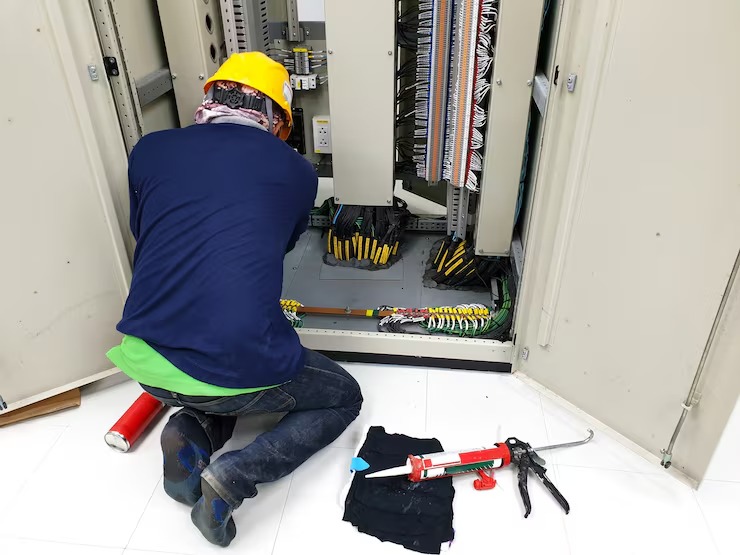
The scope centers on three points: the service entrance conductors, the meter socket, and the mast or weatherhead where the utility’s line connects to the house. Brandon sizes the new service for the load the house actually needs, usually stepping a 60 or 100 amp service up to 200 amps, sometimes higher for a larger home or one with significant electric heat and vehicle charging combined.
National Grid owns the drop and the meter itself, so their crew has to disconnect power before the old equipment comes out and reconnect once the new service passes inspection. Brandon schedules that appointment as part of the job rather than leaving it for the homeowner to arrange separately. On the house side, that means a new meter socket, new service entrance cable sized for the higher amperage, and in some cases a new mast if the existing one isn’t tall enough or isn’t rated for the upgrade.
If the home is switching from an overhead service to underground, or the mast needs to move because of a remodel or an addition, that adds trenching or mounting work on top of the swap itself.
What It Costs
An electrical service upgrade in Amesbury can vary in cost depending on the amount of additional capacity the home requires and the condition of the existing service equipment. Factors that can affect the overall cost include the size of the new electrical service, whether the existing mast, weatherhead, or meter equipment needs to be replaced, the distance between the service entrance and electrical panel, and whether the service connection is overhead or underground. Additional electrical work required to bring the system up to current requirements can also affect the total project cost.
Belfiore Home Services can evaluate the existing electrical service and the home’s electrical needs to determine the appropriate upgrade and provide a project-specific estimate based on the work required.
How Long It Takes
Permits and Inspection
A service upgrade is permitted and inspected in Massachusetts like any other electrical work, and National Grid won’t reconnect power until the inspection is signed off. Brandon pulls the permit, has the rough work inspected, and coordinates the reconnection once it passes. That sequence exists for a reason: it’s the check that keeps a bigger service from going live on wiring or equipment that isn’t actually rated to carry it.
Common Questions
Is a service upgrade the same as a panel upgrade?
How do I know if I need 100 or 200 amps?
Will the power be out all day?
Does National Grid charge separately?
Do I need this for an EV charger?
Sometimes. A single Level 2 charger can often fit on an existing 200 amp service. An older 100 amp service, especially with electric heat already on it, is a different question.
Talk to Brandon
If the panel keeps tripping under normal use, or a heat pump or EV charger is on the list and the house is still running an old 60 or 100 amp service, that’s a service upgrade conversation, not a panel conversation. Brandon can look at what’s there now and what the house needs to carry, then lay out what the upgrade actually involves. Call Belfiore Home Services at 978-637-5418 to get him out to the house.
Contact information
Reach Out for Electrical Service Upgrades
Call us at 978-637-5418 or contact us for your free quote.