
Electrical Panel Upgrades in Amesbury, MA
A panel with every slot filled can’t take a new circuit no matter how good a condition it’s in. That’s the situation a lot of Amesbury homeowners run into when they add a hot tub, finish a basement, or add an EV charger — not a broken panel, just one that’s out of room or out of headroom for what’s being asked of it now.
A panel upgrade solves that by increasing what the panel can actually handle, not by replacing something that’s failing.
Why Amesbury Homes Need This
Amesbury homes built with smaller panels — 8, 12, or 16 circuit boxes were common in earlier decades — filled those slots over the years with additions that weren’t part of the original plan: a finished basement, a garage workshop, central air, a second refrigerator. Eventually there’s nowhere left to add a breaker, even if the service itself has some capacity left.
Separately, homes on a 100-amp service can hit a ceiling on total load even with open slots, once enough is added at once — a hot tub, an EV charger, and a kitchen renovation with new appliances can push a 100-amp service close to its limit even though no single addition looks large on its own. That’s a capacity question the panel itself has to answer, and it’s the reason a panel upgrade sometimes comes up during a renovation even when nothing about the existing panel is malfunctioning.
What the Work Involves
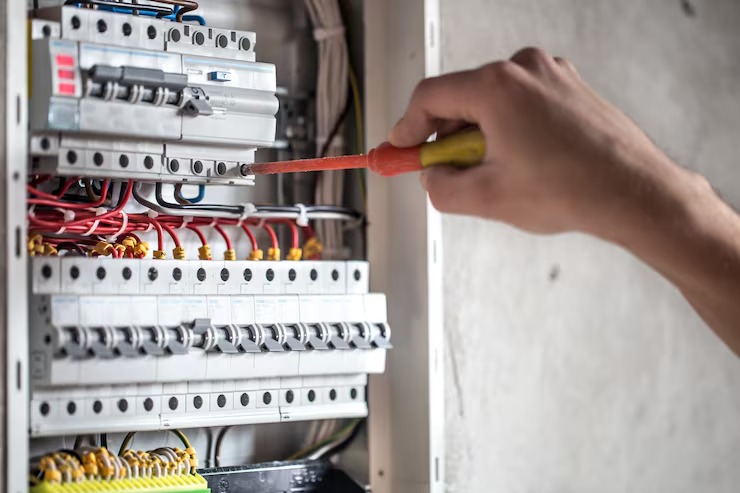
The starting point is a load calculation — what the house is currently drawing, what’s being added, and whether the panel has room for both the physical breakers and the total amperage involved. That determines whether this is a matter of adding a subpanel to create more slots, or upgrading the main panel itself to a larger box with more capacity.
The utility disconnects power at the meter for the portion of the work that touches the main panel, and everything is confirmed de-energized before work begins. If a subpanel is the right fix, it gets installed and fed from the main panel with its own dedicated feeder, creating a fresh set of breaker slots without touching the main panel’s core wiring. If the main panel itself needs to be upgraded for capacity, that follows the same process as a full replacement — existing circuits transferred over, grounding and bonding verified against current code — but the emphasis is on increasing available capacity and slots, not correcting a failing component.
Power is restored once the utility reconnects and the new capacity is tested under load.
What It Costs
Electrical panel upgrades in Amesbury can vary in cost depending on the type of upgrade required, the number of circuits involved, and the capacity of the existing electrical system. A subpanel addition may be a more straightforward option when additional circuit space is needed, while a full main panel upgrade may require more extensive electrical work to increase the system’s overall capacity. Projects that also involve additional electrical installations or other system updates may require more labor and materials, which can increase the overall cost.
How Long It Takes
A subpanel addition is usually a half-day to full-day job. A full panel upgrade takes roughly a day, similar to a panel replacement, since it involves the same utility coordination and circuit transfer work.
Permits and Inspection
Panel upgrade work — whether a subpanel or a full panel increase — is permitted and inspected under Massachusetts electrical code, and requires utility coordination that has to go through a licensed electrician. Massachusetts Board of State Examiners of Electricians — licensing and permit requirements for panel work. A permit means an inspector confirms the added capacity is sized correctly for the load it’s meant to carry, which is exactly the kind of thing that goes wrong when panel work is done informally.
Common Questions
How do I know if I need a subpanel or a full panel upgrade?
Can I add an EV charger and a hot tub without upgrading my panel?
Is a panel upgrade the same as a panel replacement?
Talk to Brandon
If you’re planning an addition, a renovation, or a few new appliances and aren’t sure your panel can take it, Brandon can run the numbers and tell you plainly whether it’s a subpanel, a full upgrade, or nothing at all. Call 978-637-5418 to get on the schedule.
Contact information
Reach Out for Electrical Panel Upgrades
Call us at 978-637-5418 or contact us for your free quote.