
Water Filtration and Water Softener Installation in Wenham, MA
Wenham has more homes on private wells than almost anywhere else on the North Shore, and that changes the whole conversation around water quality. Add in older farmhouses running original galvanized supply lines and hot water heaters that were sized for a family half the size of the one living there now, and filtration stops being a nice-to-have. For a lot of these properties it is the difference between water you can actually trust and water you just tolerate.
Water Filtration and Water Softener Installation in Wenham
Chris handles filtration and softener work as part of the regular plumbing rotation in Wenham, not as an add-on sale. That means whole-house sediment filters, carbon filtration for taste and odor, iron and manganese removal for well water with staining problems, and salt-based or salt-free softeners sized to your actual fixture count and water hardness. On a long private driveway with a well at the end of it, the system at the point of entry is doing more work than city-water homes ever ask of theirs, and it needs to be sized and installed like it matters.
What Wenham Homes Typically Have
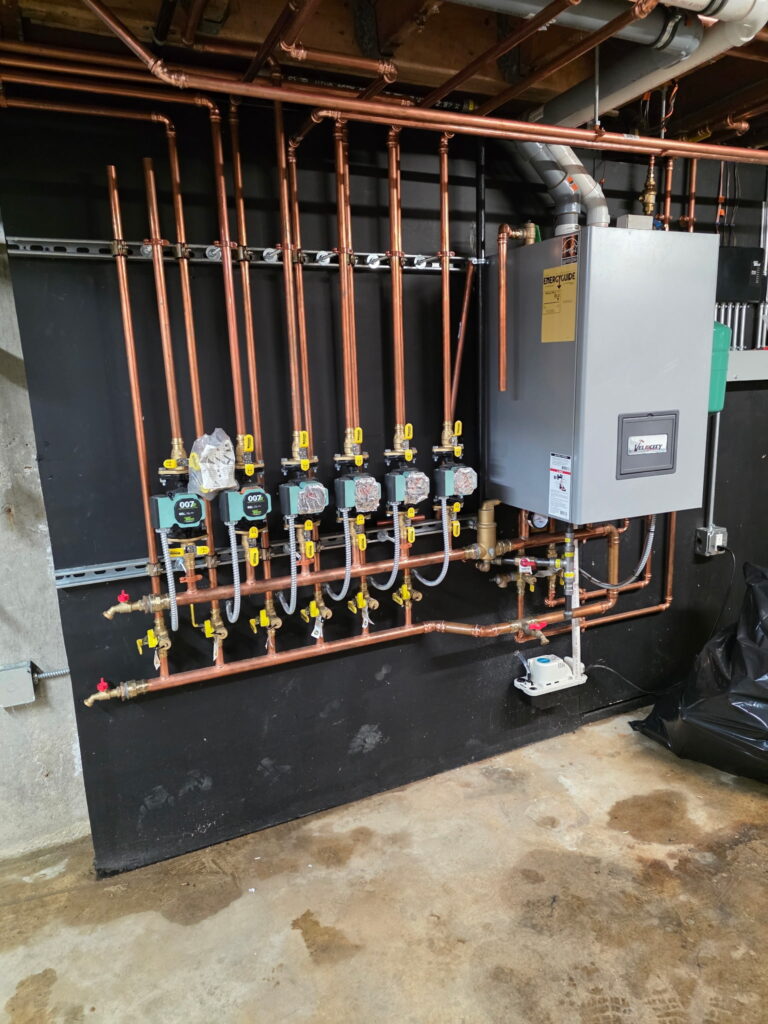
A lot of the housing stock here dates back to the 1700s and 1800s in the center of town, with larger-lot construction from the 1960s through the 1990s further out toward the Hamilton and Beverly lines. Heating splits between older oil-fired steam and hot water boilers in the historic homes and newer hot water systems in the more recently built properties. Natural gas is not available on every street in Wenham the way it is in denser North Shore towns, so oil remains common, and that affects what kind of water heater and boiler upgrades make sense on a given property.
Well water is the other defining fact here. A meaningful share of Wenham properties are on private wells with septic systems rather than town water and sewer. Well water in this part of Essex County commonly runs hard, and iron staining on fixtures and laundry is a frequent complaint. If you are on town water instead, chlorine taste and general hardness are still worth addressing, just with a lighter system.
Repair or Replace
Not every filtration or softener call ends with a new system, and Chris will say so up front. A softener that is regenerating on the wrong cycle, a clogged sediment pre-filter, or a failed bypass valve can often be repaired for a fraction of what replacement costs. If your system is under ten years old and the resin bed and control valve are in good shape, repair is usually the right call.
Replacement makes sense when the resin bed is exhausted and won’t hold a charge, when a whole-house iron filter can no longer keep up with well output, or when the softener was undersized from day one and has been running your fixtures and water heater hard for years. On a well-water property, an undersized system shortens the life of everything downstream, from the water heater to the washing machine, so getting the size right the first time matters more than it does on town water.
What the Work Involves
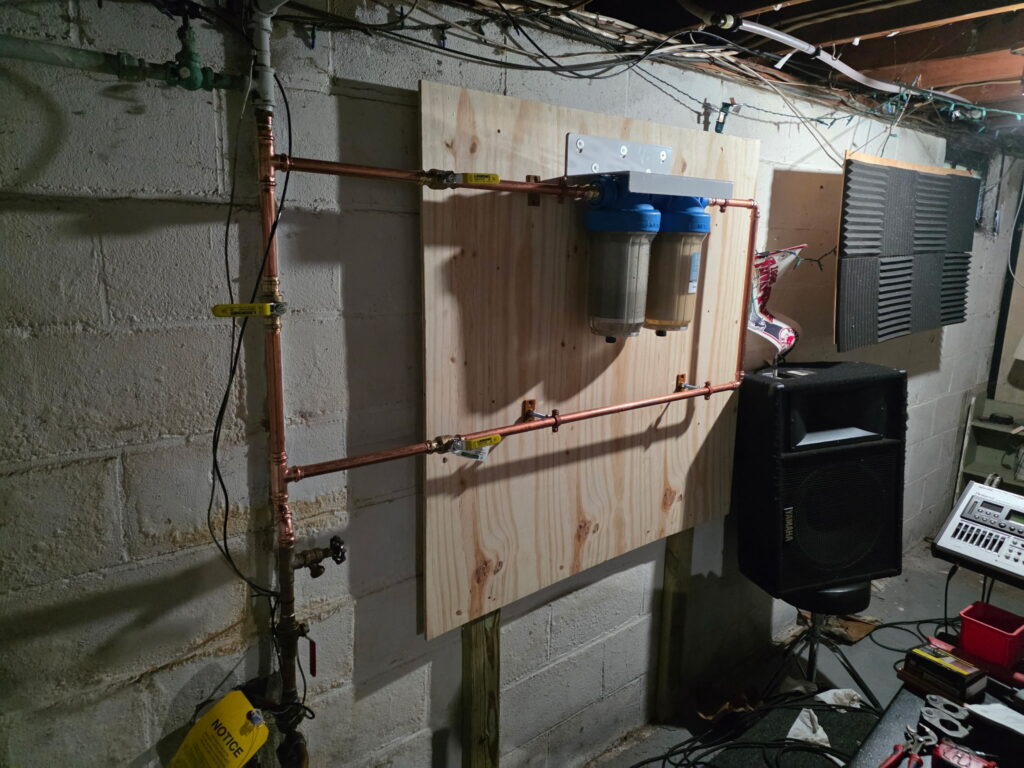
A whole-house filtration or softener installation starts with shutting down the main supply and draining the line at the point of entry. For well systems, that often means coordinating with the pressure tank and well pump wiring rather than just the plumbing. Chris tests hardness and iron content on site rather than guessing, because that number drives sizing decisions on the resin tank and the brine tank.
Installation includes setting the bypass valve, plumbing in the mineral tank and brine tank, and running a drain line for backwash and regeneration cycles, usually to a nearby floor drain or standpipe. If the system pairs with iron filtration, that’s a separate tank staged ahead of the softener. Most homes are without full water pressure for a few hours during the swap, and Chris walks you through the regeneration settings before he leaves so the system is actually calibrated to your household, not left on a factory default that wastes salt and water.
What It Costs
Cost depends on whether you’re installing a standard softener, adding iron filtration for well water, or replacing an aging whole-house system that’s been struggling for years. Larger estate properties with higher water demand and multiple bathrooms typically need a larger-capacity system than a standard single-family home, which affects the number. Chris gives you the number for your specific setup before any work starts, not a range that changes once he’s inside the house. Financing options are available for larger installations. Call {PHONE} for an on-site quote.
How Long It Takes
A standard softener installation typically runs a half day, from shutoff to first regeneration cycle. Adding iron filtration alongside a softener, or working around an older well-water plumbing layout with galvanized pipe, can push a job into a full day. Chris tells you which one you’re looking at before he starts, not after he’s found something unexpected.
Common Questions
Do I need a water softener if I'm on Wenham town water?
Town water in this area still runs moderately hard, so a softener can help with scale and soap scum, but the need is less urgent than on a private well. If you're on a well, filtration and softening address real mineral and iron content, not just convenience.
How do I know if my well water needs iron filtration, not just a softener?
Rust-colored staining on sinks, tubs, and laundry is the clearest sign. A softener alone won't fully resolve iron, so Chris tests your water on site and recommends the right combination rather than selling a softener that won't fix the actual problem.
Will a whole-house filtration system lower my water pressure?
A properly sized system shouldn't cause a noticeable drop. Problems happen when a system is undersized for the household's fixture count and water demand, which is why sizing is based on your actual usage, not a generic recommendation.
Can this be installed alongside my existing well pump and pressure tank?
Yes. Chris coordinates the filtration or softener installation with your existing well setup, tying into the line after the pressure tank so the whole system works together rather than fighting itself.
Reach Out for Water Filtration and Water Softener Installation
If your well water is staining fixtures, your softener is running constantly without softening anything, or you’re just tired of guessing what’s in your water, call {PHONE}. Belfiore is a Salem-based company working across Wenham and the rest of the North Shore, and Chris can usually get out to look at your system within the week.
Contact information
Talk to Chris
Chris runs the plumbing side of the business and handles Wenham’s filtration and softener calls directly. He’ll test your water, look at what’s actually feeding your fixtures, and tell you straight whether a repair holds up or a new system is the honest answer. No pressure to buy bigger than you need.