Electrical Service Upgrades in Rowley, MA
A lot of Rowley houses were wired for a different century. Farmhouses and capes that started life with a 30 or 60 amp fuse panel have picked up a well pump, a septic alarm, a heat pump, and a generator transfer switch since, and the original service was never sized for any of it. If you’re adding a load and the lights dim or a breaker won’t hold, the service itself is usually the real problem, not the last thing you plugged in.
Why Rowley Homes Need This
Rowley’s housing stock skews old and rural. You’ve got well and septic systems instead of town water and sewer on most of these lots, which means a well pump pulling hard amperage every time the pressure tank cycles. You’ve got long dirt or tree-lined roads that lose power first and get it back last when a storm rolls through the North Shore, which is why so many Rowley homeowners are finally looking at a whole-house generator instead of a gas can and an extension cord.
None of that works well on a 60 amp service. A lot of what we find out here still runs cloth-insulated wiring from the 1940s and 50s, sometimes knob and tube in the older farmhouses that never got a full rewire. Some homes carry an old Federal Pacific or Zinsco panel that was never swapped out because it kept the lights on and nobody thought twice about it. A 60 or 100 amp main service was fine for a house with a furnace, a fridge, and a few lights. It is not fine for a well pump, central air, an electric range, and an EV charger all sharing the same drop.
What the Work Involves
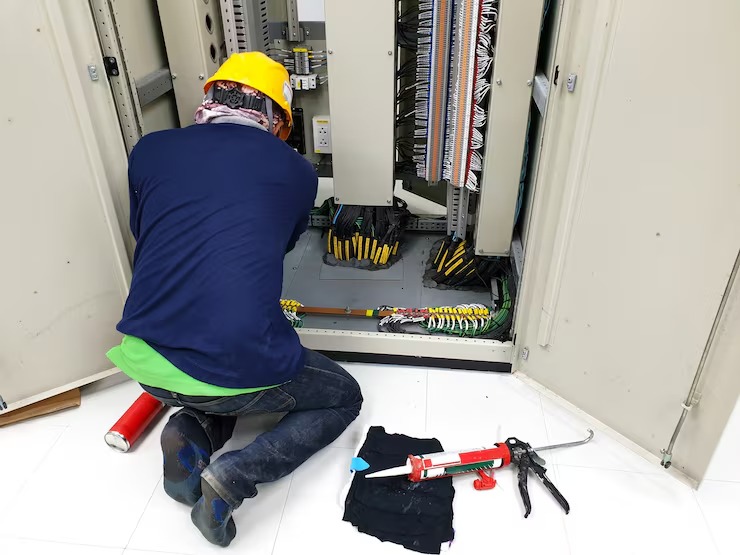
An upgrade to 200 amp service touches three things: the utility’s overhead or underground drop, the meter, and your main panel. Brandon handles the meter socket, the mast (if you’re overhead), the grounding, and the new panel with breakers sized to code. The utility owns the drop itself and the transformer feeding it, so there’s a coordination step where they schedule a disconnect and reconnect around the day of the work.
Power is out for the homeowner side of the job, typically a matter of hours rather than all day, though the utility’s own reconnect timing is out of our hands and can add a wait. On a well and septic property we plan around that, since a dead well pump means no water in the house until power’s restored, so we talk through timing before the crew shows up. Once the new panel is in, every circuit gets tested, breakers get labeled, and the whole install gets photographed for the inspection record.
What It Costs
A straightforward 100 to 200 amp service upgrade in Rowley generally runs {PRICE_LOW} to {PRICE_HIGH}. What moves the number: whether you’re going overhead or underground, how far the meter is from the panel, whether the mast or weatherhead needs replacing, and whether we’re also adding a whole-house surge protector or a generator interlock while the panel’s open. A well pump on its own dedicated breaker and a generator transfer switch are common add-ons out here and we’ll price those separately so you know what’s driving the total.
How Long It Takes
Most 200 amp service upgrades in Rowley are a one-day job for the physical install. What varies is the utility’s schedule for the disconnect and reconnect, since that’s a separate crew on their timeline, not ours. We build the town permit and inspection into the schedule up front so there’s no dead time waiting on paperwork after the work is done.
Permits and Inspection
A service upgrade is permitted work in Massachusetts, full stop. Brandon pulls the electrical permit, the town’s inspector signs off on the finished install, and the utility won’t energize a new service without that sign-off. That inspection step is exactly what separates a licensed electrician from someone working out of a truck with no ticket. It also matters for resale and for insurance, since an unpermitted panel or service is the kind of thing a home inspector flags and a lender asks about. [EXTERNAL LINK: Massachusetts Board of State Examiners of Electricians licensing and permit information, useful for homeowners who want to verify permit requirements directly]
Common Questions
How do I know if my house needs a service upgrade instead of just a new panel?
If your panel is rated 60 or 100 amp and you're adding a well pump circuit, a generator, an EV charger, or central air, the limit is the amperage coming into the house, not just the panel box. Brandon can tell in a few minutes by checking your meter and main breaker rating.
Will I be without power during the upgrade?
Yes, for the hours it takes to swap the meter, mast, and panel, plus whatever wait the utility adds for their disconnect and reconnect. On well and septic properties that means no water pressure during the outage, so we schedule around that.
Do I need a permit for this in Rowley?
Yes. A service upgrade is inspected work in Massachusetts. Brandon pulls the permit and the town inspector has to sign off before the utility will energize the new service.
Is a generator interlock worth adding while the panel is open?
For a lot of Rowley properties on long rural roads with slow storm recovery, yes. It's far cheaper to add a transfer switch or interlock during a panel swap than as a separate job later.
What panel brands should I be worried about if my house is older?
Federal Pacific Stab-Lok and Zinsco panels are known for breakers that don't trip reliably under fault conditions. If you've got one of these, it's worth having Brandon take a look regardless of whether you're upgrading amperage.
Reach Out for Electrical Service Upgrades
If your panel is tripping under normal use, if you’re quoting a generator and getting told your service is too small, or if you just want a straight answer on what a 60 to 200 amp jump would run, call {PHONE}. We work across Rowley and know this housing stock well enough to give you a real number, not a guess.
Contact information
Talk to Brandon
Brandon’s the one who’ll actually be at your panel, so he’s the one who tells you straight whether you need 150 amp or 200 amp, whether your mast height clears the utility’s requirement, and whether your well pump needs its own dedicated circuit while the panel’s already open. No sales pitch, no upsell, just what your house actually needs.