Electrical Panel Replacement in Georgetown, MA
A lot of Georgetown houses were wired for a different life than the one going on inside them now. Farmhouses and capes from the 1950s and 60s were built with 60 amp or 100 amp service, a couple of window units, and maybe a chest freezer in the basement. Now there’s a heat pump, a well pump, a hot tub, and a couple of space heaters running through a panel that was never sized for any of it, and in some cases the panel itself is a known problem, not just an undersized one.
Why Georgetown Homes Need This
Georgetown still has a good number of homes on private wells and septic systems, which tells you something about how these properties were built and how long they’ve gone without major electrical updates. Well pumps pull a real load on start-up, and if that circuit is sharing a tired panel with everything else in the house, you’ll feel it as flickering lights or a breaker that trips for no obvious reason.
We still find Federal Pacific Stab-Lok panels in this town, and a fair number of Zinsco panels too. Both were installed heavily through the 1960s and 70s, and both have documented failure modes: breakers that don’t trip when they should, which means a fault stays live instead of shutting off. That’s not a maintenance issue you patch, it’s a panel you replace. We also still open up 60 amp cloth-wired services and the occasional stretch of knob and tube feeding a room or two. None of that is unusual for a town with this much older housing stock, and none of it means the house was built badly. It means the house was built for 1962.
The other driver here is the outage question. Georgetown loses power for stretches when a storm comes through the county, longer than folks in denser parts of the North Shore usually deal with. Homeowners looking at a generator transfer switch find out fast that you can’t add one to a Stab-Lok panel with any confidence, so the panel replacement becomes step one, not an afterthought.
What the Work Involves
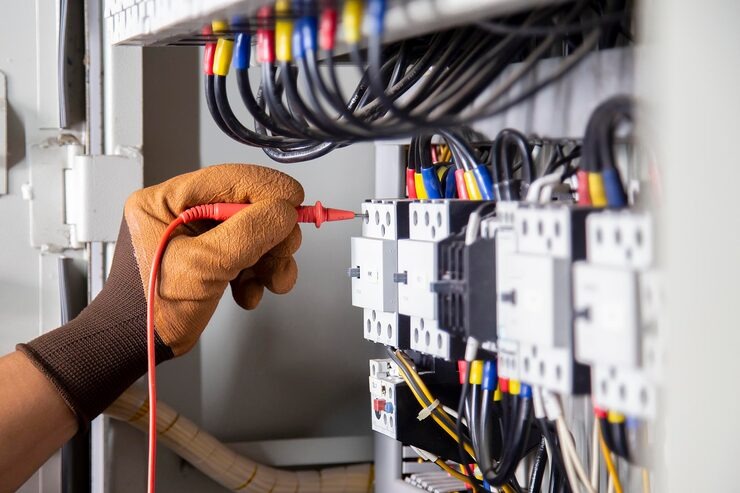
Brandon starts by opening the existing panel and tracing what’s actually there, not what the paperwork says should be there. That means checking the panel brand and model, counting circuits, checking wire gauge at the lugs, and confirming what the grounding setup looks like, since older Georgetown homes sometimes have a ground rod system that was never properly bonded.
On replacement day, the utility disconnects power at the meter, or in some cases pulls the meter itself, before any panel work starts. That part is theirs, not ours. Once power is cut, Brandon removes the old panel, mounts the new one, and re-terminates every circuit, one at a time, checking each wire as it goes back in rather than just transferring the whole bundle at once. This is where sloppy old splices and undersized wire get caught.
Power is out for the house for the stretch of the swap itself, usually a matter of hours, not a full day. If your well pump is electric, that means no water pressure during the outage window, which we plan around and tell you up front so it’s not a surprise at 2pm with laundry half done.
What It Costs
A straightforward panel replacement in Georgetown runs {PRICE_LOW} to {PRICE_HIGH}. Where you land in that range depends on panel size, how many circuits need to move over, whether the grounding system needs to be brought up to current code, and how much the utility’s mast and meter setup needs touching. A house with a straightforward 100 amp panel and clean wiring is a different job than one with knob and tube in the mix or a service mast that needs replacing too.
We give you a firm number after Brandon’s looked at the panel in person, not over the phone. Anyone quoting a panel swap sight unseen is guessing.
How Long It Takes
Most panel replacements are a single day of on-site work. The permit and utility coordination usually take longer than the swap itself. Once the permit is pulled and the inspection scheduled, Brandon can typically do the physical work in one visit, with the power outage itself limited to the hours he’s actively working inside the panel.
Permits and Inspection
Panel replacement is permitted work in Massachusetts, full stop. Brandon pulls the permit before the job starts, and the finished work gets inspected by the town’s electrical inspector before the panel is closed up and signed off. This isn’t optional paperwork. It’s the difference between a licensed electrician doing this work and someone doing it off the books, and it’s the reason an insurance company or a future buyer’s home inspector won’t flag your panel down the road. [EXTERNAL LINK: Massachusetts electrical code amendments (Mass.gov 527 CMR) – for homeowners who want the actual code language behind panel and grounding requirements]
Common Questions
Is a Federal Pacific panel really dangerous, or is that overblown?
The concern is documented, not hype. Federal Pacific Stab-Lok breakers have a known history of failing to trip during an overload or short, which means the panel doesn't do the one job it's there for. Most licensed electricians recommend replacement rather than repair when they find one, and insurance underwriters increasingly ask about it directly.
Can I add a generator transfer switch without replacing my whole panel?
Sometimes, if the existing panel is in good condition and has room. If it's a Federal Pacific or Zinsco panel, or a 60 amp service, we'll usually recommend the panel replacement first so the transfer switch has something solid to tie into.
Will my well pump be affected during the work?
Yes, power is out to the whole house during the swap, which means no pressure from an electric well pump for that window. We tell you the expected timing in advance so you can plan around it.
Do I need a permit for a panel replacement in Georgetown?
How is this different from a panel upgrade?
Reach Out for Electrical Panel Replacement
Call {PHONE} to have Brandon look at your panel. We work across Georgetown and the rest of the North Shore, and we’ll give you a clear answer on whether you’re looking at a repair, a replacement, or something that can wait.
Contact information
Talk to Brandon
Brandon left union work to run the electrical side of this family business, and panel work is where he spends a lot of his time in towns like Georgetown. If you’ve got a panel with a Federal Pacific or Zinsco label on it, or you’re just tired of breakers that trip for no reason, he’ll come look at it and tell you straight what’s going on, not what sounds good on the phone.