EV Charger Installation in Marblehead, MA
A lot of Marblehead’s housing stock predates the automobile entirely, let alone the electric one. These houses were wired for lamps and a furnace blower, then patched over the decades for window units and a dryer. Now someone wants to park a Model Y or a Rivian in the driveway on Pond Street or up near Clifton, and the panel that has quietly handled the house since the Eisenhower administration is being asked to do something it was never built for.
Why Marblehead Homes Need This
Marblehead has one of the highest concentrations of pre-1900 homes on the North Shore, and Chris will tell you it’s also the town where people are most willing to spend to do a job right. That combination matters for EV charging. A house built in 1880 and updated in the 1960s often still has a 60 amp or 100 amp main service, sometimes on cloth-insulated wiring, sometimes with sections of knob and tube still live in the attic or basement. We also still find Federal Pacific and Zinsco panels in this town, both of which have known breaker failure issues and neither of which we’ll add a 40 or 50 amp EV circuit to without addressing the panel first.
Add in Marblehead’s tight lots, narrow driveways, and detached garages set well back from the house, and the wiring run for a charger is rarely a straight shot. Salt air off the harbor is also a real factor for anything mounted outside a garage – connectors, boxes, and conduit fittings need to be rated for it or they corrode fast. This is not a town where you guess at any of this. It’s a town where the electrician plans the route, checks the panel, and tells you honestly what the house can support before any wire gets pulled.
What the Work Involves
Brandon starts with a load calculation on your existing service. That tells us whether your current panel – 100 amp, 150 amp, or 200 amp – has room for a dedicated EV circuit alongside everything else already running in the house: electric heat, a range, a heat pump, a well pump if you’re on one. Most Level 2 chargers need a dedicated 240-volt circuit on a 40, 50, or 60 amp breaker depending on the charger and the amperage you want to charge at.
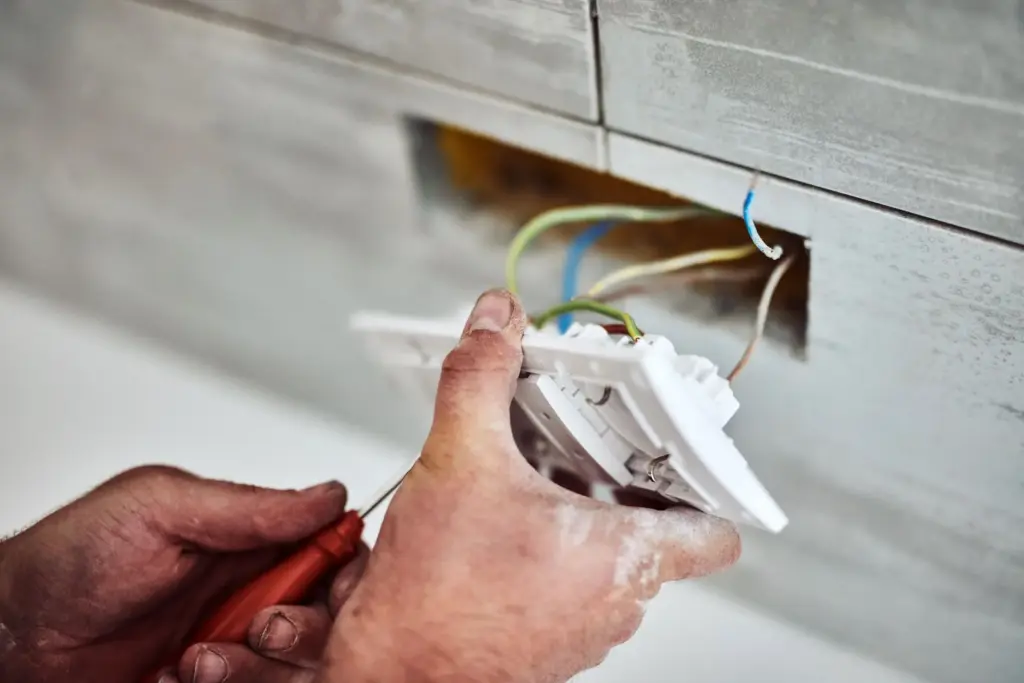
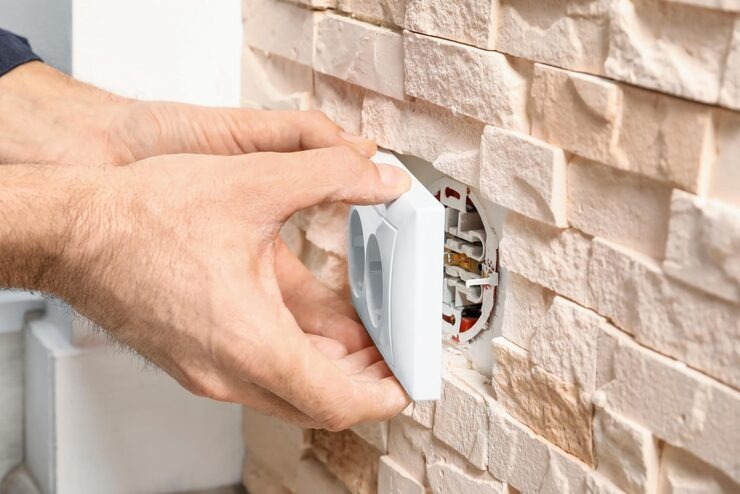
The job itself means running new wire, usually 8 or 6 gauge copper depending on breaker size and run length, from the panel to the mounting point, whether that’s a garage wall or an exterior box near the driveway. We install a new breaker, terminate the circuit, mount the charger, and test it under load. Power to the house is shut off for a short window, typically well under an hour, just for the panel connection. If the panel itself needs replacing or the service is too small to support the new load, that’s a separate, bigger job we’ll scope out with you first – the utility, National Grid in most of Marblehead, handles any change to the service drop itself, while we handle everything from the meter inward.
What It Costs
A straightforward 240-volt circuit to a garage with an already-adequate panel runs in the range of {PRICE_LOW} to {PRICE_HIGH}. What moves the number: distance from the panel to the charger, whether we’re fishing wire through finished walls or an old plaster house versus an open basement run, whether the panel needs a subpanel or upgrade to make room for the new circuit, and whether the charger itself is supplied by you or by us. Older Marblehead homes with knob and tube in the wall cavities or a service under 100 amps almost always add cost, because that wiring has to be addressed before we can safely add a high-draw circuit next to it. We give you the real number after we’ve seen the panel and the run, not before.
How Long It Takes
A standard install with an adequate panel is usually a one-day job, start to finish, including the permit paperwork we file before we start. If the panel needs to be upgraded first, plan on that being scheduled as its own visit, since it typically requires coordination with the utility for the service connection. We’ll lay out the real timeline once we know which situation you’re in.
Permits and Inspection
Massachusetts requires a permit for this work, and it gets inspected by the local electrical inspector once it’s done. That’s not paperwork for its own sake – it’s the difference between a licensed electrician doing this job and someone doing it off the books with no inspection and no accountability if something’s wired wrong. We pull the permit, we schedule the inspection, and the work has to pass before we call it finished. [EXTERNAL LINK: Massachusetts electrical code reference, for homeowners who want to see the actual standard the work is inspected against] is the code the inspector is checking against, and it’s the same code Brandon is licensed to work under.
Common Questions
Can my house handle an EV charger if it still has a 100 amp service?
Sometimes, depending on what else is drawing power in the house. We run a load calculation first. If there's not enough headroom, the options are usually a smaller-amperage charger circuit or a panel upgrade to 200 amps.
Do I need a permit for a home EV charger in Marblehead?
Yes. It's an electrical permit filed with the town and the work is inspected once it's installed. We handle the filing as part of the job.
What's the difference between a Level 1 and Level 2 charger install?
Level 1 chargers run on a standard 120-volt outlet and need no new wiring. Level 2 chargers need a dedicated 240-volt circuit, typically on a 40 to 60 amp breaker, which is the install most homeowners actually want for reasonable charge times.
Can you install a charger for any brand?
What if my panel is a Federal Pacific or Zinsco brand?
Reach Out for EV Charger Installation
Call {PHONE} to get a load calculation scheduled and a real answer on what your Marblehead home needs for EV charging. We’re a Salem-based company working across Marblehead and the rest of the North Shore, and this is a job we do often enough to know exactly what these older houses are hiding in the walls.
Contact information
Talk to Brandon
Brandon left union work to run the electrical side of a family shop, and panel and service questions are the calls he likes taking. If you’ve got a Federal Pacific panel, a 60 amp service, or just don’t know what you’re working with yet, tell him the charger you’re considering and he’ll tell you straight what the house needs.