
Generator Installation and Connection in Wenham, MA
Generator Installation and Connection in Wenham
A lot of the houses on the larger lots off Main Street and out toward the Beverly line are farmhouses and estate properties built long before anyone worried about a whole-home generator. The electrical service on those homes was sized for lights, a well pump, and maybe a furnace blower. Now people are adding central air, an EV charger, a heated barn or workshop, and the panel that came with the house was never built to carry a backup generator on top of all that.
Why Wenham Homes Need This
Wenham is spread out. Long driveways, big setbacks, and a real share of properties still on well and septic. When a storm takes down a line out here, the crew has to work its way down a rural feed to get to you, and that can mean a day or more without power. If your well pump is electric, no power means no water, not just no lights.
The housing stock adds to it. Plenty of these homes still have cloth-insulated wiring in the older sections, and it is not unusual to find a 60 amp or 100 amp service that was upgraded once, decades ago, and never touched again. Some of the mid-century additions came through with Federal Pacific Stab-Lok panels, which have known breaker problems and need to be replaced, not reused, when we tie in a generator. A generator install on a property like this is often really a panel and service conversation first, generator second.
What the Work Involves
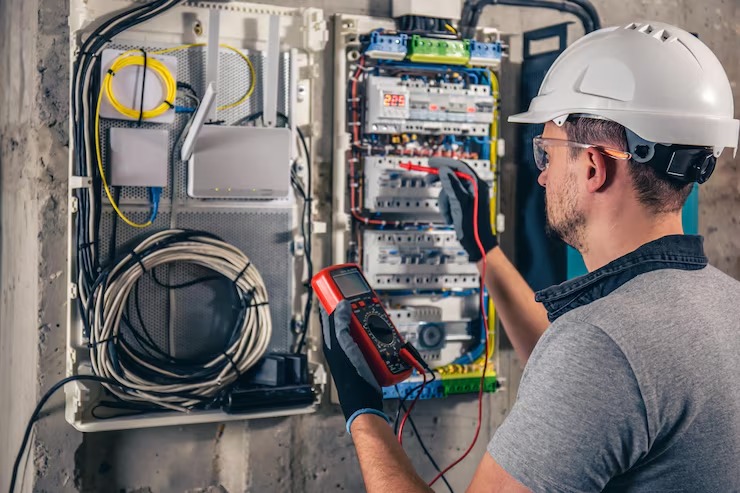
Brandon starts with a load calculation. That tells you what the generator actually needs to carry: well pump, furnace or boiler circulator, refrigeration, a few circuits of lighting, maybe the whole house if the service supports it. From there it is a question of standby generator with an automatic transfer switch, or a smaller portable setup with a manual interlock or inlet box.
For a standby unit, the generator sits on a pad outside, usually on the gas line if you have natural gas, or on propane if you do not. The transfer switch installs next to your main panel and takes over switching your house from utility power to generator power automatically when an outage hits. The utility has to disconnect and reconnect the meter for the tie-in, which is their piece of work, not ours. On our end, expect the power in the house to be off for a few hours during the panel work itself, not the whole day.
For a portable setup, we install a locking inlet on the outside of the house and a manual transfer switch or interlock inside the panel, so you can never backfeed the utility line by mistake. That is the single most dangerous shortcut we see from unlicensed installs, and it is the reason this work is not a DIY job.
What It Costs
A manual transfer switch with an exterior inlet, sized for the essentials, generally runs {PRICE_LOW} to {PRICE_HIGH} in materials and labor, generator unit not included. A full standby system with an automatic transfer switch, gas or propane hookup, and a properly rated whole-house or partial-house load runs higher, and the number moves with the size of the generator, whether your panel needs to be upgraded first, and how far the gas or propane line has to run. On an older Wenham property, panel and service work is often the bigger line item, not the generator itself. Brandon will tell you upfront if your existing panel needs to be replaced before a generator can be added safely.
How Long It Takes
A manual transfer switch and inlet is usually a one-day job. A standby system with an automatic transfer switch typically takes one to two days for the electrical work, plus a separate visit from your gas or propane contractor if new fuel line is needed. Add time if the property needs a service upgrade first, since that is inspected and reconnected by the utility on its own schedule, not ours.
Permits and Inspection
Generator installations are permitted work in Massachusetts. Brandon pulls the permit, the town inspector signs off on the transfer switch and wiring, and the gas or propane connection gets its own inspection if fuel line was run or modified. This is not paperwork for its own sake. It is what separates a licensed install from a handyman with a portable generator and an extension cord running through a window, which is still how some of these get done and how people get hurt or burn down a panel. [EXTERNAL LINK: Massachusetts Board of State Examiners of Electricians – licensing and permit requirements]
Common Questions
Do I need a permit for a generator in Wenham?
Yes. Generator installation is permitted electrical work in Massachusetts, and if fuel line is run for gas or propane, that gets its own permit and inspection too. Brandon handles the paperwork and schedules the inspections as part of the job.
Can my old panel handle a generator?
Not always. Homes with a 60 or 100 amp service, or with a Federal Pacific Stab-Lok panel, usually need a panel or service upgrade before a generator can be tied in safely. Brandon checks this first so you are not surprised later.
What size generator do I actually need?
It depends on your load calculation, not a guess. A well pump, furnace circulator, refrigerator, and some lighting is a different number than trying to run central air and an EV charger on top of it. Brandon calculates the real draw before recommending a size.
Is a portable generator with a manual switch enough?
For a lot of Wenham properties, yes, especially if you mainly need to keep the well pump and heat running through an outage. A locking inlet and manual transfer switch is safer and cheaper than backfeeding through a dryer outlet, which is dangerous and against code.
How long does the power stay off during installation?
For a manual transfer switch, usually a few hours during the panel tie-in. For a full standby system, similar, though the overall project may run one to two days when you include the gas or propane hookup and utility meter work.
Reach Out for Generator Installation
If you are on a well, on a long driveway, or just tired of losing power for a day every time a nor’easter comes through the North Shore, call {PHONE}. We work across Wenham and the rest of the North Shore, and we can usually get out to look at your panel within a few days.
Contact information
Talk to Brandon
Brandon is the electrician half of Belfiore. He will walk your panel, look at your service size, and tell you straight whether you need an upgrade before a generator makes sense, or whether your existing setup can carry it as-is. No guessing over the phone. He looks at the panel, does the math, and gives you the real number.