Electrical Panel Upgrades in Salem, MA
A lot of Salem housing went up before 1940, back when a house ran on a handful of lights and maybe a radio. Those original services were sized at 30 or 60 amps, sometimes bumped to 100 amps somewhere along the way. Now you’re trying to run central air, an electric range, a heat pump, and an EV charger off wiring that was never built for it. That’s a capacity problem, and it’s the most common reason we get called out to add a bigger panel in this city.
Why Salem Homes Need This
Salem’s housing stock is dense and old. Federal-style colonials near the historic district, triple-deckers converted from single-family to multi-unit, Victorians with additions bolted on over the decades. Each addition usually meant one more space heater, one more window AC unit, one more thing plugged into a panel that topped out at 60 or 100 amps decades ago.
We still find cloth-insulated wiring and knob and tube in attics and basements that haven’t been touched since the Truman administration. We also see 60 amp fuse panels that were adequate in 1955 and are dangerously undersized now that a homeowner wants central air and a Level 2 EV charger on the same circuit. If you’re finishing a basement, adding a heat pump, or putting in a hot tub, your existing service is very often the bottleneck, not the new equipment.
One thing specific to Salem: a good share of the housing sits inside or near the historic district, which means any exterior work touching the service mast or weatherhead can run into review. We plan around that up front instead of finding out mid-job.
What the Work Involves
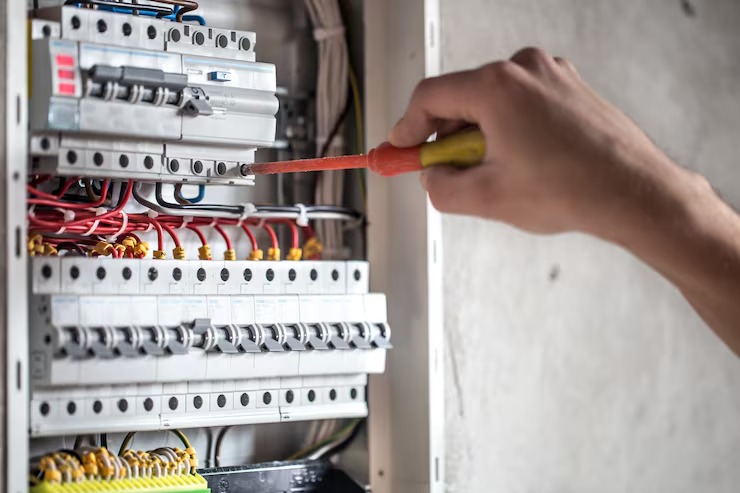
A panel upgrade adds capacity, it doesn’t just swap a box. Brandon starts by calculating your actual load: square footage, HVAC, water heater, range, dryer, and whatever you’re planning to add, like an EV charger or a heat pump. That load calculation determines whether you need 100 amps, 150, or a full 200 amp service.
On upgrade day, the utility has to pull the meter or de-energize the service drop before any work starts on the panel itself. That part is on National Grid’s schedule, not ours, so we coordinate the shutoff window in advance. Once power is cut, Brandon installs the new panel, runs new breakers sized to each circuit, and reconnects everything to code. Power is usually out for a few hours, not a full day, though multi-family conversions with several sub-panels take longer.
Breakers get matched to wire gauge on every circuit, not just copied from the old panel. A 20-amp kitchen circuit needs 12-gauge wire minimum, a 30-amp dryer circuit needs 10-gauge, and undersized wire on an oversized breaker is exactly the kind of shortcut that causes trouble later. This is also when we identify and correct any double-tapped breakers or aluminum branch wiring from additions done without a permit.
What It Costs
Panel upgrades in Salem generally run {PRICE_LOW} to {PRICE_HIGH}. Where you land in that range depends on a few things: whether you’re going from 100 to 150 amps or all the way to 200, how far the panel is from the service entrance, whether the meter socket needs replacing too, and whether the historic district review adds a step to the timeline. A straightforward 100-to-200 amp swap on an accessible exterior wall costs less than a job where we’re also relocating the panel or bringing a knob and tube circuit up to code as part of the work.
Brandon gives you a firm number after he’s done the load calculation and looked at your existing service, not a phone quote. On a job this size, guessing at price before seeing the panel does you no favors.
How Long It Takes
Most straightforward panel upgrades take one day for the electrical work itself, with the power outage window limited to a few hours in the middle of it. What adds time is scheduling around the utility. National Grid needs to coordinate the meter pull or service disconnect, and in a city like Salem with historic district considerations, that step can add a few days to the overall timeline even though the on-site work is quick.
If your job includes relocating the panel, upgrading the meter socket, or rewiring circuits that were tied into knob and tube, plan on it stretching to two days.
Permits and Inspection
Panel upgrades are permitted work in Massachusetts, full stop. Brandon pulls the permit, the city inspector signs off on the finished installation, and the paperwork becomes part of your property record. That inspection checks grounding, bonding, breaker sizing, and clearances, the same things that matter for insurance and for resale.
This is also the plain difference between a licensed electrician and someone working off the books. Unpermitted panel work is common enough in older housing stock, and it’s the kind of thing that surfaces at the worst possible time, usually during a home sale or an insurance claim after a fire. A permitted, inspected panel means there’s a record that the job was done to code, not just done.
Common Questions
How do I know if my panel needs an upgrade or just a replacement?
If your panel is the right size for your home but failing, tripping, or a known problem brand like Federal Pacific Stab-Lok or Zinsco, that's a replacement issue. If it's working fine but you're adding an EV charger, a heat pump, or a kitchen renovation and running out of amps or open slots, that's a capacity issue, which is an upgrade. Brandon can tell you which one you're dealing with in a few minutes on site.
Will I lose power to the whole house during the upgrade?
Yes, for a window of a few hours while the utility disconnects the service and Brandon swaps the panel. We schedule this in advance so you can plan around it, and it's not an all-day outage for most single-family upgrades.
Do I need a permit for a panel upgrade in Salem?
Yes. This is permitted electrical work in Massachusetts. Brandon pulls the permit and the city inspects the finished job before it's signed off.
What size panel do I actually need?
My house still has some knob and tube wiring. Does that affect the panel upgrade?
Reach Out for Electrical Panel Upgrades
If your panel is maxed out, humming, warm to the touch, or just old enough that you’re not sure what’s behind the cover, call {PHONE} and describe what you’re seeing. Brandon will tell you what to expect and get a load calculation scheduled.
Contact information
Talk to Brandon
Brandon left union electrical work to run the electrical side of this family business, and panel upgrades are a big part of what he does across Salem and the North Shore. He’ll walk your existing panel with you, tell you straight whether 100 amps is enough for what you’re planning or whether you need to go to 200, and explain what the utility side of the job looks like before anyone touches a wire.