
Electrical Panel Upgrades in Nahant, MA
Most of the housing stock on this little peninsula predates the appliance load we now expect a house to carry. A lot of Nahant homes were wired for a 60 or 100 amp service at a time when nobody was running central air, an electric range, and a car charger off the same panel. When you add a heat pump or a generator transfer switch to that original setup, the panel runs out of room fast, and it is not a fuse-box problem you can fix by swapping a breaker.
Why Nahant Homes Need This
Nahant is one of the older, tighter housing markets in this part of the North Shore, and the electrical infrastructure often matches the age of the house. Cloth-insulated wiring and knob-and-tube runs still show up in attics and basements here, especially in homes that have had partial renovations where only the visible rooms got rewired. A 60 amp main service was standard for decades and it simply was not designed to run a modern kitchen, a heat pump, and a car charger at once.
Coastal exposure adds a second layer. Salt air is hard on anything mounted outside – meter bases, disconnects, generator inlets, weatherheads. Panels and exterior equipment corrode faster here than they do a few miles inland, and Brandon sees more pitted lugs and corroded neutral bars on oceanfront and near-shore properties than almost anywhere else in the territory. Add in the outages that come with every strong nor’easter, and it is no surprise Chris calls Nahant one of the towns where people are most willing to spend to get it done right the first time, whether that means sizing a panel for a whole-house generator or just making sure the service can carry the load without nuisance trips.
What the Work Involves
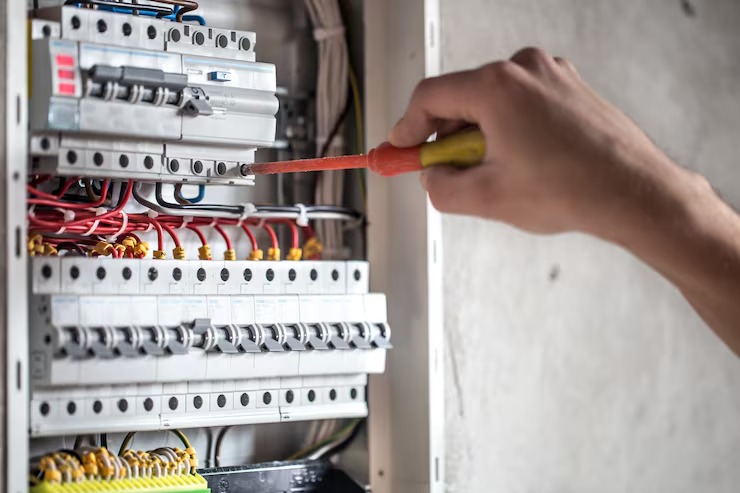
A panel upgrade means installing a new panel with more breaker spaces and more amperage capacity, usually moving from a 60 or 100 amp service to 150 or 200 amps. Brandon starts by checking what the house actually needs: current load, planned additions like an EV charger or heat pump, and the condition of the existing feeder wire.
The utility has to de-energize the line at the drop or the meter before any panel work starts, and that is coordination Brandon handles directly rather than leaving you to call. Depending on what the utility needs to schedule, the outage itself – the part where your house has no power – is typically a few hours, not a full day. During that window the old panel comes out, the new one goes in, circuits get reconnected and labeled, and grounding and bonding get brought up to current code, which older Nahant panels almost never meet as-is.
Where the house still has knob-and-tube or brittle cloth wiring feeding certain circuits, that gets flagged as a separate conversation. A panel upgrade does not rewire the house. It gives the house a panel that can safely carry more amperage, but any dangerous wiring downstream still needs its own scope.
What It Costs
A straightforward 100 to 200 amp panel upgrade in a Nahant home typically runs {PRICE_LOW} to {PRICE_HIGH}. What moves that number: the length and condition of the run from the meter to the panel, whether the meter base and mast also need replacing because of salt corrosion, how many circuits are being relocated into the new panel, and whether a generator interlock or transfer switch is part of the same job. Tight lots and difficult access for the utility truck can also add time, which is a real factor on some of the narrower Nahant streets. Brandon gives you a firm number after he has actually looked at the panel and the service drop, not a phone quote.
How Long It Takes
Most panel upgrades are a one-day job on site once the permit is issued and the utility coordination is scheduled. The physical swap – old panel out, new panel in, circuits reconnected – usually takes four to six hours. The longer lead time is usually the permit and the utility’s scheduling window, not the work itself, so it is worth starting that process a few weeks before you need the new capacity, particularly if you are timing it around a generator install before storm season.
Permits and Inspection
Panel upgrades are permitted work under the Massachusetts electrical code, full stop. Brandon pulls the permit, the town inspector signs off on the finished installation, and the paperwork gets filed. This is not optional, and it is one of the clearest ways to tell the difference between a licensed electrician and someone working without a license out of a truck. An unpermitted panel can also become a real problem later, at resale or with an insurance claim, when there is no record the work was ever inspected. [EXTERNAL LINK: Massachusetts Electrical Code (527 CMR 12) reference for permitting requirements]
Common Questions
Do I need a panel upgrade or a panel replacement?
An upgrade is about capacity – you're adding load like a car charger, heat pump, or addition and the existing panel doesn't have the amperage or breaker space. A replacement is about condition – the panel itself is failing, obsolete, or a recalled brand like Federal Pacific or Zinsco. Sometimes a house needs both at once.
How much of my house loses power during the upgrade?
The whole house is without power for the duration of the swap, since the main panel feeds every circuit. That's typically a window of a few hours, coordinated with the utility so the line is de-energized safely before Brandon opens the panel.
Can I add a generator when I upgrade my panel?
Yes, and a lot of Nahant homeowners do exactly that given how often coastal storms knock out power here. A generator interlock or automatic transfer switch is easiest to install at the same time as a panel upgrade rather than as a separate job later.
Does an old panel need to be replaced before I can add an EV charger?
Reach Out for Electrical Panel Upgrades
If your panel is undersized, corroded from salt exposure, or you are planning a generator, heat pump, or EV charger and want to know what it will take, call {PHONE}. Brandon can walk you through what your house needs before any work is scheduled.
Contact information
Talk to Brandon
Brandon left union work to run the electrical side of this family business, and panel upgrades are a big part of what he does across Nahant and the rest of the North Shore. He is straightforward about what a house actually needs versus what it does not – if your 100 amp service can genuinely handle the EV charger you want to add, he will tell you that instead of upselling a 200 amp panel you do not need.