
Dedicated Circuit Installation in Peabody, MA
A lot of Peabody was wired for a house that used a stove, a fridge, and a few lamps, not a house with a heat pump, an induction range, and an EV in the driveway. Square One, the Brown Street area, and the older streets off Lowell make this obvious fast: the panel is original or close to it, and every new appliance you add is fighting the same circuit for power.
Why Peabody Homes Need This
Peabody has a lot of housing stock from before 1940, plus the wave of two and three family conversions that came later as the leather and tanning industry gave way to denser residential use. That combination means a few things show up over and over when Brandon is on site: cloth-insulated wiring, knob and tube still live in parts of the house, and 60 or 100 amp services that were adequate in 1955 and are undersized now.
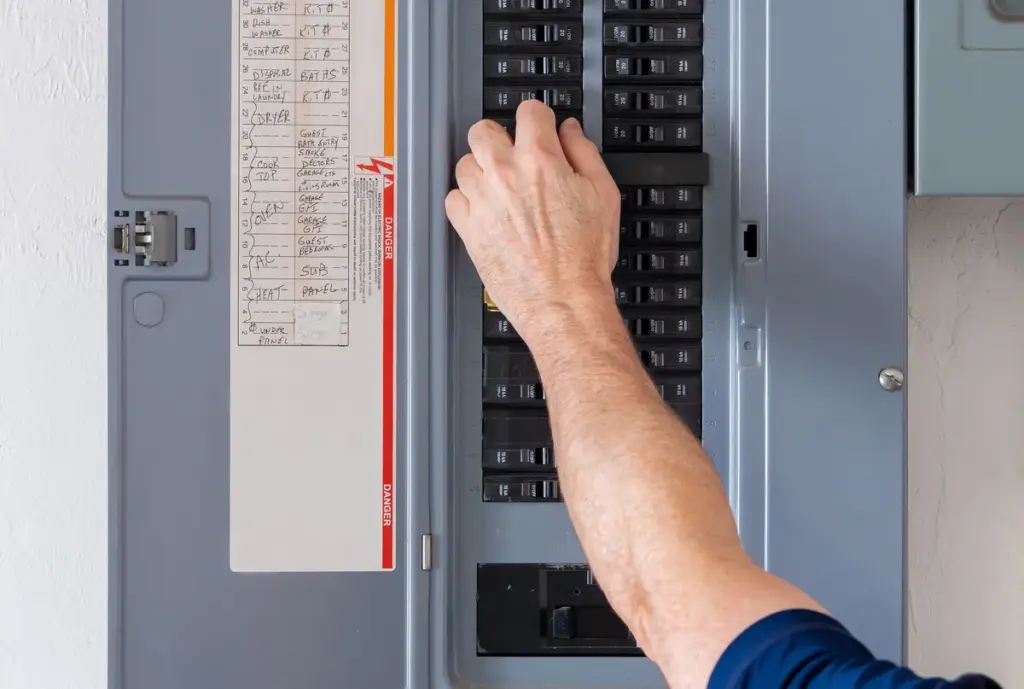
Add a modern appliance to a panel like that and something has to give. A window AC, a hot tub, a garage subpanel for a workshop, an EV charger, a second heat pump head – none of these are supposed to share a circuit with anything else, and on an old panel there often isn’t a free slot to give them their own. Some Peabody homes still have Federal Pacific Stab-Lok panels too, which most electricians and insurers flag as a fire risk regardless of what’s plugged into them. If that’s what you’ve got, a dedicated circuit conversation usually turns into a panel conversation fast, and Brandon will tell you that up front instead of pretending it isn’t part of the job.
What the Work Involves
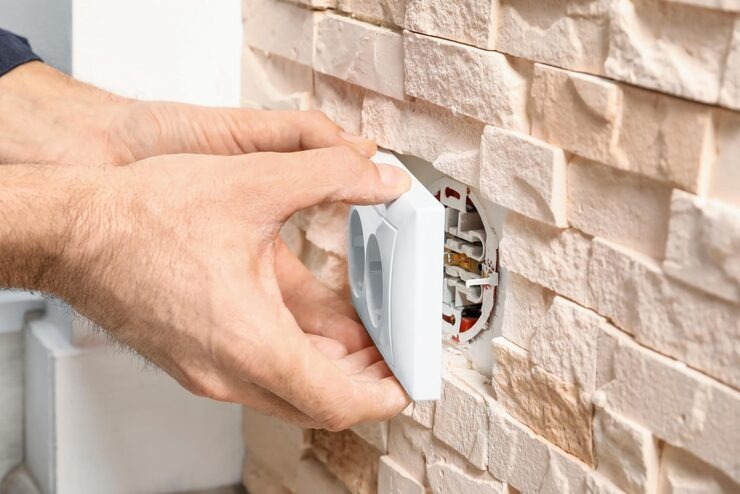
A dedicated circuit runs alone from the breaker panel to one outlet or one piece of equipment. Nothing else shares that wire, that breaker, or that neutral. For a range, that usually means 6-gauge or 8-gauge copper on a 40 or 50 amp double-pole breaker. For a heat pump condenser, it might be 10-gauge on a 30 amp breaker with a disconnect at the unit. For a garage subpanel or an EV charger, it’s often 6-gauge or larger depending on the run length and the amperage you need.
Brandon starts by shutting off the main breaker or just the affected circuits, depending on where the new wire has to travel. Power to the rest of the house typically isn’t affected for more than a few minutes, if at all, unless the panel itself needs work. He runs the new wire through the attic, basement, or wall cavities as the house allows, terminates it at a new breaker, and lands it at the appliance or outlet. If the run needs to cross an area with existing knob and tube, he’ll flag that separately since it’s not part of the new circuit but it’s worth knowing about.
The utility, National Grid in most of Peabody, only gets involved if the work requires a service upgrade or a meter change. Otherwise this is work done entirely at your panel and doesn’t require a utility appointment.
What It Costs
A single dedicated circuit in Peabody typically runs {PRICE_LOW} to {PRICE_HIGH}. Where you land in that range depends on the amperage, the wire gauge, how far the run is from the panel to the appliance, and whether Brandon has to fish wire through finished walls versus an open basement or attic. An EV charger circuit or a garage subpanel feed costs more than a circuit for a window AC or a disposal, simply because the wire is heavier and the run is often longer.
If the load calculation shows your existing panel can’t take another circuit without exceeding its rating, that’s a separate conversation about a panel upgrade, priced on its own. Brandon will always tell you before the work starts if that’s where things are headed, not after.
How Long It Takes
Most single dedicated circuits are a one-day job, often a few hours if the run is straightforward and the panel has room. Runs through finished walls, long distances to a garage or detached structure, or anything that turns up unexpected wiring behind a wall can push a job to a second day. The inspection itself is scheduled separately and doesn’t hold up your use of the appliance in most cases, though the town does need to sign off before the permit closes.
Permits and Inspection
New circuits require a wiring permit in Massachusetts and Peabody is no exception. Brandon pulls the permit before work starts, and the city’s electrical inspector reviews the completed circuit before it’s signed off. This isn’t optional paperwork. It’s the difference between work that’s done to code and work that just looks fine until an insurance claim or a home sale turns up an unpermitted circuit. [EXTERNAL LINK: Massachusetts Board of State Examiners of Electricians – licensing and permit requirements, useful for homeowners who want to verify a contractor’s status] A licensed electrician carries the license number on the permit application, which is one of the simplest ways to tell licensed work from a handyman job.
Common Questions
Do I need a permit for a dedicated circuit in Peabody?
Yes. Massachusetts requires a wiring permit and inspection for any new circuit, even a single one. Brandon pulls the permit, schedules the inspector, and handles the paperwork so you don't have to track it down yourself.
Can my 100 amp panel handle another dedicated circuit?
Sometimes. It depends on what else is already on the panel and what you're adding. A range or heat pump can push an older 100 amp service close to its limit. Brandon does a load calculation before recommending anything, including whether a panel upgrade should happen first.
How many dedicated circuits does an EV charger need?
Just one, but it needs to be sized correctly. Most Level 2 home chargers run on a 240 volt, 40 to 60 amp circuit depending on the charger and how fast you want it to charge. That circuit runs alone back to the panel, no exceptions.
Is knob and tube wiring a problem for adding new circuits?
What's the difference between a dedicated circuit and a regular outlet?
Reach Out for Dedicated Circuit Installation
If you’re adding an EV charger, a new range, a heat pump, or anything else that needs its own circuit, call Belfiore at {PHONE}. We’re a Salem-based company working across Peabody and the rest of the North Shore, and we’ll give you a straight answer about what your panel can handle before any wire gets run.
Contact information
Talk to Brandon
Brandon left the union to run electrical for the family business, and he’s the one who’ll walk your panel with you, do the load calculation, and tell you straight whether your existing service can take what you’re adding or whether it’s time to talk about a bigger panel. He’s seen enough Peabody two-families and pre-1940 wiring to know what questions to ask before he even opens the panel cover.