Dedicated Circuit Installation in North Reading, MA
Most of North Reading was built out in the postwar decades through the 1970s and 80s, on lots big enough for a garage bay and a driveway that can fit two cars side by side. That’s exactly the kind of house now getting an EV charger, a heat pump, or a finished basement with a home theater and a mini fridge – and the 100 amp panel that came with the original build was never sized for any of it.
Why North Reading Homes Need This
A dedicated circuit is one breaker, one wire run, and one outlet or hardwired connection, serving a single piece of equipment. No sharing with the kitchen counter outlets, no sharing with the bedroom lights. Appliances and equipment that draw a steady, heavy load need this: electric ranges, wall ovens, central air condensers, electric dryers, sump pumps, hot tubs, and EV chargers all fall into this category by code.
North Reading’s housing stock makes this a live issue more than it would in a newer town. A lot of the split-level and colonial-style homes from the 1960s and 70s still have their original 100 amp service, sometimes less. Some older sections of town, closer to the center, have knob and tube wiring or cloth-insulated cable still live in the walls behind newer receptacles. We’ve also come across Federal Pacific Stab-Lok panels here – a brand known for breakers that don’t trip reliably under fault conditions. None of that is a reason to panic, but it is a reason to have an electrician look at the panel before you add a 40 or 50 amp EV charger circuit to it, not after.
What The Work Involves
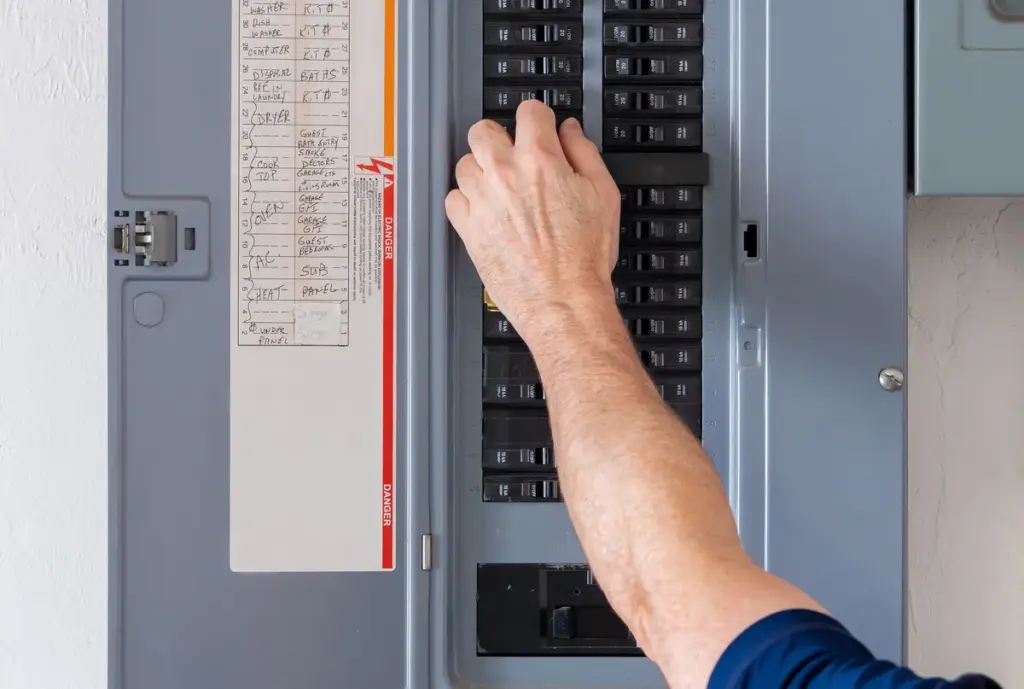
Brandon starts at the panel, not at the outlet. He checks what’s already installed, what the panel is rated for, and how much of that capacity is actually free once you account for everything already running. If there’s room, he runs a new circuit: the right wire gauge for the amperage and distance, a breaker sized to match, and a dedicated run to the appliance or equipment location – whether that’s a garage wall for an EV charger, a laundry nook for a new dryer, or a mechanical room for a heat pump air handler.
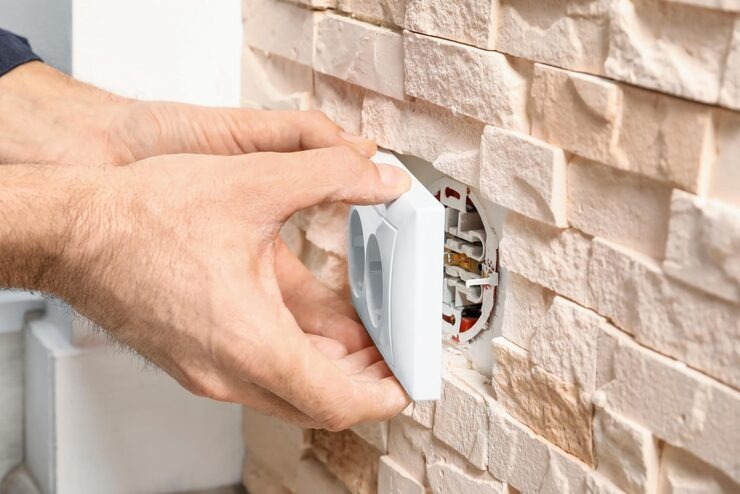
The power to that circuit gets shut off while the connection is made, but it’s isolated – the rest of the house stays live. If the panel itself doesn’t have room or capacity, that’s a different conversation, and one worth having before any equipment gets ordered. Anything that touches the utility’s meter or service drop is coordinated with National Grid, since that portion is their equipment, not ours to touch.
What It Costs
A straightforward dedicated circuit – new breaker, new wire run, new outlet, short distance from the panel – typically runs {PRICE_LOW} to {PRICE_HIGH}. What moves that number is distance from the panel, whether we’re fishing wire through finished walls versus an open basement ceiling, the amperage required, and whether the panel needs any prep work like added breaker space before the new circuit can even go in. An EV charger circuit on a panel with room to spare is on the lower end. The same job on a full 100 amp panel that needs a subpanel or service upgrade first is a bigger project, and we’ll tell you that up front rather than after the wall is open.
How Long It Takes
A single dedicated circuit in an accessible location, like a garage or unfinished basement, is usually a same-day job – a few hours of work. Runs through finished living space take longer because of the wall and ceiling work needed to fish the cable without leaving a mess behind. If the job uncovers a panel that needs attention first, that adds a separate visit, since panel work is scheduled and inspected on its own.
Permits and Inspection
New circuit work is permitted and inspected in Massachusetts, and that’s not a formality we skip. A permit gets pulled with the town, the work gets done to the Massachusetts Electrical Code, and an inspector signs off before the circuit is considered done. This is one of the clearest ways to tell a licensed electrician from someone working off the books – unpermitted circuit work is common enough in older housing stock, and it’s also the kind of thing that shows up as a problem during a home sale or an insurance claim. [EXTERNAL LINK: Mass.gov Board of State Examiners of Electricians – electrical code and permit requirements]
Common Questions
Do I need a dedicated circuit for an EV charger?
Yes. Level 2 EV chargers draw a continuous heavy load, typically on a 40 or 50 amp circuit, and code requires that load to be on its own dedicated circuit, not shared with anything else in the garage or house.
Can my current panel handle a new dedicated circuit?
It depends on how much spare capacity is left. Many North Reading homes still have their original 100 amp panel, and once you count the existing appliances, HVAC, and lighting load, there may not be room for another heavy circuit without an upgrade first.
What's the difference between a dedicated circuit and a subpanel?
A dedicated circuit is a single wire run and breaker for one appliance or piece of equipment. A subpanel is a secondary panel that adds breaker space for multiple new circuits at once, usually needed when a garage, basement, or addition needs several new circuits and the main panel is out of room.
Is this work permitted?
How do I know if I have a Federal Pacific or Zinsco panel?
Reach Out for Dedicated Circuit Installation
Call {PHONE} to talk through what you’re adding and get a straight answer on what your North Reading home’s panel can handle. We work across North Reading and the rest of the North Shore, and we’ll tell you plainly if the job is a simple circuit or something bigger.
Contact information
Talk to Brandon
Brandon’s the licensed electrician on the Belfiore side of the business – he left union work to run electrical for the family company his brother Chris runs the plumbing side of. If you’re planning an EV charger, a new range, a heat pump, or a finished basement and you’re not sure what your panel can actually support, that’s the first conversation to have, before any equipment shows up on your doorstep.