
Dedicated Circuit Installation in Middleton, MA
Most of Middleton went up as post-war suburban lots and then kept filling in through the 70s and 80s, with plenty of newer builds on the bigger parcels off Route 114 and toward the Topsfield line. Those houses got a service sized for baseboard heat, a dryer, and maybe central air. Nobody in 1975 wired for a Level 2 EV charger, a mini-split condenser, or a hot tub on the back deck, and that gap between old capacity and new demand is exactly what dedicated circuit work fixes.
Why Middleton Homes Need This
A dedicated circuit is a single breaker and wire run feeding one piece of equipment and nothing else. No shared outlets, no shared load, no nuisance tripping when the microwave and the window AC decide to run at the same time. In Middleton that matters more than in a newer town because the lot sizes here encourage exactly the additions that need their own circuit: detached garages with EV chargers, finished basements with a workshop or a second fridge, pools and hot tubs on larger backyards, and heat pump systems replacing oil or propane.
The wiring behind the walls tells the story of when the house was built. Homes from the immediate post-war years can still have knob-and-tube segments or cloth-insulated conductors that were never designed for continuous high-load equipment. Panels from the 60s through the 80s sometimes turn out to be Federal Pacific Stab-Lok or Zinsco, both of which have known breaker reliability problems and get flagged by inspectors and insurers alike. And a fair number of Middleton homes are still running on 60 or 100 amp services that were adequate decades ago and are not adequate now. Before Brandon runs a new circuit, he checks what the panel is actually rated for and whether it has room, because sometimes the real fix is a panel upgrade first.
What the Work Involves
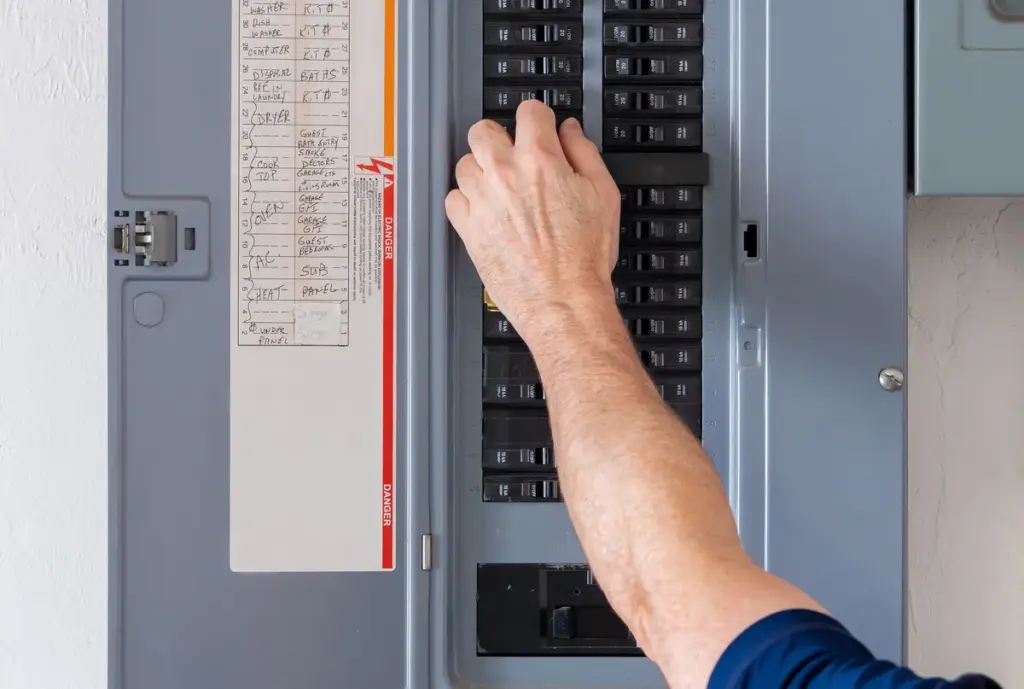
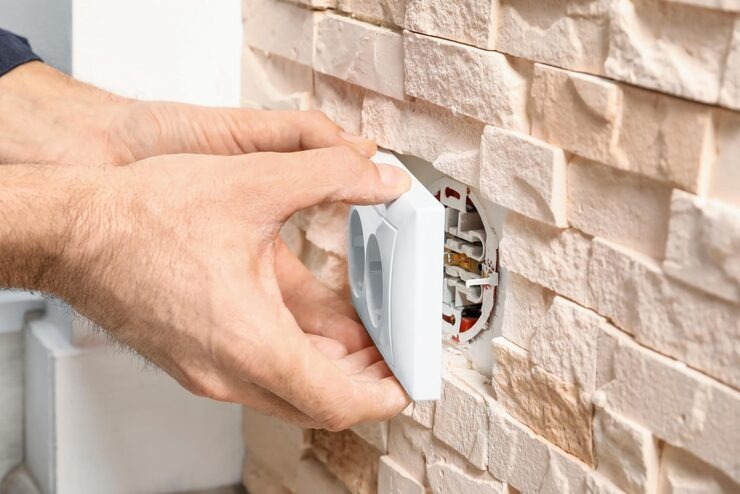
A straightforward dedicated circuit starts at the panel. Brandon sizes the breaker and wire gauge to the load: a 20 amp/12 gauge circuit for a window AC or garbage disposal, a 30 or 40 amp/8 gauge circuit for an electric dryer or range, a 50 amp/6 gauge circuit for a hot tub or larger EV charger, adjusted for run length and voltage drop. He runs new cable from the panel to the equipment location, sets a dedicated outlet or hardwires the connection depending on the appliance, and labels the breaker.
Power to the whole house does not need to be off for most of this. Brandon kills power to the panel only for the few minutes it takes to land the new breaker and make the connection there, then works live circuit by circuit everywhere else. If the job requires opening finished walls or fishing wire through a basement ceiling, that adds time but not necessarily an outage. Anything that touches the utility’s meter or service drop, rather than your interior panel, goes through National Grid, and Brandon coordinates that scheduling directly so you are not stuck making calls yourself.
What It Costs
A single dedicated circuit for something straightforward, like a window AC or a garbage disposal, typically runs {PRICE_LOW} to {PRICE_HIGH}. Bigger loads cost more: a 240-volt circuit for a hot tub, an electric range, or an EV charger involves heavier wire, a larger breaker, and often a longer run, which pushes the number up. What moves the price on any given job is the distance from the panel to the equipment, whether the wire can run through open framing or has to be fished through finished walls and ceilings, and whether the existing panel has an open slot or needs a subpanel or upgrade to make room. Brandon gives you the number after he sees the panel and the run, not before.
How Long It Takes
A single dedicated circuit with a clear, accessible run from panel to appliance is usually a same-day job, often a few hours. Add finished walls, a long run from a basement panel to a detached garage, or a panel that needs a subpanel added first, and it stretches to a full day or two. If the job needs a permit inspection before it’s considered complete, which it does, plan for the inspection to happen a few days to a couple of weeks after the rough work, depending on the Middleton inspector’s schedule.
Permits and Inspection
New circuit work in Massachusetts requires an electrical permit, and Middleton’s building department inspects it before it’s signed off. That is not paperwork for its own sake. It means someone other than the electrician who did the work checks the breaker sizing, the wire gauge, the grounding, and the connections at the panel and at the equipment end. Unlicensed work skips that check entirely, which is how you end up with a 15 amp breaker protecting 12 gauge wire that’s actually carrying a 30 amp load, and nobody finds out until something gets hot. Brandon pulls the permit, does the work to the Massachusetts Electrical Code (based on the National Electrical Code with state amendments), and schedules the inspection so it’s on record with the town, which also matters if you ever sell the house or file an insurance claim.
Common Questions
Do I need a dedicated circuit for an EV charger?
Yes, in almost every case. A Level 2 charger draws a continuous 30 to 50 amp load, which is more than any shared circuit should carry. It needs its own breaker sized to the charger's specs and, often, its own run from the panel.
Can my current panel handle a new dedicated circuit?
It depends on available capacity and open breaker slots. Many Middleton homes still on a 100 amp service, or on an older Federal Pacific or Zinsco panel, may need a panel upgrade before a new high-load circuit can go in safely.
Will the power go out during the installation?
Only briefly, while the new breaker is landed at the panel. Brandon works the rest of the circuit live, so most of the job doesn't require an extended outage.
Is this work permitted?
What size wire does a hot tub or range circuit need?
Reach Out for Dedicated Circuit Installation
Belfiore is a Salem-based company working across Middleton and the rest of the North Shore. Call {PHONE} to talk through what you’re adding, whether it’s a charger, a heat pump, a hot tub, or a workshop circuit, and get a straight answer on what the panel can support.
Contact information
Talk to Brandon
Brandon is the licensed electrician at Belfiore. If you’re not sure whether your panel can handle a new EV charger or a hot tub circuit, or you just want someone to look at what you’ve got before you buy the equipment, that’s a conversation worth having before any wire gets pulled. He’ll tell you straight if the panel needs work first instead of quietly rewiring around a problem.