
Dedicated Circuit Installation in Lynnfield, MA
Most of Lynnfield was built from the 1950s through the 1980s, on lots big enough that a two-car garage and a finished basement were part of the plan from the start. That’s exactly the kind of house now getting an EV charger in the garage, a heat pump on the side wall, and a home theater or workshop downstream in what used to be unfinished space. The panel that came with the house was sized for a smaller life than the one being lived in it now.
Why Lynnfield Homes Need This
A house built in Lynnfield’s main growth era typically shipped with a 100 amp panel, sometimes 150 if the builder upgraded. That was plenty for lights, a fridge, and a window AC unit. It was never sized for a Level 2 EV charger pulling 40 to 50 amps on its own circuit, a heat pump condenser, an induction range, and a finished basement with its own lighting and outlet load all running at the same time.
We still find Federal Pacific Stab-Lok panels in some of the older sections of town, and they’re a real problem, not a scare tactic – the breakers in those panels have a documented history of failing to trip under fault conditions. We also see original knob-and-tube segments in houses that had partial rewires decades ago and never got a full update. None of that is a reason to panic. It is a reason to have a licensed electrician look at what you actually have before you add a 240-volt circuit for a charger or an appliance, because the answer sometimes starts with the panel itself, not just the new circuit.
Lynnfield’s larger lots also mean longer runs – detached garages, pool equipment, sheds with power – which changes wire gauge and conduit decisions compared to a tighter urban lot.
What the Work Involves
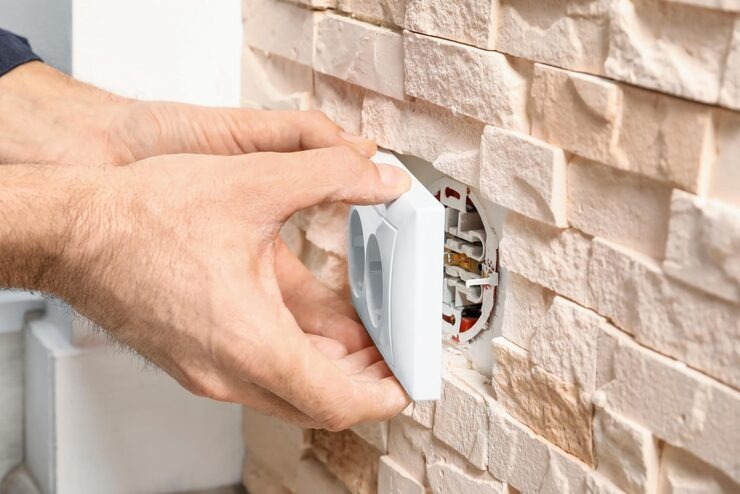
A dedicated circuit means one breaker, one wire run, one purpose – no sharing with outlets, lights, or anything else in the house. For an EV charger that’s usually a 240-volt, 50 or 60 amp circuit on 6-gauge copper. For an electric range it might be a 40 or 50 amp circuit on 6 or 8 gauge. A heat pump condenser has its own load calculation based on the unit’s nameplate, often a 20 to 30 amp circuit with a disconnect at the outdoor unit.
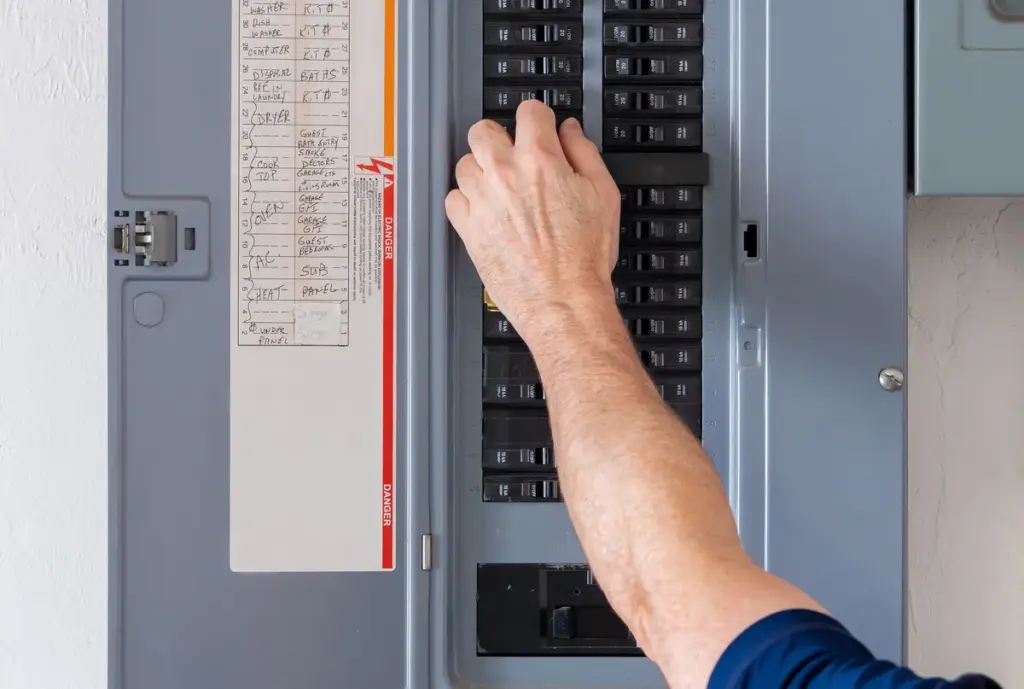
Brandon starts by checking what the panel can actually support – not just open slots, but available amperage after everything else on it is accounted for. If there’s room, he runs new wire from the panel to the location, sets a dedicated breaker sized to the load, and terminates at the appliance, charger, or outlet. Power to the panel gets shut off for the connection itself, usually 30 to 60 minutes, not all day. If the panel doesn’t have the capacity, that’s a different conversation – a subpanel or a full panel upgrade – and it gets priced separately before any work starts, not discovered halfway through.
What It Costs
A straightforward dedicated circuit in Lynnfield, from an existing panel with available capacity, generally runs {PRICE_LOW} to {PRICE_HIGH}. What moves that number: the distance from the panel to the new location, whether the run is through finished walls or an open basement ceiling, the amperage and wire gauge required, and whether a permit-required panel change turns out to be necessary once Brandon opens things up. An EV charger circuit to a detached garage will always cost more than one to an attached garage on the same wall as the panel, simply because of the wire run. We give you the number before we start, not after.
How Long It Takes
Most single dedicated circuits are a one-day job – install, testing, and cleanup done in an afternoon in a lot of cases. Longer runs, finished-wall fishing, or a garage detached from the house can push it to a full day or into a second. If it turns into a panel or service upgrade, that adds its own timeline, including a scheduled outage with the utility that Brandon coordinates directly rather than leaving you to sort out.
Permits and Inspection
Dedicated circuit work is electrical work under Massachusetts code, and it gets a permit and a town inspection, same as any other licensed electrical job. Brandon pulls the permit, an inspector reviews the completed work, and you get a record that the circuit was installed to code – which matters when you sell the house or when an insurer asks. This is also the plain difference between a licensed electrician and someone working off the books: the paperwork exists, and it protects you, not just us. For anyone who wants the underlying rule book, the [EXTERNAL LINK: Massachusetts amendments to the National Electrical Code, published by the state Board of Fire Prevention Regulations – shows homeowners the actual standard the inspection is measured against].
Common Questions
Can my existing panel handle a new dedicated circuit for an EV charger?
It depends on the panel size and what else is already drawing power from it. Brandon does a load calculation on site – if there's headroom, the circuit goes in directly. If not, the honest answer is a subpanel or panel upgrade first.
Do I need a permit for one dedicated circuit?
Yes. Massachusetts requires a permit and inspection for electrical circuit work regardless of whether it's one circuit or a full panel change. We pull the permit as part of the job.
How is a dedicated circuit different from just adding an outlet?
A dedicated circuit runs straight from the panel to one appliance or piece of equipment with its own breaker. A regular outlet shares its circuit with other outlets or lights in the same area, which is fine for a lamp but not for a 50-amp EV charger or an electric range.
I have a Federal Pacific panel - can you still add a circuit to it?
How long will my power be off during the work?
Reach Out for Dedicated Circuit Installation
If you’re planning an EV charger, a heat pump, a new range, or a finished basement in Lynnfield, get the panel checked before you buy the equipment. Call Belfiore at {PHONE} and we’ll set up a time for Brandon to take a look and give you a real number.
Contact information
Talk to Brandon
Brandon left union electrical work to run the electrical side of a family plumbing and electrical company his brother Chris runs the plumbing half of. He’s the one who comes out, looks at the panel, and tells you straight whether it’s a simple circuit or a bigger conversation. No dispatcher relay, no subcontractor – the person who quotes the job is the person who does it.