
Dedicated Circuit Installation in Georgetown, MA
A lot of Georgetown houses were wired for a different life than the one they’re living now. A cape or farmhouse built in the 50s or 60s with a 60 or 100 amp service was fine for a stove, a furnace blower, and a few lamps. It was never sized for a heat pump water heater, a well pump on its own breaker, a table saw in the barn, and an EV charger in the driveway, all at once.
Why Georgetown Homes Need This
Georgetown is well and septic country. That alone changes the electrical conversation, because a well pump needs its own dedicated circuit sized to the pump’s horsepower and the wire run to the well head, not a shared line that also feeds an outlet in the barn or a sump pump in the basement.
The housing stock adds another layer. Some of the older farmhouses and capes in town still have cloth-insulated wiring or knob and tube in sections that were never touched during a remodel. We still find 60 amp services on properties out toward the Groveland and Boxford lines, and we’ve pulled Federal Pacific Stab-Lok panels out of houses where nobody realized the brand had a real failure history. None of that is a reason to panic. It’s a reason to run new circuits correctly instead of tying new loads onto old wiring and hoping.
Then there’s the outage argument, which matters more out here than it does closer to the water. Georgetown loses power on long tree-lined roads for longer stretches than the denser parts of the North Shore, and a lot of homeowners are wiring in standby generators with a dedicated transfer switch circuit for exactly that reason. If you’re adding a generator, an EV charger, a hot tub, or a finished basement with a mini-split, each of those wants its own circuit sized to the load, not a tap off whatever’s nearby.
What the Work Involves
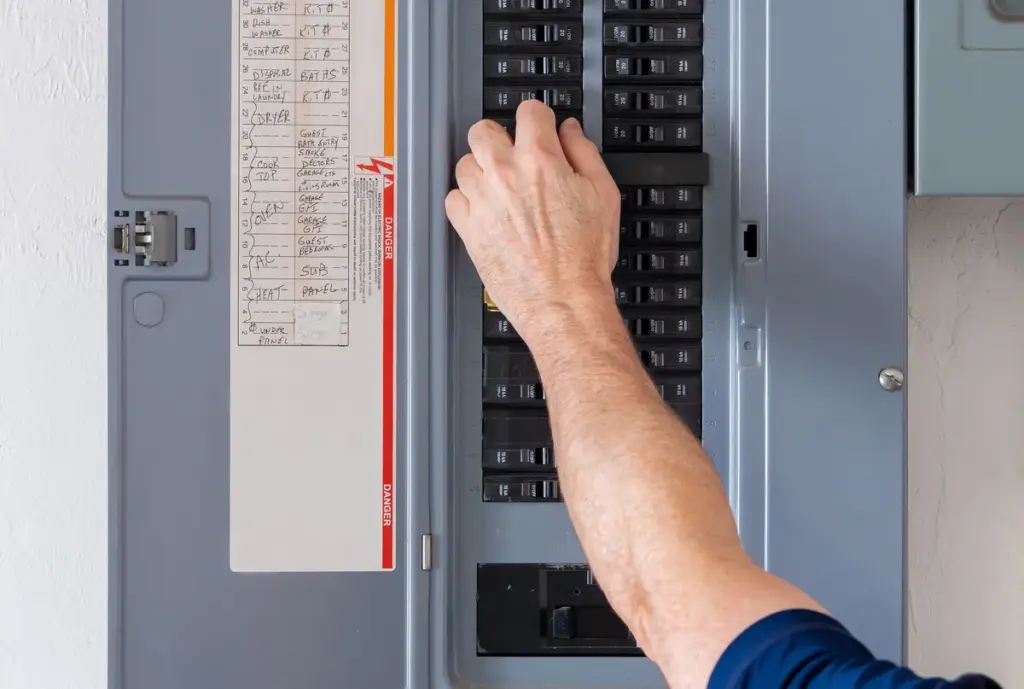
A dedicated circuit means one breaker, one wire run, one job. No sharing with the kitchen counter outlets or the bedroom lights. Brandon starts by checking your panel’s capacity and open breaker slots, because that determines whether this is a straightforward add or whether it needs a subpanel or a service upgrade first.
From there it’s wire gauge and breaker type matched to the load. A 20 amp kitchen or garage circuit runs 12 gauge copper. A 240 volt EV charger or range circuit runs 8 or 6 gauge depending on amperage, on a double-pole breaker. A well pump circuit gets sized to the pump’s nameplate and often needs a GFCI breaker outdoors or in a damp basement.
Power to that area of the house or that branch of the panel gets shut off while the circuit is run and terminated, usually for a couple of hours, not all day. The rest of the house stays live. If the job requires a new meter socket or a service change, National Grid or your utility handles the drop and the meter itself. Brandon handles everything from the meter inward, and everything gets tested with a load check before he calls it done.
What It Costs
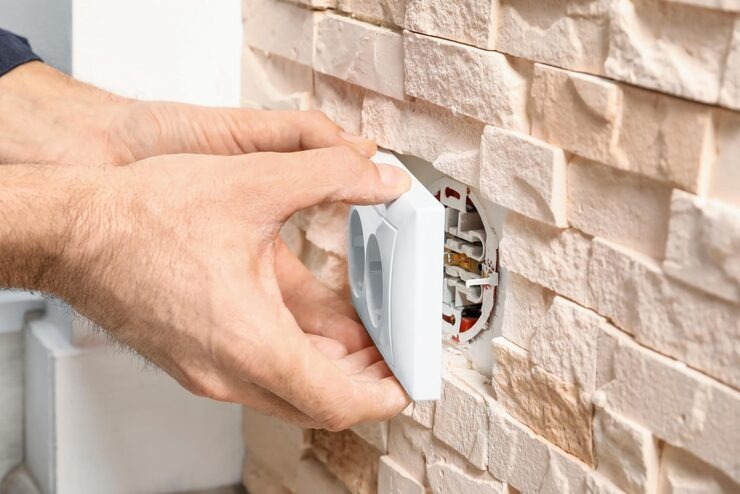
A single interior circuit for an appliance or a finished room runs {PRICE_LOW} to {PRICE_HIGH} in most Georgetown houses, assuming there’s open panel capacity and a reasonable wire run. Costs move up with distance from the panel, whether the run goes through finished walls or a crawlspace, and whether the circuit needs a subpanel because the main panel is full. A well pump or EV charger circuit, or anything requiring a panel with no room left, sits at the higher end. We’ll walk the space, look at the panel, and give you a number before anything gets cut into.
How Long It Takes
Most single dedicated circuits are a one-day job, done in a few hours once Brandon is on site. Add a subpanel or a service upgrade to make room, and you’re looking at a full day plus a scheduled inspection before it’s signed off. Anything involving the utility, like a new meter or service size change, depends on their scheduling window as much as ours.
Permits and Inspection
Circuit work in Massachusetts is permitted and inspected, full stop. Brandon pulls the permit, does the work to the Massachusetts Electrical Code, and the town’s electrical inspector signs off before it’s live. That’s not paperwork for its own sake. It’s the difference between a licensed job and someone’s cousin running a wire on a Saturday, and it’s what your homeowner’s insurance expects to see if there’s ever a claim involving the wiring. [EXTERNAL LINK: Massachusetts electrical code and permitting requirements from Mass.gov, for homeowners who want to see the actual code sections]
Common Questions
Do I need a dedicated circuit for an EV charger?
Yes. Level 2 chargers pull a continuous 240 volt load, usually 30 to 50 amps, and code requires it on its own circuit and breaker. Sharing it with another load isn't allowed and isn't safe.
My house has a 100 amp service. Is that enough for a new circuit?
Often yes, if there's open breaker space and the existing loads leave headroom. Brandon checks actual capacity, not just panel size, before adding anything. If it's tight, a subpanel or service upgrade is the honest answer.
Can you add a circuit for my well pump?
Yes, and it should already have its own dedicated circuit if it doesn't. We size the wire and breaker to the pump's specs and add GFCI protection where it's needed outdoors or in a damp space.
How long will my power be off?
Is this work actually inspected in Georgetown?
Reach Out for Dedicated Circuit Installation
If you’re adding a well pump, an EV charger, a generator, or shop equipment anywhere in Georgetown, call {PHONE} and tell us what you’re plugging in. We’ll tell you what it takes to do it right.
Contact information
Talk to Brandon
Brandon is the electrician here, licensed, and he’s the one who’ll walk your panel and tell you straight whether you need one circuit or a bigger conversation about your service size. No sales pitch, no upsell to work you don’t need.