
Ceiling Fan and Light Fixture Installation in Marblehead, MA
A lot of the housing stock in Marblehead predates central air, dishwashers, and definitely predates ceiling fans in every bedroom. These houses were wired for lamps and a radio, not for the load people are asking of them now. Add a fan with a light kit and a remote control to a room that’s still running on a shared 15-amp circuit from the 1950s, and something downstream is going to trip.
We get called into Marblehead for exactly this reason. What starts as “can you hang a fan in the primary bedroom” often turns into a conversation about the panel feeding that room. That’s fine. We’d rather have that conversation up front than leave you with a fan that flickers every time the AC kicks on.
Why Marblehead Homes Need This
Chris has said it plainly: Marblehead has the highest ticket tolerance in our footprint, and the housing explains why. You’ve got a real concentration of eighteenth and nineteenth century houses downtown and around the Neck, plus a lot of mid-century capes and colonials further out toward Devereux and the causeway. Both categories bring their own wiring problems.
In the old downtown houses, we still find knob and tube wiring in ceiling and wall cavities, especially in additions that were never fully re-pulled. Cloth-insulated conductors from early rewires are common too, and they get brittle with age. A lot of these homes are still sitting on 60-amp services, sometimes on a fuse box, which was fine when the house had a refrigerator and a furnace and nothing else pulling amperage. It is not fine once you start adding fans, recessed lighting, and a coffee maker on the same run.
We also still run into Federal Pacific Stab-Lok and Zinsco panels in this town, both of which have documented breaker failure issues and are flagged by most home inspectors. If your fan installation touches a circuit fed from one of those panels, we’re going to tell you honestly what we found, because that’s a safety issue independent of the fan.
Then there’s the coastal factor. Anything mounted outdoors here, porch fans, exterior sconces, gets salt air on it constantly. That accelerates corrosion on housings, mounting brackets, and wire connectors far faster than it would ten miles inland. We spec fixtures and boxes rated for it, not the box-store version meant for a dry porch in Ohio. Generator demand is also real here. Coastal outages during nor’easters are frequent enough that a lot of Marblehead homeowners are thinking about backup power in the same conversation as fan and fixture work, and it’s worth mentioning to Brandon while he’s already looking at your panel.
What the Work Involves
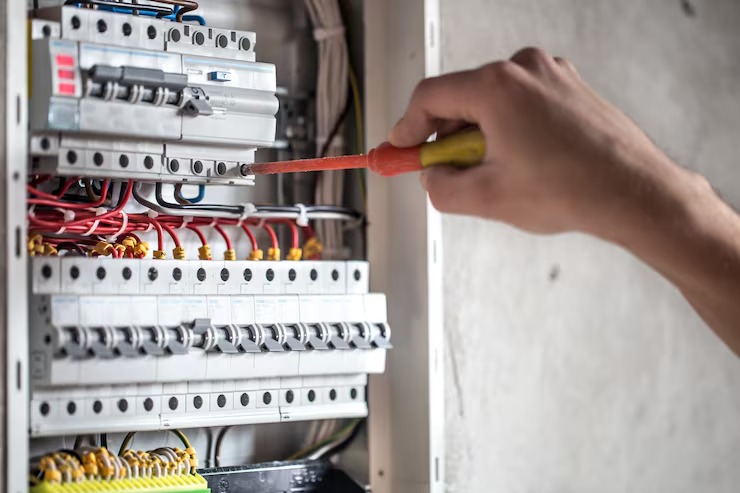
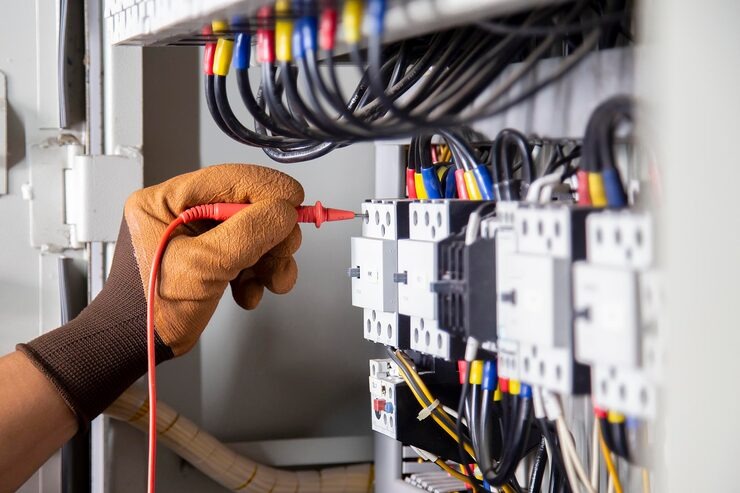
For a straightforward ceiling fan swap where a fixture box already exists, we kill power at the breaker, confirm it’s dead at the box with a tester, pull the old fixture, and check what’s actually feeding it. This is where old houses surprise people. A box that looks fine can be fed by two-conductor cloth wire with no ground, which changes the plan.
If the box isn’t rated for a fan, we replace it with a fan-rated box brace, because a standard light box will not support the weight and vibration of a fan over time, especially a larger 52-inch or 56-inch fan in a bedroom or great room. We run new cable if the existing conductor is undersized, damaged, or ungrounded. Wire gauge depends on the circuit: a 15-amp lighting circuit runs 14 gauge, a 20-amp circuit runs 12 gauge, and mixing those wrong is a common shortcut we won’t take.
Power is typically out for that specific circuit for the duration of the job, usually a couple of hours, not the whole house. If we’re adding a new circuit or dedicated switch leg, that’s more cutting into finished ceiling or wall, and we’ll walk you through the patch work before we start. If the job reveals a panel that can’t safely support additional load, sometimes the fix is a panel upgrade first. That’s a bigger conversation, but we’d rather have it than energize a circuit we’re not comfortable with. Anything involving new service capacity means coordinating with National Grid or your utility for the meter and service drop, we handle everything on your side of the meter, they handle the utility connection.
What It Costs
A single fan replacement on an existing, adequate box and circuit generally runs {PRICE_LOW} to {PRICE_LOW}. Add a remote control or wall control with dimming, and it moves up modestly. Installing a fan where no box exists, new switch leg required, or the circuit needs upgrading pushes the job toward {PRICE_HIGH}, sometimes past it if we’re dealing with knob and tube removal or a panel that needs attention first.
What moves the number: access (a fan on a 12-foot cathedral ceiling costs more in labor and equipment than an 8-foot bedroom ceiling), whether the existing wiring is sound or needs replacing, whether you want multiple fans done in the same visit, and whether the fixture is customer-supplied or something we’re sourcing. We’ll give you a real number after we’ve seen the box and the circuit, not a phone estimate based on guesswork.
How Long It Takes
A single fan swap with an existing rated box is usually a two to three hour job. Two or three fans in one visit is typically a half day. If we’re adding a fan-rated box, running new cable, or wiring in a new switch, plan on a full day for that room. Anything requiring a permit adds the town’s inspection turnaround on top, which we’ll factor into the schedule so you’re not guessing.
Permits and Inspection
Electrical work in Massachusetts, ceiling fan installs included when they involve new wiring or circuits, requires a permit pulled by a licensed electrician and a follow-up inspection by the local electrical inspector. We pull the permit, schedule the inspection, and stand behind the work when the inspector signs off. This isn’t paperwork for its own sake. It’s the difference between a licensed electrician’s work and a handyman’s, and it matters when you sell the house or file an insurance claim. If your project is a straight one-for-one fixture swap on an existing circuit with no new wiring, it may not require a separate permit, and we’ll tell you plainly which category your job falls into. [EXTERNAL LINK: Massachusetts electrical code (527 CMR 12) reference for permit and inspection requirements]
Common Questions
Can you install a ceiling fan where there's only a light fixture now?
Usually yes, but the existing box has to be fan-rated or replaced with one that is. A standard light box isn't built to hold a fan's weight and vibration over time, so we swap it before mounting anything heavier.
Do I need a permit just to swap out an old ceiling fan?
A direct one-for-one swap on an existing, adequate circuit often doesn't need a separate permit. Once we add wiring, a new box, or a dedicated switch, it does, and we handle that filing and the inspection.
My house still has knob and tube wiring. Can you still install a fan?
We can, but we'll usually recommend replacing the wiring to that specific circuit first. Knob and tube has no ground and the insulation gets brittle with age, so tying a new fan into it isn't something we'll do without addressing that.
Will installing a fan trip my breaker or overload my panel?
How long will my power be off during the install?
Reach Out for Ceiling Fan and Light Fixture Installation
If you’re in Marblehead and thinking about fans for the season, or you’ve got a fixture that’s flickered or buzzed one too many times, call {PHONE}. Tell us the room, the ceiling height, and roughly how old the wiring is if you know it, and we’ll get you a straight answer on timing and cost before anyone sets foot on a ladder.
Contact information
Reach Out for Ceiling Fan and Light Fixture Installation
We work across Marblehead and the rest of the North Shore, and we’re a Salem-based company, licensed in both plumbing and electrical. Two brothers, two trades, no subcontracted crews showing up in your driveway.
Talk to Brandon
Brandon is the electrician side of this business. He left union work to run electrical for Belfiore alongside his brother Chris on the plumbing side, and fan and fixture calls are often where he first sees a house's actual wiring condition. If he finds something concerning, an ungrounded circuit, a panel that's not up to the load, he'll tell you straight, without turning a fan install into a sales pitch for work you don't need yet.