Water Heater Repair in Topsfield, MA
A lot of Topsfield homes are on well water, which is hard on a water heater’s tank and heating element in ways town water just isn’t. Pair that with older oil-fired systems and undersized tanks left over from a smaller family’s needs, and it’s no surprise this is one of the most common calls we get out this way.
Water Heater Repair in Topsfield
Chris and the crew work water heater calls across Topsfield on a regular basis, from smaller capes near the town center to the larger estate-style properties out toward the Boxford line. We see everything from 40-gallon electric tanks in a finished basement to oil-fired indirect heaters tied into a boiler. Each of those fails differently, and each gets a different fix.
We’re not going to tell you a tank needs replacing when a thermocouple, a heating element, or a bad gas valve will get you another few years out of it. That’s the whole approach here.
What Topsfield Homes Typically Have
Topsfield has a good number of older farmhouses and colonials, plus newer construction on larger lots with long driveways. That mix matters for water heater work. Natural gas is available on some streets in town, but a real share of Topsfield homes still run on oil or propane, especially further from the center. If your street doesn’t have a gas main, your water heater is either electric, oil-fired through an indirect tank off the boiler, or propane with a tank out back.
Plenty of these homes are also on private wells, which means iron, sediment, and hard water are working against your tank’s anode rod and heating element every day. That’s a real factor in how often we’re replacing elements and how much sediment we’re draining out of a tank that’s only a few years old.
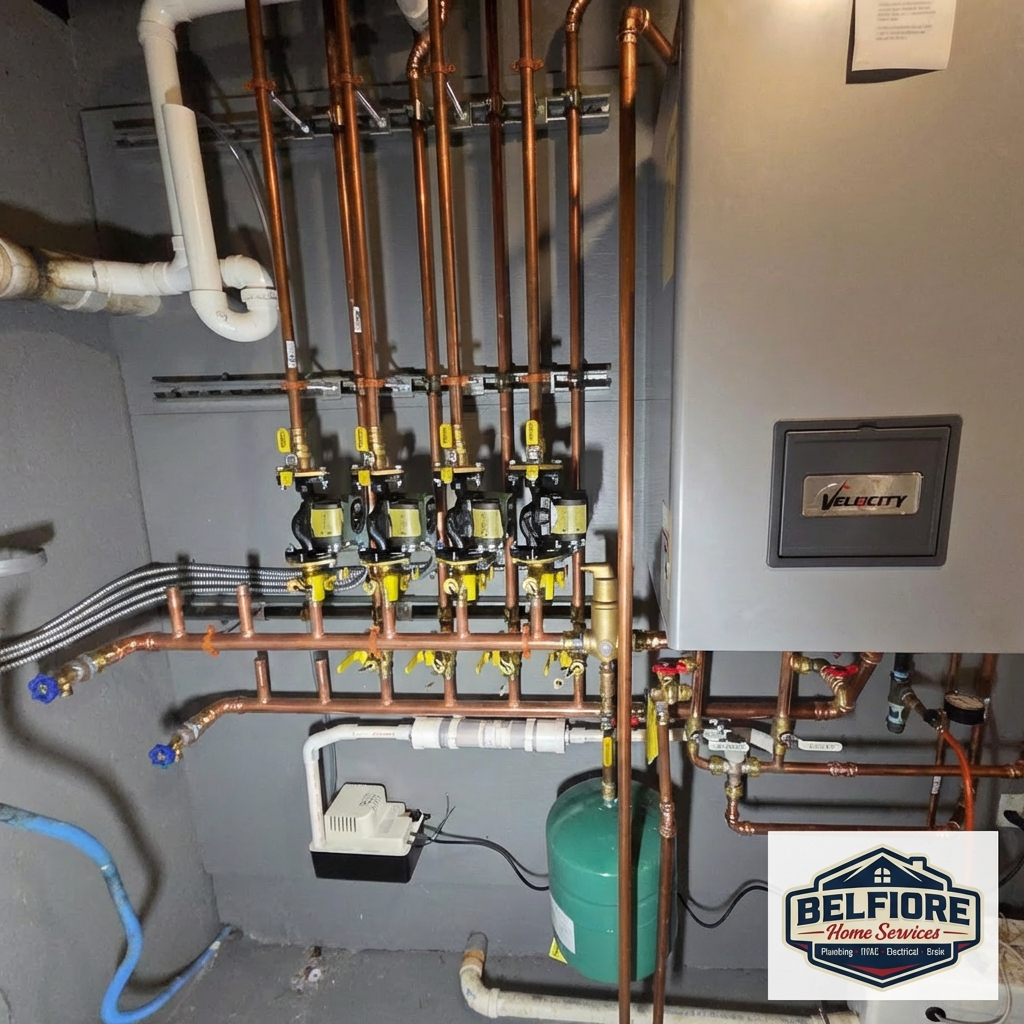
Heating systems here skew toward older steam and hot water boilers, some original to houses built decades ago and updated piecemeal since. If your hot water comes from an indirect tank off that boiler, a repair call sometimes has as much to do with the boiler’s aquastat or circulator as it does with the tank itself.
What the Work Involves
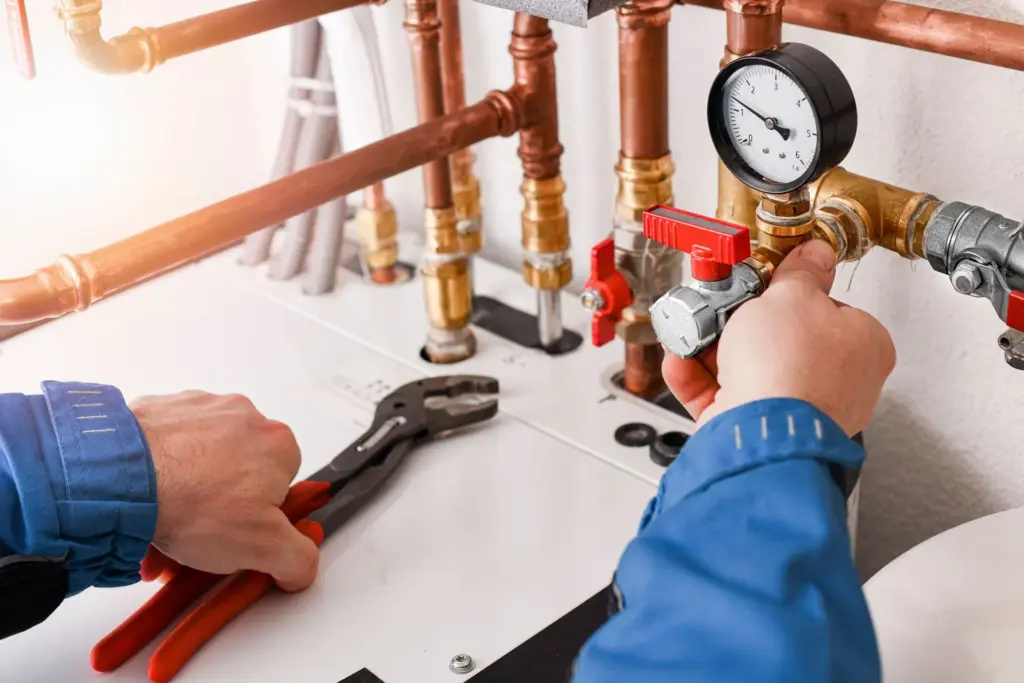
A repair call starts with figuring out what’s actually failed, not just what’s leaking. For a standard tank, that means checking the thermocouple or ignitor, the gas valve, the heating elements on an electric unit, the pressure relief valve, and the anode rod if the water smells like sulfur. On a gas unit we check venting too, since a partially blocked flue or a cracked vent pipe is a safety issue before it’s a comfort issue.
For an indirect tank off a boiler, we’re looking at the boiler’s aquastat, the circulator pump, and the zone valve feeding that tank. Sometimes the tank is fine and the boiler side is the actual problem.
Most repair jobs mean the tank gets drained and isolated first, so the house is without hot water for the visit, usually a few hours depending on the part and whether we have it on the truck. If gas line work is needed, we size it to code for the appliance, whether that’s a straightforward swap or a larger line for a higher-BTU unit.
Repair or Replace
Here’s the honest version. If your tank is under 8 years old and the failure is a part, an element, a valve, or a thermocouple, repair is almost always the right call. Those are inexpensive fixes that buy you real years.
If the tank itself is leaking from the body, not a fitting, that’s a replace situation. Once the steel tank is compromised, there’s no repair for that. Age matters too. A tank past 10-12 years that’s already had one or two repairs is usually close enough to the end that we’ll tell you straight rather than keep patching it.
For Topsfield specifically, well water households sometimes get shorter tank life from sediment buildup, so we’ll flag if that’s shaping the timeline. We’d rather tell you a repair is worth it and be right than sell you a new tank you didn’t need.
What It Costs
Costs depend on the fuel type, the specific part, and whether it’s a tank, an indirect system, or a tankless unit. A heating element or thermocouple swap is on the lower end. Gas valve or circulator work runs more, and anything involving the boiler side of an indirect system costs more still. We’ll give you the number for your specific situation before we start, not after {PRICE_PLACEHOLDER}.
How Long It Takes
Most straightforward tank repairs, a heating element, a thermocouple, a relief valve, are same-visit fixes, typically an hour or two once we’re on site with the part. Gas valve replacements and indirect tank or boiler component work can take longer, sometimes requiring a return trip if a specialty part needs to be ordered. We’ll tell you which category your job falls into before we start draining anything.
Common Questions
Can a water heater repair really extend the life of an old tank?
Yes, in a lot of cases. A failed heating element, thermocouple, or gas valve doesn't mean the tank itself is bad. If the tank body isn't leaking and it's under about 10 years old, a targeted repair often adds several more years of service.
Does well water in Topsfield really affect my water heater?
It does. Sediment and mineral content from well water accelerate anode rod wear and can build up inside the tank, which shortens element life and sometimes shortens the tank's overall lifespan compared to a home on town water.
My hot water comes from my boiler. Is that a plumbing repair or a heating repair?
Often both at once. If you have an indirect tank fed by your boiler, the failure could be in the tank, or it could be the boiler's aquastat, circulator, or zone valve. We check both sides so you're not paying for a fix that doesn't solve the actual problem.
Is gas available for water heaters throughout Topsfield?
Not on every street. Some parts of town have natural gas service, and others rely on oil or propane. If gas isn't available at your address, that shapes whether a like-for-like replacement or a different fuel type makes more sense down the line.
What's a sign I should stop repairing and replace instead?
Reach Out for Water Heater Repair
We work across Topsfield on water heater repairs for tanks, indirect systems, and tankless units alike. Call {PHONE} to get a straight answer on what’s wrong and what it’ll take to fix it.
Contact information
Talk to Chris
Chris runs the plumbing side of this business and has seen enough Topsfield basements, boiler rooms, and well setups to know what’s normal for this town and what’s a warning sign. If your water heater is acting up, or your hot water just isn’t lasting like it used to, call and describe what’s happening. He’ll tell you straight whether it’s worth fixing.