
Water Heater Repair in Salem, MA
A lot of Salem homes are running water heaters that were sized for a smaller household, or for a bathroom count that doubled after a renovation. Add in well water on some streets and older galvanized supply lines on others, and a unit that’s struggling to keep up or leaking at the fitting isn’t unusual. Before you write off the tank, get someone to look at what’s actually failing.
Water Heater Repair in Salem
Chris and the team handle water heater repair calls all over Salem, from the streets around the historic district to the newer construction out toward the Salem State side of town. The most common calls: no hot water at all, water that runs lukewarm and never gets hot, a pilot light that won’t stay lit, a pressure relief valve dripping, or rust-colored water that points to a failing tank lining. Some of these are quick fixes. Some are your tank telling you it’s done.
What Salem Homes Typically Have
Salem’s housing stock skews old. A big share of the city’s homes were built before 1940, plenty of them converted from single-family to two and three family use over the decades. That history shows up in the mechanical room as much as it does on the front porch.
Gas is available on most streets in Salem proper, so you’ll find a mix of gas-fired tank water heaters and, in some of the converted multi-families, older electric units that were installed when a gas line wasn’t run to that unit. Homes further out toward Marblehead-adjacent neighborhoods and some of the outlying pockets still run on oil, which changes the water heater conversation entirely since an oil-fired system usually means an indirect tank off the boiler rather than a standalone heater.
Most of the city is on town water, but there are homes, especially on the outskirts, drawing from private wells. Well water in this area tends to run hard and sometimes carries iron, which shortens a tank’s life and is worth addressing with filtration rather than just replacing heaters every few years.
What the Work Involves
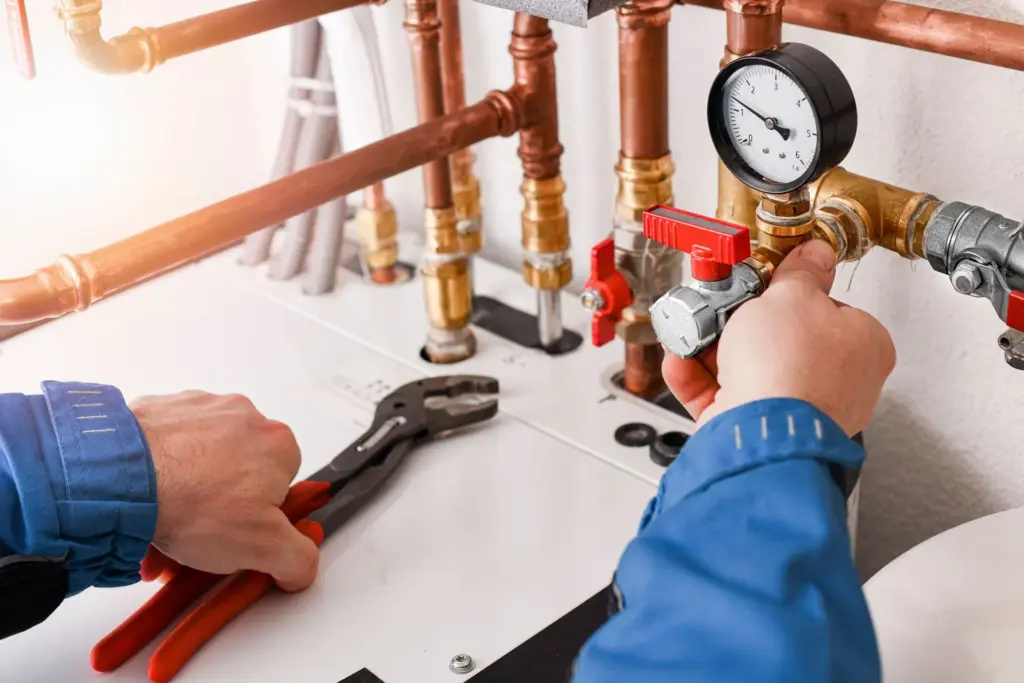
A repair call starts with figuring out whether the problem is the heat source, the tank, or the plumbing around it. On a gas unit that means checking the thermocouple or igniter, the gas valve, and venting. Salem’s older homes sometimes have water heaters vented into a shared chimney flue with the boiler, and if that flue was resized or relined for a newer boiler, the water heater’s draft can suffer. That gets checked, not guessed at.
On an electric unit, it’s the heating elements and thermostats, and a look at the breaker and wire gauge feeding it. A standard 4500-watt electric water heater needs a dedicated 30-amp, 10-gauge circuit. In some of the older conversions we still find these tied into undersized wiring that was never right for the load.
If the fix involves draining the tank to replace an element or clear sediment, expect the water heater to be offline for an hour or two. A full repair visit, diagnosis through fix, usually runs half a day at most. Nobody’s without hot water overnight for a straightforward repair.
Repair or Replace
Here’s the part most companies skip past. If your water heater is under eight years old and the failure is a part, a thermocouple, an element, a valve, that’s a repair, not a sales pitch for a new tank. Chris will tell you that plainly, because a $150 to $300 part swap on a tank with years left in it is the right call and everybody knows it.
Where replacement makes sense: the tank itself is leaking from the body rather than a fitting, it’s past 10 to 12 years old and showing rust in the water, or you’re on your second or third repair in two years. At that point you’re paying to patch a tank that’s going to fail anyway, usually at a worse moment. If the household has grown or you’ve added a bathroom, undersizing is also a real reason to replace rather than repair, since no amount of tinkering fixes a tank that was never big enough for the demand.
What It Costs
Simple repairs, a thermocouple, a heating element, a pressure relief valve, run at the lower end. More involved repairs, like gas valve replacement or venting corrections, cost more because of the labor and parts involved. Chris gives you the number before any work starts, not after the tank’s already drained. If replacement turns out to be the better option, that gets quoted separately so you’re deciding with real numbers in hand, not a repair estimate that quietly turned into a sales conversation.
How Long It Takes
Most water heater repairs in Salem are same-day. Diagnosis takes maybe 30 minutes. Parts for common failures, thermocouples, elements, valves, are usually on the truck. The full visit, start to hot water again, typically wraps in two to three hours. Jobs that involve venting work or a part that has to be sourced take longer, and Chris will tell you that up front rather than have you find out when the truck leaves.
Common Questions
How do I know if my water heater needs repair or replacement?
Age is the biggest factor. Under 8 years old with a single failed part is usually a repair. Past 10 to 12 years, or on a second repair in a couple years, replacement is generally the better money. Rust-colored water is a sign the tank itself is failing from the inside.
Why is my water heater making popping or rumbling noises?
That's usually sediment built up at the bottom of the tank, common in Salem homes on well water or with harder town water. It can often be flushed out, though heavy buildup over years can shorten the tank's remaining life regardless.
Can a water heater be repaired if it's leaking?
Depends where the leak is. A leaking fitting, valve, or connection is a repair. A leak from the tank body itself means the tank is failing and needs replacement, no way around it.
Do you work on both gas and electric water heaters in Salem?
Yes. Chris handles gas-fired tanks, electric tanks, and the indirect tanks common in homes still running oil boilers, which is a real setup in parts of Salem's older housing stock.
What if my home is on well water?
Reach Out for Water Heater Repair
Call {PHONE} to get a straight read on your water heater. We work across Salem and the North Shore, and we’ll tell you honestly whether it’s worth fixing before we touch a wrench.
Contact information
Talk to Chris
Chris runs the plumbing side of Belfiore and has been in enough Salem basements and utility closets to know what a given street’s housing usually means for the water heater setup before he even opens the closet door. If your hot water’s acting up, describe what’s happening, lukewarm water, a smell, rust color, a pilot that won’t hold, and he can usually tell you over the phone whether it sounds like a repair or something bigger.