
Water Heater Repair in Marblehead, MA
A lot of Marblehead homes are running heating and hot water equipment that’s older than what you’d find inland. Between the salt air, the age of the housing stock, and the number of properties still on well water, a water heater problem here is rarely as simple as “it broke.” Chris and the team look at the whole setup before they tell you what to do about it.
Water Heater Repair in Marblehead
Marblehead’s tight streets and old lots mean equipment access is often the first challenge, before anyone even opens a panel. Tanks tucked into low basements, oil-fired systems sharing space with an ancient boiler, units wedged behind stone foundation walls that were never built with a 50-gallon tank in mind. We work around that. A repair call here starts with figuring out what you actually have, what’s original to the house, and what’s been swapped in by a previous owner or contractor.
Because Marblehead carries a reputation for higher-end coastal homes, we also see more requests for tankless upgrades and larger-capacity systems than in some neighboring towns. That’s a conversation worth having, but it comes after we’ve looked at the unit you’ve got and told you honestly whether it needs replacing at all.
What Marblehead Homes Typically Have
Marblehead’s housing stock skews old, plenty of it eighteenth and nineteenth century, with additions and renovations layered on over decades. That means you’ll find a mix of steam boilers, older hot water boilers, and standalone water heaters that were installed whenever the last major plumbing update happened, not necessarily on any planned schedule.
Gas availability varies block by block. Some streets have natural gas service, others don’t, and a fair number of homes still run on oil for heat with a separate electric or gas water heater bolted on. Before we talk repair or replacement options, we check what fuel source is actually available at your house, because that decision drives everything else, including whether tankless is even on the table.
Water source matters too. Marblehead is mostly town water, but there are pockets on private wells, especially on the outskirts and older estate lots. Well water with iron or hardness will shorten the life of a tank heater faster than town water will, so if you’re on a well and your heater keeps failing early, that’s usually part of the story.
What the Work Involves
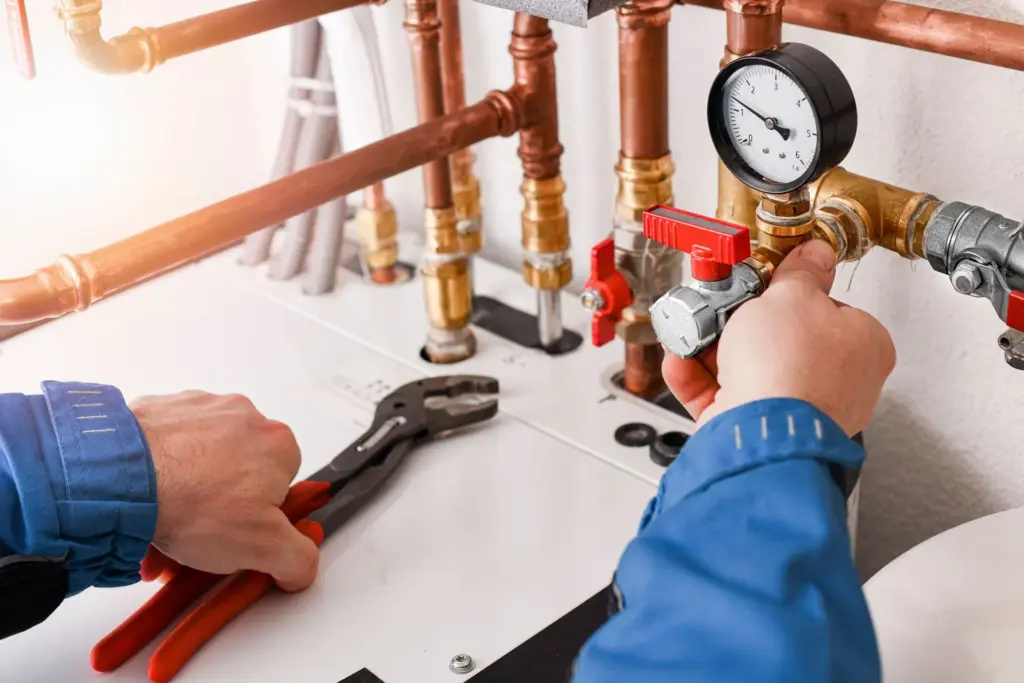
A straightforward repair visit starts with draining down the tank partially or fully, depending on what we’re replacing. We check the anode rod, the thermocouple or igniter on gas units, the heating elements and thermostats on electric units, and the temperature and pressure relief valve. On gas-fired heaters we also check venting, because older Marblehead chimneys and vent stacks weren’t always sized or maintained for the equipment now tied into them.
If gas sizing is part of the problem, meaning the line feeding the heater is undersized for the BTU load, that gets flagged before any part gets swapped. Running a new gas line or upsizing an existing one is a separate job with its own permit, and we’ll walk you through that if it’s needed rather than patching around it.
Most repair visits leave you without hot water for a few hours, not days. If the fix requires a part that isn’t on the truck, we’ll tell you that up front and give you a real timeline instead of a vague one.
Repair or Replace
This is the part most companies skip past to get to a sales pitch. We don’t. If your water heater is a handful of years old and the problem is a failed thermocouple, a bad heating element, or a stuck valve, that’s a repair, full stop. Those are inexpensive parts and quick fixes, and there’s no reason to replace a tank that still has years of service left in it.
Replacement makes sense when the tank itself is leaking from the bottom, when it’s well past typical service life and starting to show rust at the fittings, or when repeated repairs are chasing the same underlying failure. Chris will tell you straight which category your unit falls into. If it’s a repair, you’ll get a repair quote, not a replacement pitch.
What It Costs
Repair costs depend on the part and the access. A thermocouple or thermostat swap is a small job. A gas control valve or a set of heating elements costs more in parts and labor. Access matters in Marblehead specifically, since a heater wedged into a tight basement corner or an old crawlspace takes longer to work on than one sitting in an open utility room. We’ll give you a number before we start, not after.
{PRICE} is a placeholder here on purpose. Every job is different depending on the fuel type, the parts needed, and what we find once the panel’s off, so we quote it on the visit rather than guessing over the phone.
How Long It Takes
Most repair visits run one to two hours once we’ve diagnosed the issue. Diagnosis itself is usually fast, fifteen to thirty minutes, unless the access is difficult or the problem is intermittent. If a part has to be ordered, we’ll tell you that on the spot and get you scheduled for the return visit as soon as the part’s in. We don’t leave a house without hot water any longer than we have to.
Common Questions
How do I know if my water heater needs repair or a full replacement?
Age and the specific failure matter most. A younger unit with a single failed part, like a thermocouple or heating element, is almost always worth repairing. A tank that's leaking from the bottom or corroding at the fittings is at the end of its life and replacement is the honest answer.
Are Marblehead homes usually on natural gas or oil for hot water?
It varies by street. Some parts of Marblehead have natural gas service, others don't and rely on oil heat with a separate electric or gas water heater. We check what's available at your address before recommending any repair or replacement path.
Does well water affect water heater lifespan in Marblehead?
Yes. Homes on private wells, which are more common on Marblehead's outskirts, often see faster mineral buildup and anode rod depletion. If your heater is failing early and you're on a well, that's usually part of why.
How long will I be without hot water during a repair?
Most repairs take one to two hours once diagnosed, so you're typically without hot water for a few hours, not days. If a part needs to be ordered, we'll tell you upfront and get you scheduled quickly for the follow-up visit.
Can you work on water heaters in tight or old Marblehead basements?
Reach Out for Water Heater Repair
If your water heater in Marblehead is leaking, not heating, or making noise it shouldn’t, call {PHONE}. We’re a Salem-based company working across Marblehead and the rest of the North Shore, and we’ll get someone out to look at it and give you a straight answer on repair versus replacement.
Contact information
Talk to Chris
Chris runs the plumbing side of Belfiore and has seen most of what Marblehead’s older housing stock can throw at a water heater, from undersized gas lines to well water eating through tanks faster than it should. He’ll look at your setup, tell you if it’s a repair or a replacement, and explain why, in plain language, before any work starts.