
Water Heater Installation and Replacement in Salem, MA
A lot of Salem homes are still running the water heater that came with the house, or close to it. Between the pre-1940 housing stock, converted two and three families, and older steam and hot water boilers that were never sized right in the first place, water heater problems here usually trace back to age and undersizing rather than one bad part. If you’re on well water anywhere outside the downtown core, sediment and mineral buildup speed that process up even more.
Water Heater Installation and Replacement in Salem
Chris and the team handle water heater installs and replacements across Salem, from single-family homes near the historic district to multi-unit conversions on the outskirts of town. Some jobs are a straight swap, same fuel type, same spot, new unit. Others involve moving a heater out of a cramped basement corner, upsizing a gas line that was never adequate, or converting from electric to gas because the numbers finally make sense. We look at the whole system before we quote anything, not just the tank.
What Salem Homes Typically Have
Salem’s housing stock skews old. A good share of the homes we work in were built before 1940, many converted from single-family to two or three units at some point, which means the mechanical systems have usually been patched and re-routed more than once. It’s common to find a water heater feeding a house that also has an aging steam or hot water boiler doing double duty for space heating, both well past what most manufacturers call a normal design life.
Gas is available on most streets in Salem proper, but it isn’t universal. Some pockets, especially older side streets and homes further from the main gas mains, still run on oil or have electric-only service. That changes what’s realistic for a replacement. A gas tank or tankless unit only makes sense if gas is actually run to the house or can be brought in without tearing up half the yard. Town water covers most of Salem, but a handful of properties on the edges of town are on private wells, and those homes deal with sediment and mineral scale in the tank a lot faster than town water customers do.
What the Work Involves
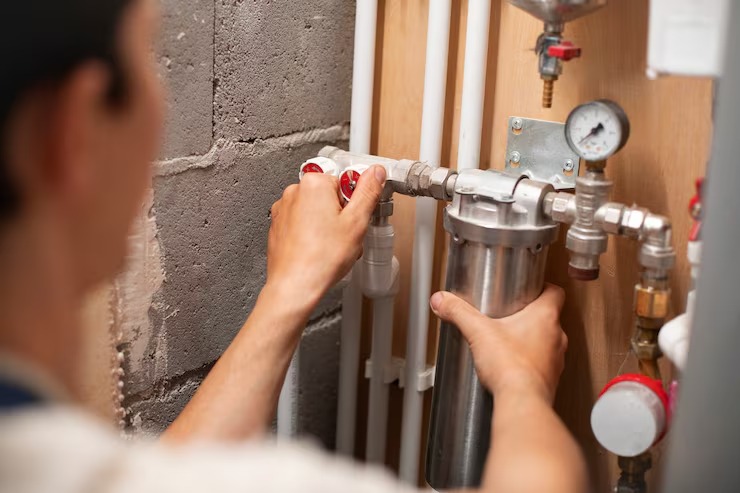
A standard tank swap means draining the old unit, disconnecting the water lines and vent, and setting the new tank on a proper stand or pan if it’s in a finished space. For gas units we check that the gas line is sized correctly for the BTU input, not just reused because it was there before, and we confirm the vent connector and draft are still up to code, especially if the old unit was vented into a chimney shared with a boiler. Electric units get checked against the breaker and wire gauge already in the panel. A lot of older Salem homes have a 30-amp double-pole breaker on 10-gauge wire for the water heater circuit, which is fine for most tanks but not for a high-output hybrid or larger electric unit.
If you’re moving to tankless, that’s a different scope entirely. It means larger gas sizing in most cases, a dedicated vent run through the wall or roof, and often an electrical outlet nearby for the unit’s controls. We walk through all of that before we start, not after.
Repair or replace
Not every water heater problem means a new tank. If the unit is under ten years old and the issue is a bad thermocouple, a failed heating element, a pressure relief valve, or a thermostat, that’s a repair, and we’ll say so. Where it usually stops making sense to repair is once the tank itself is leaking from the bottom or has visible rust coming through the seams. A leaking tank isn’t a part you can replace. That’s the water heater telling you it’s done.
Age matters too. Most standard tanks are built to last somewhere around 8 to 12 years depending on water quality and use. If your unit is past that range and starting to act up, sinking money into a repair on a tank that’s already near end of life usually isn’t the better bet, and we’ll walk you through why rather than just quoting a part.
What it costs
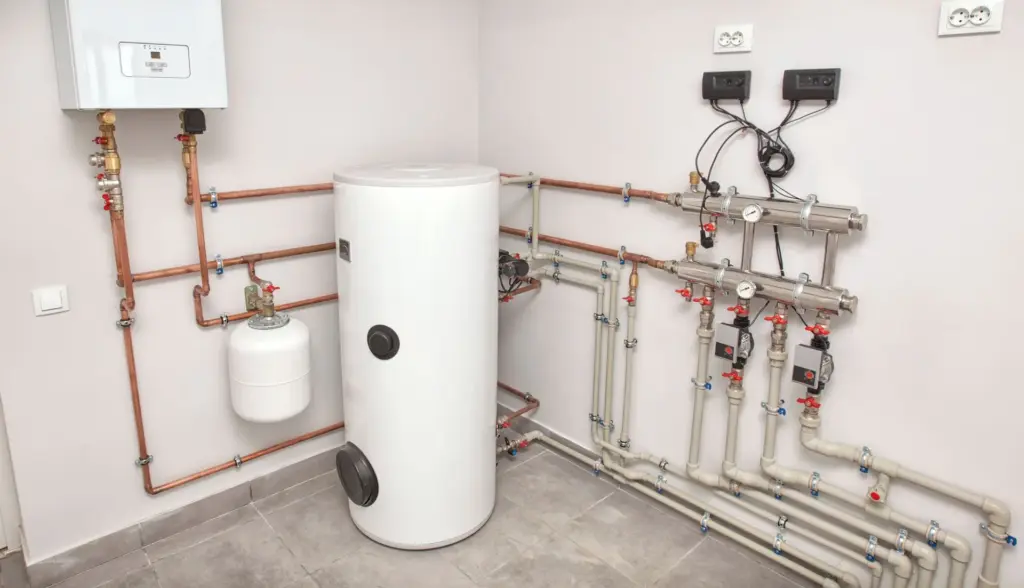
Cost depends on fuel type, tank size, and whether anything upstream needs work, like gas line sizing, venting, or an electrical circuit that isn’t up to the new unit’s demand. A like-for-like gas tank swap with no complications is the simplest and least expensive version of this job. Moving from electric to gas, upsizing a gas line, or switching to tankless adds cost because there’s more involved than swapping the tank itself. We’ll give you a real number for your house before any work starts, not a phone estimate based on guesswork. Call {PHONE} and Chris can talk through what your specific setup would run.
How long it takes
A standard tank replacement, gas or electric, usually takes half a day. That includes draining and removing the old unit, setting the new one, reconnecting water, gas or electrical, and testing. You’re without hot water for that stretch, not longer. Jobs that involve rerouting gas lines, upgrading a vent, or converting fuel types take longer, sometimes a full day, because there’s more to inspect and connect before we can fire the unit up and check it.
Common Questions
How do I know if my water heater needs to be replaced instead of repaired?
Rust-colored water, a tank leaking from the bottom, or a unit past 10-12 years old that's failing are the main signs replacement makes more sense than another repair. If it's a newer unit with one bad part, like a thermocouple or heating element, repair is usually the better call and we'll tell you that.
Can I switch from an electric water heater to gas?
Often yes, if gas service is already run to the house or can be brought in reasonably. It requires a gas line sized for the new unit and a proper vent, so it's more involved than a straight swap, but it's a common upgrade in Salem homes where gas is available on the street.
Do older Salem homes need any special work for a water heater install?
Sometimes. Homes with knob and tube wiring or a 60 or 100 amp electrical service may need panel or circuit work if you're installing an electric unit. Homes with a shared chimney vent for a boiler and water heater need that venting checked when one unit is replaced.
Does well water affect water heater lifespan?
Yes. Sediment and mineral content in well water builds up in the tank faster than with town water, which shortens the life of the heating element and the tank itself. Homes on wells in Salem's outer areas often see more frequent tank issues for this reason.
How long will I be without hot water during a replacement?
Reach Out for Water Heater Installation and Replacement
Whether you’re dealing with a tank that’s finally given out or you’re planning ahead before it does, Belfiore works across Salem and the North Shore on water heater installs and replacements, gas and electric alike. Reach out at {PHONE} to set up a time to look at your current setup and go over real options.
Contact information
Talk to Chris
Chris runs the plumbing side of the business and has been in enough Salem basements to know what an old steam boiler next to a tired water heater usually means before he even looks at the nameplate. If you want a straight answer on whether your unit needs replacing or just a part, call {PHONE}. No pressure to upsize or upgrade past what your house actually needs.