
Water Heater Installation and Replacement in Marblehead, MA
A lot of Marblehead houses were built before anyone thought about hot water demand for two bathrooms and a dishwasher running at once. Add older steam or hot water boilers, tanks tucked into tight basements or closets, and in some cases well water instead of town water, and a straightforward tank swap turns into a job that needs some judgment. This page covers how we handle water heater installation and replacement in Marblehead, plainly, so you know what you’re dealing with before Chris ever picks up a wrench.
Water Heater Installation and Replacement in Marblehead
Marblehead has some of the oldest housing stock we work in across the North Shore, and it shows in the mechanical rooms. We see original 40 and 50 gallon tanks pushed well past their expected life, undersized units trying to keep up with renovated bathrooms, and setups crammed into spaces that were never meant to hold modern equipment. Salt air off the harbor is also hard on anything with exposed metal, so vent piping, connectors, and fittings near exterior walls corrode faster here than they would inland.
Chris has replaced enough tanks in Marblehead’s older homes to know that access is usually the first problem to solve, before you even get to gas sizing or venting. A lot of these installs need a plan for getting the old tank out and the new one in without tearing up finished space.
What Marblehead Homes Typically Have
Most of the homes we go into here were built in the 1800s or early 1900s, with additions and updates layered on over the decades. That means a mix of heating systems. Steam boilers are still common in the oldest houses, hot water boilers are common in homes updated mid-century, and a smaller number have been converted to modern high-efficiency systems. The water heater is usually a separate, standalone tank rather than tied into the boiler, though we do see some indirect-fired setups where the boiler heats the domestic hot water too.
Marblehead is served by natural gas on most streets, but not all of them. Some pockets, especially closer to the water and in older sections of Old Town, still run on oil or propane. That changes everything about a replacement job, from venting requirements to whether a tankless unit is even a realistic option. Town water reaches most of Marblehead, but there are homes on well water, particularly toward the Marblehead Neck and outlying areas, where sediment and mineral content mean a heater lasts longer with filtration ahead of it instead of without.
What the Work Involves
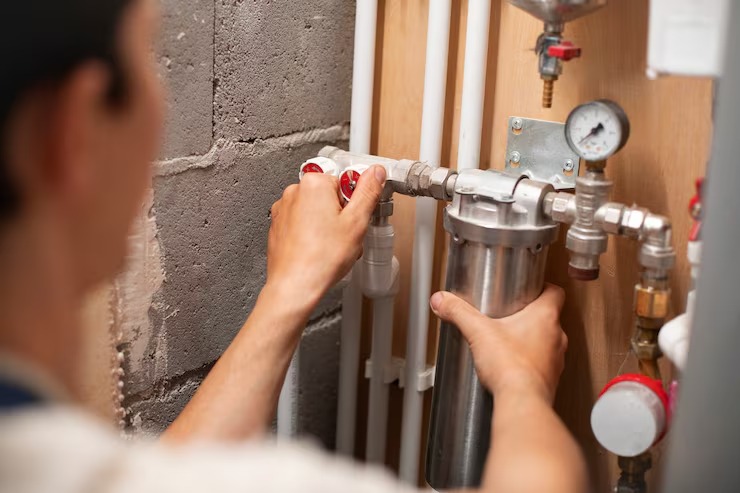
A standard tank replacement starts with draining the old unit, which can take longer than people expect if there’s sediment buildup, common on well water and on older units that were never flushed. From there we disconnect the water lines, gas line or electrical circuit, and the vent connector, then remove the old tank.
For gas units, we check that the gas line is sized correctly for the new heater’s BTU input. Older Marblehead homes sometimes have undersized gas lines from decades of add-on appliances, and that gets corrected before the new unit goes in, not after. Venting gets checked too. A lot of these houses have old masonry chimneys shared with a boiler, and if the boiler has been replaced with a more efficient model, the chimney can end up oversized for what’s venting through it now, which affects draft and safety.
Electric units need a dedicated 240-volt circuit, typically on a 30-amp double-pole breaker with 10-gauge wire, and we verify the existing circuit meets code before reusing it. Once the new tank is set, connected, and the gas or power is on, we check for leaks, run the water, and make sure the temperature and pressure relief valve is piped correctly to a safe discharge point.
Repair or replace
Not every failing water heater needs to come out. If the tank itself is sound and the problem is a failed thermocouple, a bad heating element, a dying thermostat, or a pilot control issue, that’s a repair, and Chris will tell you that straight. Those parts fail on units of any age and fixing them is usually the right call if the tank has years left in it.
Replacement makes sense when the tank itself is leaking, when it’s original to a much older home and past its expected service life, when it can’t keep up with the household’s actual hot water use, or when repairing it would mean spending real money on a unit that’s going to fail anyway within a year or two. Rust-colored water, a tank that’s damp or rusted at the base, or a unit that’s already been patched once before are signs we’re usually past the point of repair. We’d rather tell you a $150 part will get you another few years than sell you a new tank you didn’t need.
What it costs
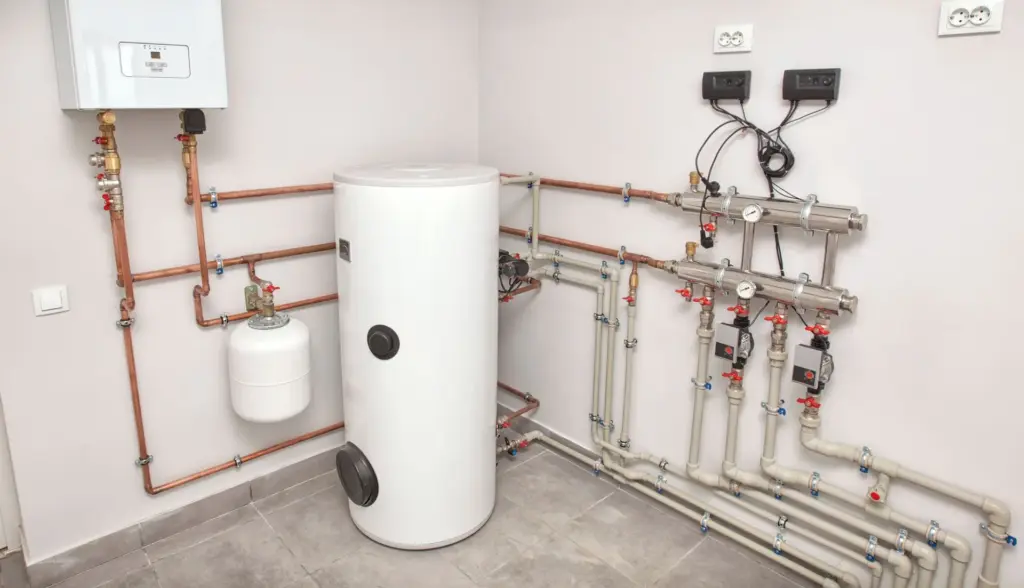
Cost depends on the unit, the fuel type, and what the existing setup requires to bring it up to code. A straightforward like-for-like tank swap is the simplest job. Costs go up when a gas line needs upsizing, when venting has to be reworked, when the space requires an expansion tank or updated shutoff valves that weren’t there before, or when a switch to tankless is on the table. Chris will walk the site, look at the actual gas line, vent, and access, and give you a number before any work starts, not an estimate that changes once the old tank is already out.
How long it takes
A standard tank replacement in a home with reasonable access usually takes half a day, done in one visit. Homes with tighter basements, tank locations in closets or attics, or gas line and venting corrections take longer, sometimes a full day. If the job requires a permit inspection, which most water heater replacements in Massachusetts do, we’ll walk you through when that happens and you won’t be without hot water any longer than necessary for the swap itself.
Common Questions
Is my Marblehead home likely to have gas or oil?
Most streets in Marblehead have natural gas available, but some areas, especially older sections and parts closer to the water, still run on oil or propane. We check what's actually feeding your house before recommending a unit, since that decides whether a gas or electric tank, or a tankless system, makes sense.
Do I need a permit to replace a water heater in Marblehead?
Yes, most water heater replacements in Massachusetts require a plumbing permit and inspection. We handle the permit process as part of the job so you don't have to deal with the town yourself.
My water heater is old but still working. Should I replace it now?
If it's not leaking and it's keeping up with your hot water use, there's often no rush. Chris will tell you honestly if it's near the end of its life so you can plan for it, rather than pushing a replacement you don't need yet.
I'm on well water. Does that affect my water heater?
It can. Well water often carries more sediment and minerals than town water, which shortens a tank's life and can clog elements and valves faster. Filtration ahead of the heater is worth considering if you're on a well and replacing a unit that failed early.
Can you install a tankless water heater in an older Marblehead home?
Reach Out for Water Heater Installation and Replacement
Belfiore is a Salem-based company working across Marblehead and the rest of the North Shore. Call {PHONE} to talk through your water heater, get a straight answer on repair versus replace, and get a real number for the work before anything comes out of the wall.
Contact information
Talk to Chris
Chris runs the plumbing side of Belfiore and has seen the range of what Marblehead’s older homes throw at a water heater job, from corroded gas fittings to boilers sharing a chimney that’s now oversized for the load. If your tank is acting up, showing rust, or just old enough that you’re wondering, call and describe what’s going on. He’ll tell you honestly whether it’s worth fixing or whether replacement is the better use of your money.