
Water Heater Installation and Replacement in Ipswich, MA
A lot of Ipswich houses are older than the water heaters trying to keep up with them. Between First Period homes near the historic district and the newer construction out toward the marshes, you get a real mix of undersized tanks, tired oil-fired systems, and well water that’s hard on everything it touches. If your hot water is running out fast or your tank is starting to weep at the base, it’s worth understanding what’s actually involved before you replace it.
Water Heater Installation and Replacement in Ipswich
Chris and the crew install and replace water heaters across Ipswich, from the center of town out to the Great Neck and Little Neck areas. Every house here is a little different. Some have natural gas at the street. Some are on oil and always have been. Some are on well water that leaves scale on every fixture it passes through. We size the job to the house you actually have, not a one-size-fits-all tank pulled off a truck.
What Ipswich Homes Typically Have
Ipswich has one of the largest concentrations of First Period and colonial-era housing on the North Shore, and that shows up in the mechanical systems too. Plenty of homes still run older steam or hot water boilers, some original to a renovation done decades ago, with a water heater tucked in beside them that was sized for a smaller household.
Gas availability is genuinely mixed here. Parts of town along the main corridors have natural gas service, which opens up options like a power-vented or tankless unit. Other sections, especially further out toward the rural edges of town, run on oil or propane, and that changes both the equipment and the venting plan. We check what’s actually on the street before we quote anything, not what’s typical two towns over.
Well water and septic systems are common outside the town center, and that matters for tank life. Hard, mineral-heavy well water accelerates sediment buildup inside a tank and shortens its working life. If you’re on a well, filtration isn’t an upsell, it’s a real fix for a real problem, and we’ll tell you honestly if it makes sense for your situation.
What the Work Involves
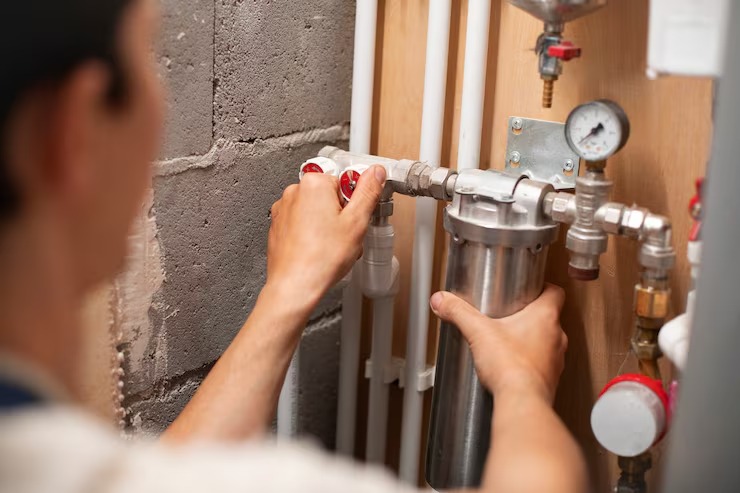
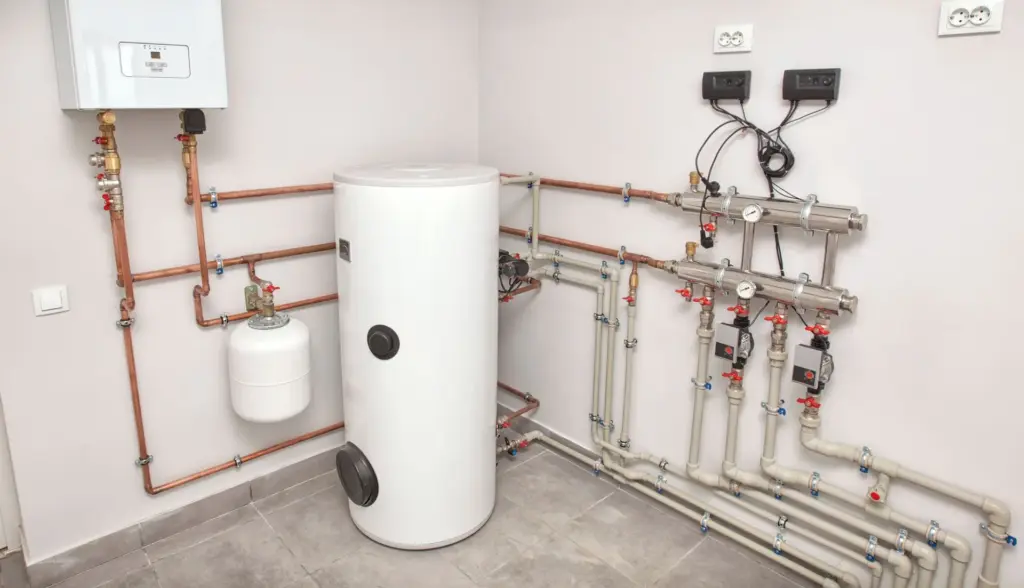
A straightforward tank swap starts with draining the old unit, disconnecting the gas or electric supply, and pulling it out along with the old venting if it’s not up to current code. From there we set the new tank, connect water lines, run new venting where needed, and reconnect gas or wire the electric supply depending on your setup.
Gas sizing matters more than people think. A tank that’s undersized for the BTU demand of your household, or a gas line that’s marginal to begin with, can cause the unit to underperform even when it’s brand new. We check line size and pressure as part of the install, not after you call back with lukewarm showers.
If you’re on oil and staying on oil, we’re often replacing an indirect water heater tied into the boiler, which is a different job entirely from a standalone gas or electric tank. Switching from oil to gas is a bigger project involving new venting and gas line work. Most straightforward tank replacements leave a house without hot water for a few hours. A boiler-tied indirect swap or a fuel-type switch runs longer.
Repair or Replace
Not every problem means a new water heater. If your unit is a few years old and the issue is a bad thermocouple, a failed heating element, or a faulty thermostat, that’s a repair, and we’ll say so. A pilot light that won’t stay lit or an electric tank that’s tripping its breaker are usually fixable without replacing the whole unit.
Replacement makes sense when the tank itself is leaking from the bottom, when it’s old enough that internal corrosion is the real cause of recurring problems, or when the unit was never sized right for your household in the first place. Rust-colored water, a rotten egg smell, or a tank that’s making rumbling noises from sediment buildup are signs the tank itself is failing, not just a part on it.
Chris will tell you straight which category your water heater falls into. On well water especially, a tank that looks old on the outside sometimes has years of life left inside, and one that looks fine can be scaled up internally and working harder than it should. We look at the actual condition, not just the age on the label.
What It Costs
Cost depends on fuel type, tank size, and what the venting and gas or electric connections require. A like-for-like gas tank swap with existing venting in good shape is the simplest job. Switching fuel types, adding power venting, or upgrading gas line size for a larger unit adds material and labor. An indirect tank tied into an oil boiler is priced differently than a standalone gas or electric unit. We’ll give you a real number for your specific house and situation, in {PRICE_RANGE}, before any work starts, not a phone estimate that changes once we’re in the basement.
How Long It Takes
A standard tank replacement with no venting or gas line changes typically takes a few hours, and most households have hot water again the same day. Jobs that involve new venting, a gas line upgrade, or a switch from oil to gas take longer because there’s more to install and inspect. If we’re pulling an indirect tank off a boiler system, that timeline depends on the condition of the boiler connections too. We’ll walk you through the expected timeline before we start so you’re not guessing.
Common Questions
Is my Ipswich home on gas or oil?
It depends where in town you are. Sections along the main roads often have natural gas service, while more rural parts of Ipswich commonly run on oil or propane. We check what's actually available at your address before recommending equipment.
Does well water shorten the life of a water heater?
It can. Hard, mineral-heavy well water leads to faster sediment buildup inside the tank, which reduces efficiency and shortens its working life. Filtration ahead of the tank can help, and we'll tell you honestly if it's worth it for your setup.
Can I switch from oil to a gas water heater?
Yes, if gas service is available at your home. It's a bigger job than a like-for-like swap since it involves new gas line work and venting, but it's a common upgrade in parts of Ipswich where gas has come through more recently.
How do I know if I need a repair or a full replacement?
If the tank itself is leaking, rusted, or scaled up internally, replacement is usually the right call. If the problem is a specific part, like a thermocouple or heating element, a repair often solves it. We'll look at the actual unit and tell you which situation you're in.
How long will my house be without hot water?
Reach Out for Water Heater Installation and Replacement
Whether you’re dealing with a tank that’s finally given out or you’re just tired of running out of hot water halfway through a load of laundry, call {PHONE} to talk through the options. We’re a Salem-based company working across Ipswich and the rest of the North Shore, and we’ll tell you plainly whether a repair or a full replacement is the right call for your house.
Contact information
Talk to Chris
Chris runs the plumbing side of Belfiore Home Services and has seen the range of what Ipswich’s older housing stock throws at a water heater install, from marginal gas lines to boilers that have been patched together for years. If you’re not sure whether your unit needs a part or needs to come out entirely, describe what’s happening and he’ll give you a straight read before anything gets scheduled.