
Water Heater Installation and Replacement in Georgetown, MA
A lot of Georgetown’s housing stock is older, and a lot of it sits on well water. That combination means water heaters here work harder than the ones in newer subdivisions, and they get chosen wrong more often than you’d think. When one starts failing, the questions are usually about sizing, fuel type, and whether the house even has the gas or venting to support what’s being proposed as a replacement.
Water Heater Installation and Replacement in Georgetown
Chris and the plumbing crew handle water heater installs and replacements across Georgetown, from straightforward tank swaps to full conversions when a house is ready to move off an old oil-fired setup or an undersized electric tank. This isn’t a call center dispatch job. It’s the same two people looking at your actual water heater, your actual gas or electric service, and your actual usage before recommending anything.
We install standard tank units, high-recovery tanks for bigger households, and tankless systems where the gas line and venting can support them. We’ll tell you flatly when a house isn’t a good tankless candidate yet, rather than sell the upgrade and leave you with a gas line problem.
What Georgetown Homes Typically Have
Georgetown has a good mix of older farmhouses and colonials alongside newer construction on the outskirts of town. In the older homes we still find oil-fired boilers paired with a separate indirect water heater, or standalone electric tanks that were installed decades ago and never upsized as the household grew. Natural gas is available on some streets in town but far from all of them, so a fair number of properties run on oil or propane instead. That changes the replacement conversation completely: a gas tankless unit isn’t on the table if there’s no gas service to the house, and propane conversions carry their own tank and delivery considerations.
Well water is common outside the town center, and it matters more than most homeowners realize. Hard or sediment-heavy well water shortens the life of a tank, clogs elements, and can void a manufacturer’s warranty if there’s no pre-filtration. If you’re on a well and haven’t had your water tested before a water heater replacement, that’s a five-minute conversation worth having before we install anything.
What the Work Involves
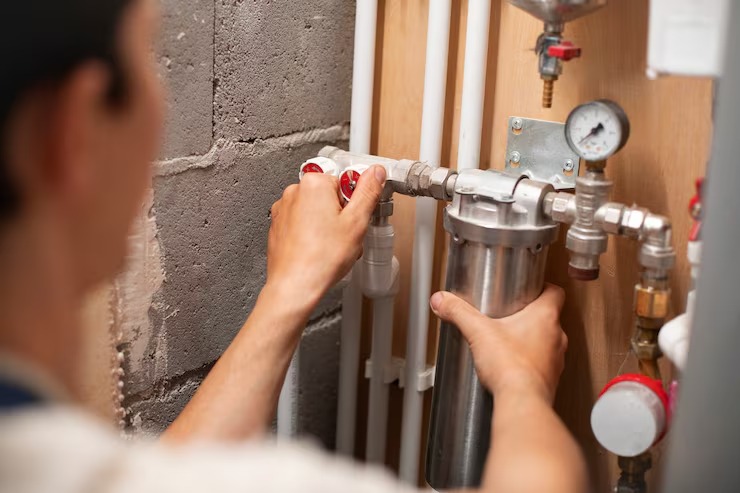
A tank replacement starts with draining and disconnecting the old unit, then removing it from the space. For gas units, we check that the venting is sized correctly for the new unit’s BTU output and that the gas line itself is sized to handle it without starving other appliances. For a 40 or 50-gallon standard tank, that’s usually a 3/4-inch gas line, though it depends on what else is on that line. Electric units get checked against the existing circuit, typically a 30-amp double-pole breaker with 10-gauge wire for a standard residential tank, and upsized if the new unit draws more.
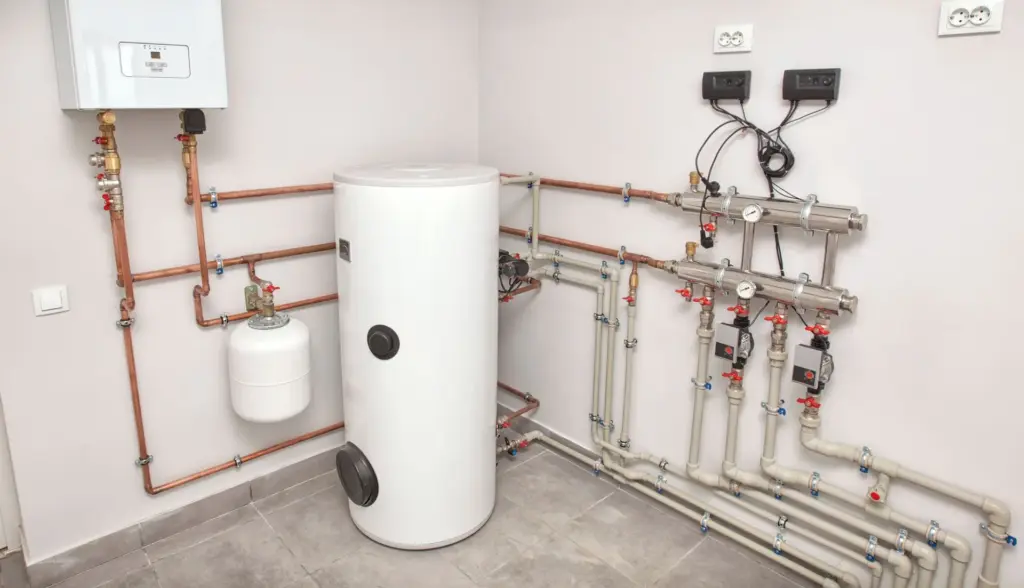
Tankless installs are a bigger job. They need a dedicated gas line sized for a much higher BTU draw, often 3/4-inch or larger depending on run length, plus proper intake and exhaust venting and a condensate line for high-efficiency models. We’ll walk you through exactly what your house needs before we quote it, not after.
Most tank swaps put a house without hot water for four to six hours. Tankless conversions and any job that involves new gas line or venting work take longer, often a full day, because there’s more to install correctly and more to test before we sign off on it.
Repair or Replace
If your water heater is leaking from a fitting or valve rather than the tank itself, that’s usually a repair, not a replacement. Same goes for a bad thermocouple, a failed heating element, or sediment buildup causing rumbling and reduced hot water. Those are common issues on a unit that’s otherwise sound, and fixing them costs a fraction of a new install.
Replacement makes sense when the tank itself is rusting or leaking from the shell, when the unit is undersized for the household, or when it’s old enough that a repair is just delaying the inevitable by a few months. Chris will tell you straight which category your unit falls into. We’re not interested in selling a new water heater to someone who needs a forty-dollar part.
What It Costs
Cost depends on the type of unit, the fuel source, and whether anything beyond the water heater itself needs work, like gas line upsizing, new venting, or electrical panel capacity for an electric or heat pump model. {PRICE} A tankless conversion or a switch in fuel type costs more than a straight tank swap because of the added gas, venting, or electrical work involved. We’ll give you a real number for your specific house before we start, not a range that changes once the job is underway.
How Long It Takes
A standard tank-to-tank replacement is typically done in one visit, with the house back to hot water the same day. Tankless installs, fuel conversions, or jobs that require new gas piping or panel work take longer and sometimes need a second visit if a permit inspection is required in between. We’ll tell you upfront which category your job falls into so you’re not guessing about how long you’ll be without hot water.
Common Questions
Can I install a tankless water heater if my Georgetown home doesn't have natural gas?
Yes, but it usually means a propane tankless unit instead of natural gas, which changes the tank and delivery setup. We'll assess your existing fuel source before recommending tankless at all.
Do I need a water softener or filter before installing a new water heater on well water?
Not always, but it's worth checking. Hard or sediment-heavy well water shortens tank life and can affect warranty coverage, so we'll flag it if your water quality is a concern for the unit you're choosing.
How long will my house be without hot water during a replacement?
A standard tank swap usually takes four to six hours. Tankless conversions or jobs requiring new gas line or venting work can take a full day.
Is it worth repairing my water heater instead of replacing it?
Often, yes. Leaking fittings, bad thermocouples, and failed heating elements are common repairs on tanks that are otherwise in good shape. We'll tell you honestly which situation you're in.
Does my electric water heater need a different circuit than my old one?
Reach Out for Water Heater Installation and Replacement
If your water heater in Georgetown is leaking, undersized, or just old enough to worry about, call Belfiore at {PHONE}. We’re a Salem-based company working across Georgetown and the rest of the North Shore, and we’ll give you a straight answer about what your house actually needs.
Contact information
Talk to Chris
Chris runs the plumbing side of the business and he’s the one who’ll look at your water heater, your gas or electric service, and your water quality before recommending anything. If you’re on well water, dealing with an oil-to-gas question, or just trying to figure out if that popping noise means repair or replace, that’s exactly the kind of thing worth a phone call before it becomes an emergency.