
Water Filtration and Water Softener Installation in Salem, MA
A lot of the housing stock in Salem was built before anyone worried about lead solder or PFAS in the water table, and it shows up in what comes out of the tap. Some streets sit on hard well water that chews through fixtures and water heaters. Others are on town water running through pipe old enough to have its own history. Either way, filtration here is usually a real fix, not a sales pitch.
Water Filtration and Water Softener Installation in Salem
Belfiore installs whole-house filtration, water softeners, and point-of-use systems for homes across Salem, from the McIntire Historic District out toward Salem Willows and the neighborhoods off Highland Avenue. Chris runs the plumbing side of the business, and he treats water quality as part of the plumbing system, not an accessory. A softener or filter gets sized to your actual water test and your actual pipe run, not a generic recommendation off a spec sheet.
This is licensed plumbing work. Anything that ties into your main line, your water heater feed, or your gas-fired boiler’s makeup water gets permitted and inspected the way it should be.
What Salem Homes Typically Have
Salem’s building stock skews old. Plenty of pre-1940 single and two-family homes, a good number of three-family conversions near downtown, and a historic district where any exterior work runs through the design review process before a permit gets pulled. That matters for filtration systems that need an outdoor bypass or a new exterior spigot line.
Most of the city is on municipal water, but pockets on the edges of town, especially toward the Peabody and Marblehead lines, still run on private wells. Well water here tends to run hard, sometimes with iron staining or a sulfur smell, which is a straightforward case for a softener or an iron filter. On town water, the concern is usually different: old lead or galvanized service lines feeding houses built long before copper or PEX became standard, which is a real reason to filter at the point of entry rather than just at the kitchen sink.
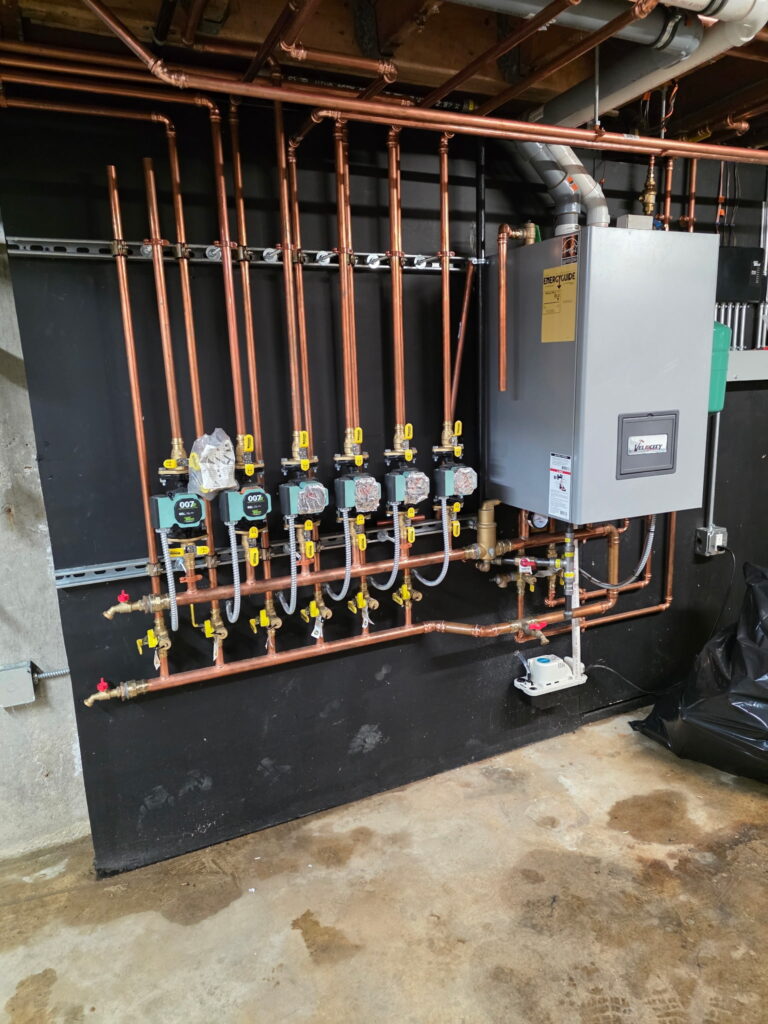
Gas availability also varies. Some streets have gas mains and a boiler or water heater can run on natural gas. Others, particularly older sections without gas infrastructure, still run oil-fired systems. That does not change a filtration install directly, but it is part of the same conversation Chris has with homeowners about what their whole water and heating system actually needs.
What the Work Involves
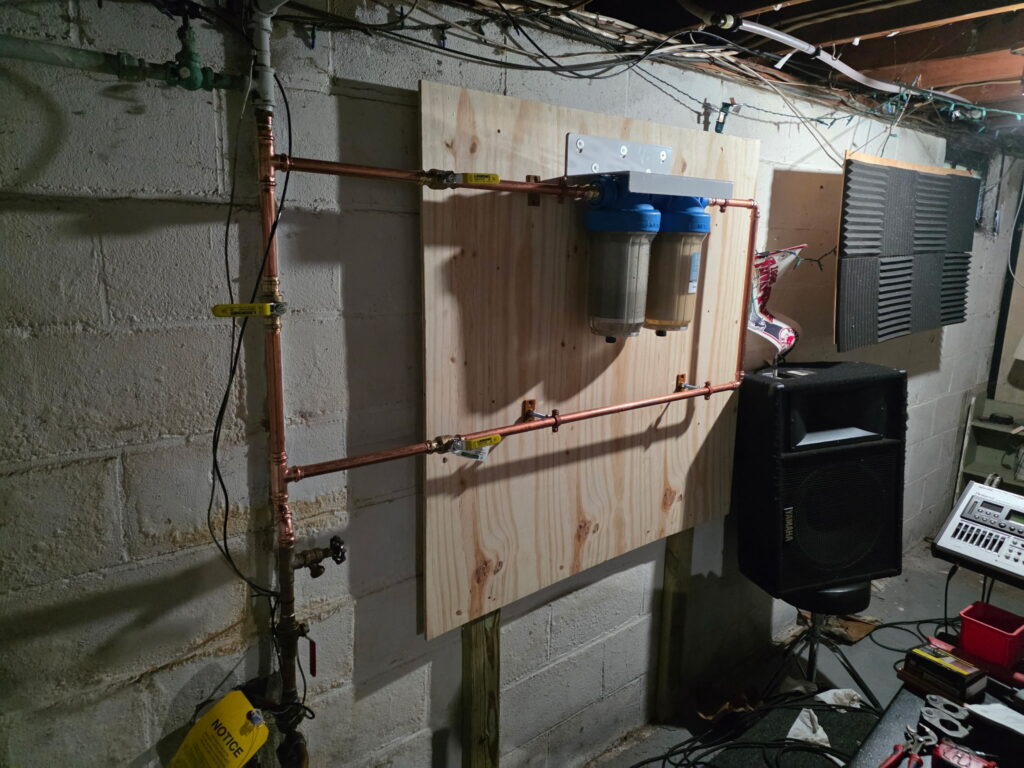
A whole-house softener or filter ties into the main line, usually right after it enters the house and before it splits off to the water heater. The work involves shutting off the main, cutting into the line, and installing a bypass valve so the system can be serviced or bypassed without shutting off water to the whole house. For a softener, that means a resin tank and a brine tank, plumbed with a drain line for the backwash cycle, usually to a nearby floor drain or standpipe.
For iron or sediment filtration, it is often a single tank with a filter media bed and a similar backwash setup. Reverse osmosis systems for drinking water get installed under the kitchen sink with their own small tank and a dedicated faucet, tied into the cold supply line with a saddle valve or a proper tee fitting, done right rather than clamped on.
Most whole-house installs take a few hours and the water gets shut off only during the actual cutover, not all day. If the work is happening alongside other plumbing, like a water heater swap, Chris coordinates it so the house is only without water once.
Repair or Replace
Not every water quality problem needs a new system. If you already have a softener or filter and it is underperforming, sometimes the fix is a new resin bed, a cleaned injector, or a control head that has stopped cycling correctly, not a full replacement. A softener that is ten or twelve years old with a working control valve is often worth repairing rather than pulling out entirely.
Where replacement makes sense is when the tank itself is cracked, when the unit is undersized for a family that has grown since it was installed, or when a well water test shows a problem, like iron or manganese, that the existing system was never built to handle. Chris will test your water and look at what you have before recommending anything. If a repair solves the actual problem, that is what gets recommended.
What It Costs
Cost depends on what your water test shows and what kind of system fits the house. A basic sediment or carbon filter is a smaller job than a full softener with a brine tank, and iron filtration for well water runs differently again depending on how bad the iron content is. Reverse osmosis under the sink is its own smaller project. Chris gives a firm number after seeing the water test and the install location, not a phone estimate, because guessing on this kind of work does not serve either of you.
How Long It Takes
A standard whole-house softener or filter install runs about half a day, including the water test review, the bypass valve installation, and the backwash drain connection. Well water systems with iron filtration can take longer if a pre-treatment stage is needed. Under-sink reverse osmosis is usually a one to two hour job on its own. None of this requires opening walls or ceilings, so it is a contained job that does not disrupt the rest of the house.
Common Questions
Do I need a water softener if I'm on Salem town water?
Not always. Municipal water in Salem is generally softer than private well water, but older service lines can still bring in sediment or metal that a basic filter handles better than a full softener. A water test tells you which one you actually need.
How do I know if my well water needs filtration?
Signs include a metallic or sulfur smell, orange or brown staining on fixtures, cloudy water, or scale buildup on faucets and shower heads. Chris tests the water directly rather than guessing from symptoms alone.
Will a water softener affect my boiler or water heater?
Softened water actually helps. Hard water causes scale buildup inside water heater tanks and boiler heat exchangers, which reduces efficiency over time. A properly sized softener protects that equipment.
Can filtration systems be installed in older Salem homes with older pipe?
Yes. The system ties in at the main line regardless of what the rest of the house is plumbed with, though if the interior pipe is old galvanized, that is worth a separate conversation about the pipe itself.
Does a whole-house filter need much maintenance?
Reach Out for Water Filtration and Water Softener Installation
Call {PHONE} to schedule a water test and installation quote. Belfiore is a Salem-based company working across the North Shore, and this is licensed plumbing work handled by the people who will answer when you call back with a question six months later.
Contact information
Talk to Chris
If your water tastes off, leaves spots on glassware, or you just moved into a Salem house on a well and have never had it tested, that is the first step. Chris will walk through what your water actually needs before recommending equipment, and explain the difference between a filter, a softener, and a full point-of-entry system in plain terms.