
Water Filtration and Water Softener Installation in Ipswich, MA
A lot of Ipswich houses sit on well water, and a lot of them are old enough that the plumbing has seen decades of whatever that water carries with it. Iron staining in the tub, scale building up in an aging water heater, a faucet that never quite tastes right. This is the town where filtration stops being a nice-to-have and starts being basic upkeep.
Water Filtration and Water Softener Installation in Ipswich
Chris and the plumbing crew install whole-house filtration and softener systems across Ipswich, from the older sections near the center with First Period and colonial-era houses to the newer construction out toward the Rowley and Essex lines. The approach is the same in every case: test the water first, then size the system to what’s actually in it. Guessing at a system based on a neighbor’s setup wastes money and sometimes makes a problem worse.
Softeners handle hardness and scale. Filtration handles iron, sediment, tannins, and in some cases bacteria depending on the well. Many Ipswich homes on well water need both working together, not one or the other.
What Ipswich Homes Typically Have
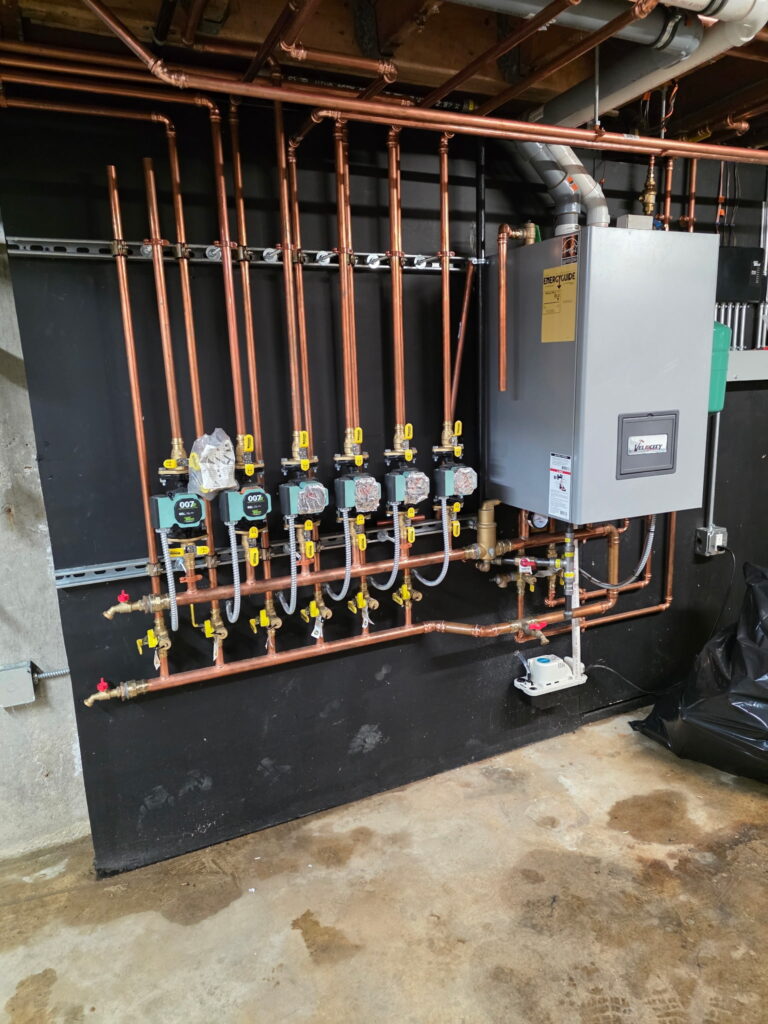
Ipswich has one of the largest concentrations of First Period housing on the North Shore, along with a broad mix of 19th and early 20th century colonials and farmhouses. Heating in these homes runs the gamut: older steam boilers original to the house in some cases, converted hot water systems in others, and oil-fired equipment in the sections of town where gas hasn’t been run to the street.
Water supply splits fairly evenly. In-town and near the center you’re more likely on town water. Out toward the rural edges, well water is common, and that changes the filtration conversation entirely. Well water in this part of Essex County often carries iron, manganese, or hardness minerals picked up from the bedrock, and none of that shows up until you’ve been drinking it or running it through a water heater for a few years.
Undersized or original water heaters are common too. A 40-gallon tank installed decades ago wasn’t sized for how a modern household actually uses hot water, and hard or iron-heavy water shortens its working life further.
What the Work Involves
A filtration or softener install starts with a water test, not a sales pitch. Chris pulls a sample, checks hardness grains per gallon, iron content, pH, and sediment load, and builds the system around those numbers.
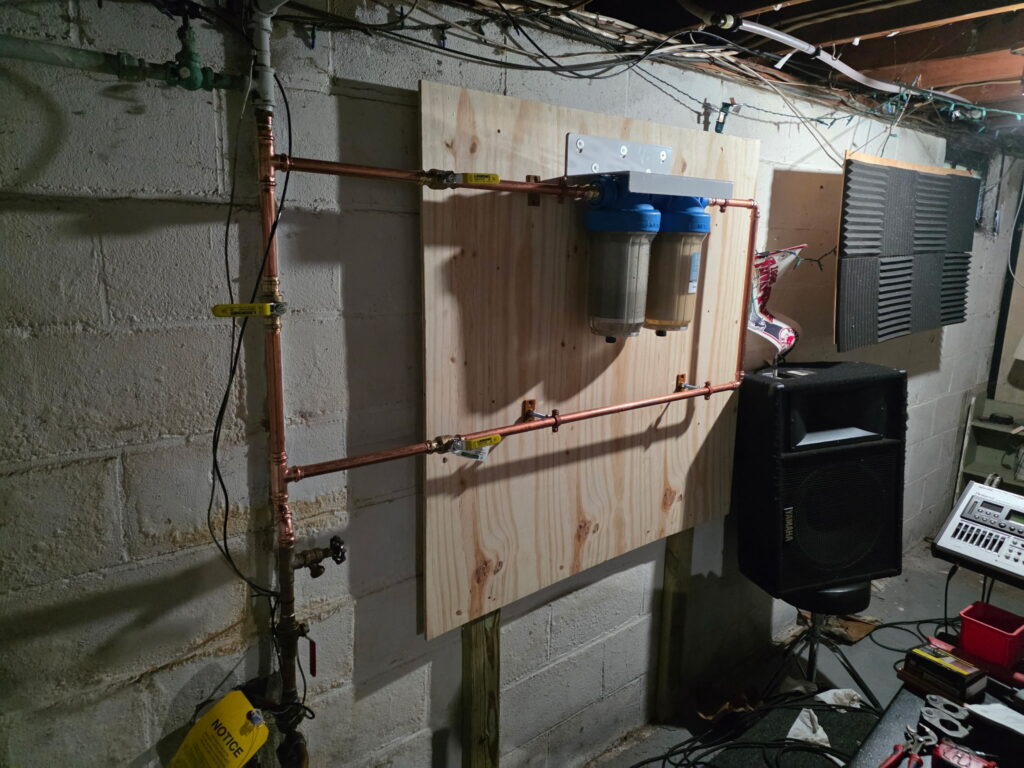
For a softener, that usually means a resin tank and brine tank set on the main line where it enters the house, typically right after the shutoff and before the water heater. For iron or sulfur issues, an oxidizing filter or air injection system gets added ahead of the softener so the resin bed isn’t doing work it wasn’t built for.
Installation means cutting into the main line, sweating or press-fitting new copper or PEX connections, setting a bypass valve so the system can be serviced without shutting off water to the whole house, and running a drain line for backwash cycles. Most installs take a single day and the house is without water for a matter of hours during the cutover, not the whole day.
If the home is on a private well, this is also a good time to check the well pump, pressure tank, and any existing treatment equipment that might be outdated or undersized for the current system.
Repair or Replace
Not every water quality complaint means a new system. If a softener is running but not softening well, sometimes it’s just old resin that needs replacing, or a brine tank that’s bridged over with salt and not drawing properly. Both are repairs, not replacements, and both are cheaper than a new install.
A system that’s over 12 to 15 years old, has a cracked tank, or was never sized correctly for the household in the first place is usually better replaced than patched. Chris will tell you straight which category you’re in. If a $150 resin recharge fixes the problem, that’s what gets recommended. The goal is a system that actually solves the water issue, not the most expensive box on the truck.
What It Costs
Cost depends on what the water test shows and how many stages the system needs. A straightforward softener install is one price. A softener plus an iron filter plus a sediment pre-filter is a bigger job with more equipment and more labor. {PRICE} Chris will walk through the test results and give you a firm number before any work starts, not a range that grows once the truck is on site.
How Long It Takes
Most whole-house filtration or softener installs are done in a single visit, generally {DURATION}. Water to the house is off only during the actual cutover into the main line, which is typically an hour or two, not an all-day shutdown. If well equipment or a pressure tank needs attention at the same time, that adds to the visit but it’s still usually one trip.
Common Questions
How do I know if I need a softener, a filter, or both?
A water test tells you. Hardness minerals call for a softener. Iron, sediment, or tannins call for a filter stage. Many Ipswich homes on well water need both, especially older wells drawing from bedrock aquifers with naturally high iron content.
Will a softener hurt my well's septic system?
A properly installed softener with a correctly sized drain line for the backwash cycle isn't a problem for a standard septic system. If you're on an older or undersized septic setup, that's worth mentioning during the estimate so the discharge is routed appropriately.
Can filtration fix rust-colored water?
Usually yes, if the cause is iron in the well water rather than corroding galvanized pipe inside the house. The water test distinguishes between the two, because the fix is completely different depending on the source.
Do I need electrical work for a filtration system?
No. Softeners and filtration systems run on standard household power for the control head, nothing that requires new circuits or panel work.
How often does a softener need salt or maintenance?
Reach Out for Water Filtration and Water Softener Installation
Belfiore is a Salem-based company working across Ipswich and the rest of the North Shore. Call {PHONE} to set up a water test and get a straight answer on what your system actually needs.
Contact information
Talk to Chris
If your water leaves rust stains in the tub, your fixtures are crusted with scale, or you just moved into an older Ipswich house on a well and don’t know what’s coming out of the tap, that’s worth a conversation before it’s worth a purchase. Chris runs the plumbing side of Belfiore and handles these calls directly. A short conversation and a water test tell you more than any brochure will.