
Water Filtration and Water Softener Installation in Danvers, MA
Danvers has a mix of town water neighborhoods and pockets still on private wells, especially toward the outskirts near Middleton and Topsfield. If you’re on a well, filtration usually isn’t optional, it’s how you keep sediment, iron staining, and hard water out of your fixtures and appliances. If you’re on town water, the conversation is more often about chlorine taste, hardness, or an aging water heater that’s already showing scale buildup.
Water Filtration and Water Softener Installation in Danvers
Chris and the plumbing crew install whole-house filtration systems, water softeners, and combination setups for homes across Danvers. This isn’t a bolt-on add-on service. It’s plumbing work that touches your main line, so it gets sized, vented, and tied in the same way any other piece of your water system would be. We look at your water test results, your fixture count, and your existing pipe material before we recommend anything.
What Danvers Homes Typically Have
A lot of Danvers housing dates from the early to mid-1900s, with a good number of capes and colonials built out further in the postwar years toward Liberty Tree Mall and the Route 1 corridor. Older sections closer to the center tend to have galvanized or early copper supply lines, which corrode and restrict flow over decades. That corrosion feeds sediment into a home’s water even on town service.
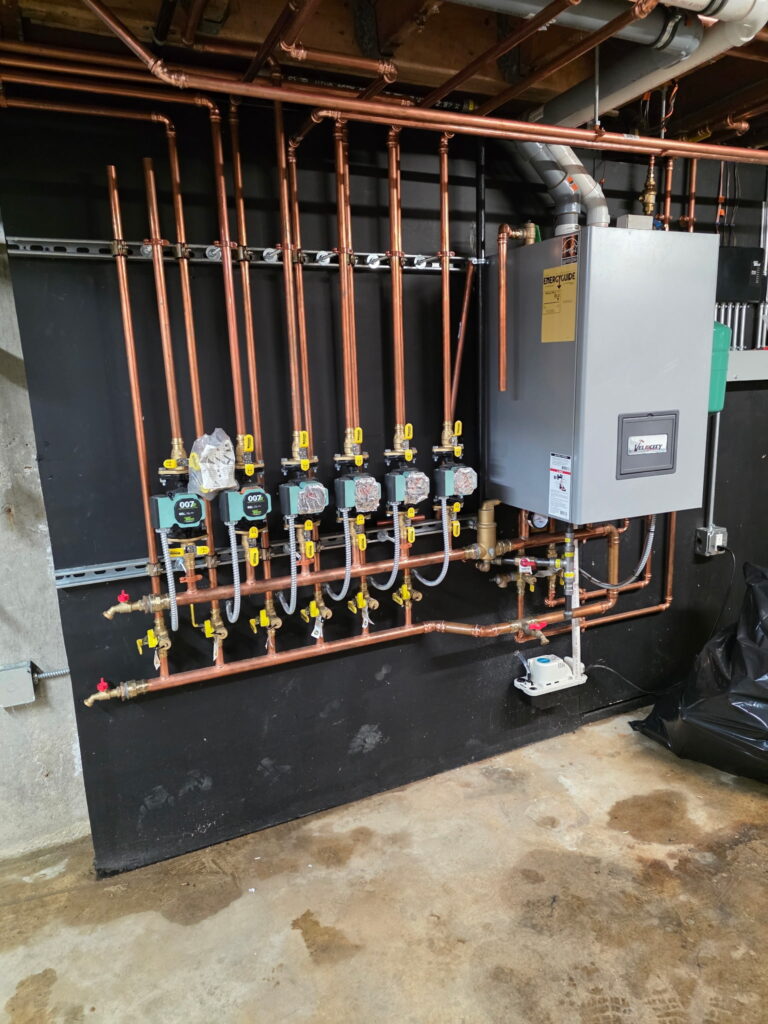
Well water is real here, not rare. Homes off the main water lines, particularly on larger lots, often pull from a private well and deal with iron, manganese, or hardness levels that stain fixtures and shorten the life of water heaters and washing machines. Gas availability also varies by street. Some blocks have natural gas at the curb, others still run on oil or propane, which matters when we’re sizing a system that ties into an existing mechanical room.
What the Work Involves
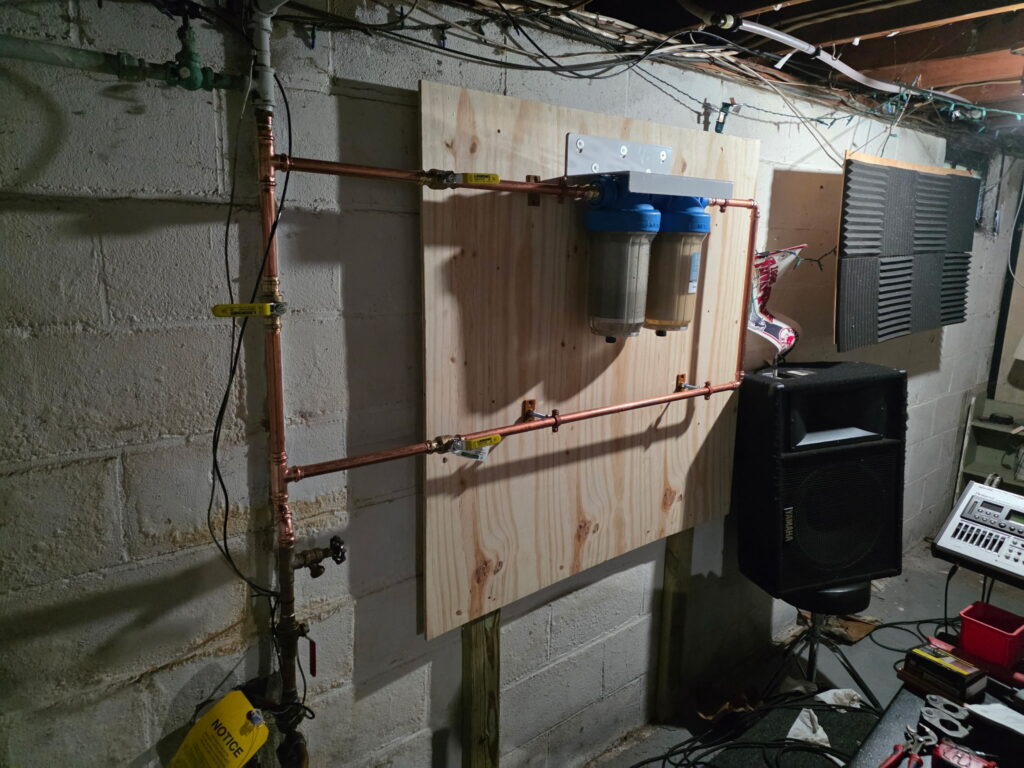
For a whole-house filter or softener, the main line gets shut down and cut at the point of entry, usually right after the meter or well pressure tank. We install a bypass valve so the system can be serviced later without shutting off water to the whole house. Softeners need a drain line for the brine tank’s regeneration cycle, so we confirm there’s a suitable drain nearby, usually a floor drain, standpipe, or utility sink.
Sizing depends on grain hardness (measured in grains per gallon) and household water usage, not just square footage. A four-person household on well water with 15 grains per gallon of hardness needs a different resin tank size than a two-person condo on town water with mild chlorine taste. For iron and sediment filtration, we’ll often add a pre-filter stage ahead of the softener so the resin bed isn’t doing double duty. Most installs take a home off water for two to four hours total.
Repair or Replace
Not every water problem needs a new system. If your existing softener is regenerating on schedule but you’re seeing hardness creep back in, it’s often a resin bed that needs recharging or a control valve that needs adjusting, not a full replacement. Salt bridging in the brine tank is another common fix. It looks like a hard crust has formed above the water line, blocking the salt from dissolving properly, and it’s usually a five-minute repair, not a new unit.
Where replacement makes sense: the resin tank is more than 10-12 years old and losing capacity, the control valve is failing and parts aren’t available anymore, or you’re switching from a straight softener to a combination filtration and softening system because your water testing turned up iron or bacteria a softener alone won’t handle. Chris will walk the mechanical room, look at what’s already installed, and tell you straight which category you’re in before any work gets scheduled.
What It Costs
Cost depends on system type, water test results, and how accessible your main line and drain are. A basic whole-house sediment filter is a smaller job than a full softener with a separate iron filtration stage. Well water setups generally cost more upfront than town water softener installs because they often need pre-treatment for iron or manganese ahead of the softening resin. We’ll give you a firm number after a water test and a look at your plumbing, not a phone estimate. {PRICE_RANGE}
How Long It Takes
A standard water softener or single-stage filtration install usually runs a half day, including cutting into the main line, setting the bypass valve, running the drain line, and testing water pressure before and after. Combination systems with a separate iron or sediment pre-filter stage can run a full day since there’s more piping and more testing involved. You’ll be without water for a portion of that time, but we schedule around it so it’s not an all-day shutdown.
Common Questions
Do I need a water softener if I'm on town water in Danvers?
Not always. Town water in Danvers is treated and generally softer than well water, but hardness still varies by neighborhood and by the age of your street's supply lines. A quick water test tells you whether you're dealing with true hardness or just cosmetic issues like chlorine taste, which a smaller carbon filter can handle instead of a full softener.
How do I know if my well water needs filtration in Danvers?
Staining on sinks or tubs, a metallic taste, or cloudy water are common signs. We test for hardness, iron, manganese, and pH before recommending anything, since well water problems vary a lot even between neighboring properties in the same part of town.
Can a water softener be installed without a nearby drain?
It needs a drain connection for the brine tank's regeneration cycle, whether that's a floor drain, standpipe, or utility sink. If your mechanical room doesn't have one nearby, we'll talk through options, including running a new drain line, before the install.
Will installing a filtration system affect my water pressure?
A properly sized system shouldn't cause a noticeable drop. We check your home's flow rate and fixture count before choosing a resin tank or filter cartridge size specifically so pressure stays consistent.
How long does a water softener last before it needs replacing?
Reach Out for Water Filtration and Water Softener Installation
Belfiore Home Services is a Salem-based, family-run plumbing and electrical company working across Danvers and the rest of the North Shore. Call {PHONE} to talk through your water quality issue, get a water test scheduled, or set up a filtration or softener install with Chris and the team.
Contact information
Talk to Chris
Chris runs the plumbing side of Belfiore and handles water filtration and softener work directly. If you’re dealing with staining, scale buildup on fixtures, or you’ve just gotten a well water test back with numbers you don’t understand, call and describe what you’re seeing. He’ll tell you what’s likely going on and what a fix or upgrade actually involves before anyone sets foot in your mechanical room.