
Water Filtration and Water Softener Installation in Andover, MA
Andover has more well water than most of the North Shore towns we work in, and that changes the conversation about filtration fast. Between older homes near the town center with original galvanized supply lines and newer construction out toward the Merrimack with pressure tanks and iron staining, the fixes are rarely the same house twice. We look at what’s actually coming out of your tap before we talk equipment.
Water Filtration and Water Softener Installation in Andover
Belfiore installs whole-house filtration systems, water softeners, and point-of-use setups for homes across Andover. Some of this is straightforward: town water with hard water spots on fixtures and glassware, solved with a softener sized to your household. Some of it takes more digging, especially on private wells where iron, manganese, sulfur smell, or sediment need a system built around a water test, not a guess. Chris runs the plumbing side of the business and handles the sizing and system selection himself rather than handing you a one-size-fits-all package.
What Andover Homes Typically Have
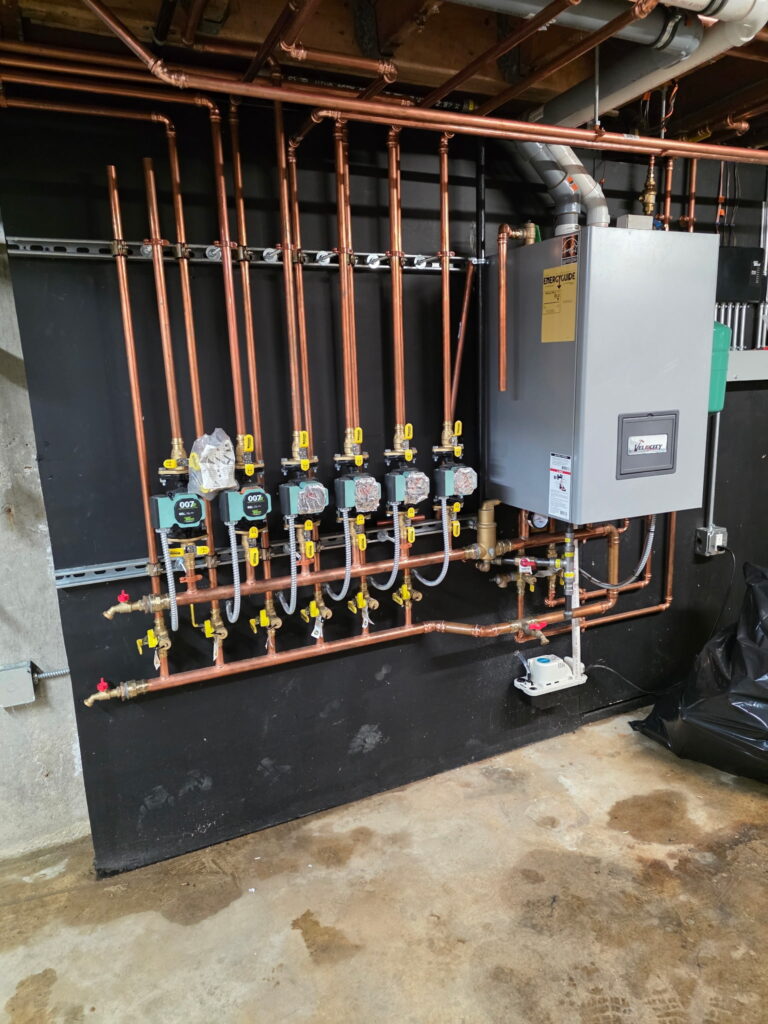
Andover’s housing splits a few ways. The historic center and older neighborhoods have homes built in the early-to-mid 1900s, many still running steam or hot water boilers, some with original or partially updated plumbing. Post-war stock from the 1950s through the 70s is common further out, usually with hot water baseboard heat and water heaters that are due for replacement or already past their rated life. Newer construction and recent remodels, which are common here given the demand for updated kitchens and baths, tend to have tankless or higher-efficiency water heaters already in place.
Water source is the real variable. Parts of Andover are on town water through Andover’s municipal system, while other properties, especially larger lots and homes further from the center, are on private wells. Gas availability follows a similar pattern: some streets have natural gas mains, others don’t, and homes there run on oil or propane. This matters directly for filtration, because a well system needs treatment for hardness and mineral content that town water customers may never deal with, and it matters for anything downstream too, since a softener protects a tankless water heater’s internals the same way it protects your pipes.
Repair or Replace
Most softeners and filtration systems don’t fail outright. They lose efficiency. A resin bed that’s exhausted, a brine tank that isn’t drawing salt properly, or a control valve that’s sticking will all show up as water that’s not quite as soft as it used to be, not water that stops working entirely. If your system is a few years old and the issue is a valve, a float switch, or a bypass that’s stuck, that’s almost always a repair, and we’ll tell you that instead of pitching a new unit.
Replacement makes sense when the resin tank itself has failed, when a system was undersized for the house from the start, or when a well test comes back showing a mineral or bacterial issue the existing setup was never built to handle. If you’re renovating a kitchen or bath and want to run new supply lines anyway, that’s often the right moment to size a new system for the whole house rather than patch the old one. We’ll walk you through both options and the real trade-offs, not just the one that costs more.
What the Work Involves
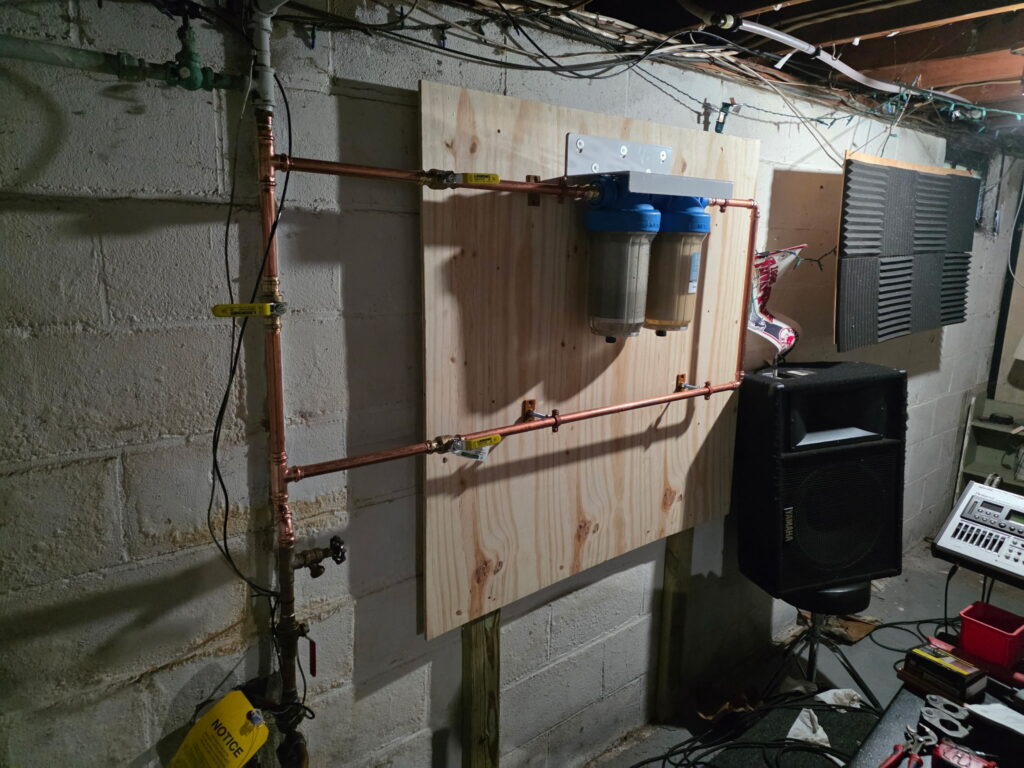
Installing a whole-house softener or filtration system means shutting off the main supply, cutting into the line where it enters the house, usually right after the pressure tank on a well system or near the meter on town water, and plumbing in the new unit with a bypass valve so the system can be serviced later without shutting off water to the whole house. On well systems, we’ll also check pressure tank condition and pump cycling while we’re in there, since a filtration system won’t fix a failing pressure switch or a tank that’s lost its air charge.
For iron or sulfur-heavy well water, that often means adding an oxidizing filter or an air injection system ahead of the softener, since standard softener resin isn’t built to handle high iron loads on its own. Drain lines need to run to a suitable discharge point for the backwash cycle, and the unit needs a dedicated electrical outlet nearby, usually a standard 120V receptacle, for the control head. Most installs take a few hours and your water is off for a portion of that, not the whole day.
What It Costs
Cost depends on what your water actually needs. A standard softener for town water hardness is a simpler job than a multi-stage well system with iron filtration, UV disinfection, or sediment pre-filters stacked ahead of it. House size, current pipe layout, and whether we’re retrofitting into tight quarters or an open mechanical room all factor in too. We’ll give you a firm number based on a water test and a look at your setup before any work starts, in {PRICE_RANGE_PLACEHOLDER}, not a phone estimate.
How Long It Takes
A single-tank softener install on town water typically runs a few hours in one visit. Well systems with multiple stages, additional filtration components, or work on the pressure tank and electrical connections can take longer or occasionally require a follow-up visit if a water test needs lab results before we finalize the system. We’ll tell you upfront which kind of job yours is before we start, not after.
Common Questions
Is Andover's water hard, or is this mainly a well water issue?
Both come up. Homes on Andover's town water supply often deal with hardness that leaves spots on glassware and fixtures. Homes on private wells, more common on larger lots and further from the center, tend to have hardness plus iron, sediment, or sulfur smell that town water customers don't see.
Do I need a water test before installing a softener?
For town water hardness, sometimes a visual inspection and a conversation about your fixtures is enough. For well water, yes. Iron, manganese, and bacterial content all change what system you actually need, and guessing leads to buying equipment that doesn't fix the problem.
Will a softener protect my tankless water heater?
Yes, and it matters more with tankless units than with a standard tank. Hard water scale builds up in the tight heat exchanger passages of a tankless unit faster than in a tank, and that scale reduces efficiency and shortens the unit's life.
Can you install filtration during a kitchen or bathroom remodel?
Yes. If you're already opening up plumbing for a remodel, it's often the most efficient time to size and run lines for a whole-house system rather than adding it separately later.
How often does a softener need salt or resin service?
Reach Out for Water Filtration and Water Softener Installation
Andover is on the far edge of our service area, so we’re upfront about scheduling rather than promising a same-hour arrival. We do work across Andover regularly and we’ll give you a straight timeframe when you call. Reach Belfiore at {PHONE} to talk through your water and get a visit scheduled.
Contact information
Talk to Chris
Chris looks at every filtration and softener job himself before quoting it, because a well with high iron and a town water house with hard spots on the shower door need completely different systems, and getting that wrong means paying for equipment that doesn’t solve the actual problem. If you’re not sure what your water needs, that’s a normal place to start the conversation.