
Tankless Water Heater Installation in Rowley, MA
A lot of Rowley homes are still running a 40 or 50 gallon tank that was sized for a smaller family, or for a house before it had an addition put on. Add in well water and older steam or hot water boilers that were never matched to today’s fixture count, and you’ve got a house where hot water runs out fast and nobody’s sure why.
Tankless Water Heater Installation in Rowley
Chris and the plumbing crew install tankless water heaters across Rowley, from the farms and older homesteads off Route 1A to newer construction near the town center. A tankless unit heats water on demand instead of storing it, which means no standby heat loss and, if it’s sized right for the house, no running out of hot water mid-shower. The install is a real job, not a swap, and that’s exactly why the sizing and venting matter more than the brand on the unit.
What Rowley Homes Typically Have
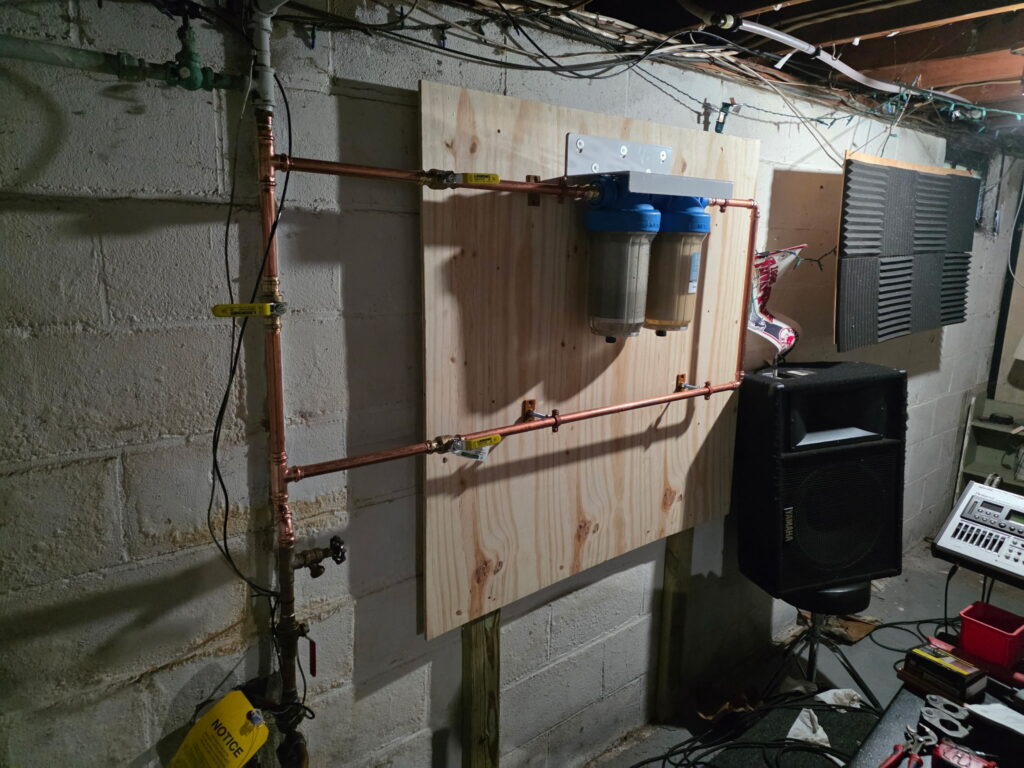
Rowley’s housing stock runs from 18th and 19th century farmhouses to ranch and colonial-style homes built in the postwar decades, plus newer subdivisions off the main roads. A good share of the town is on private well water, which changes the tankless conversation. Wells often carry more sediment and mineral content than town water, and a tankless heat exchanger is a lot less forgiving of hard water than an old tank ever was. If you’re on a well, we’re talking about a whole-house filtration or softening setup alongside the heater, not after the fact.
Gas availability is the other split. Some parts of Rowley have natural gas on the street, and a gas tankless unit is usually the simpler, less expensive install there. Other parts of town run on oil or propane, and if there’s no gas line nearby, we look at either a propane-fired tankless unit or a high-efficiency electric tank as the more practical option. This is a house-by-house call, not a town-wide default.
What the Work Involves
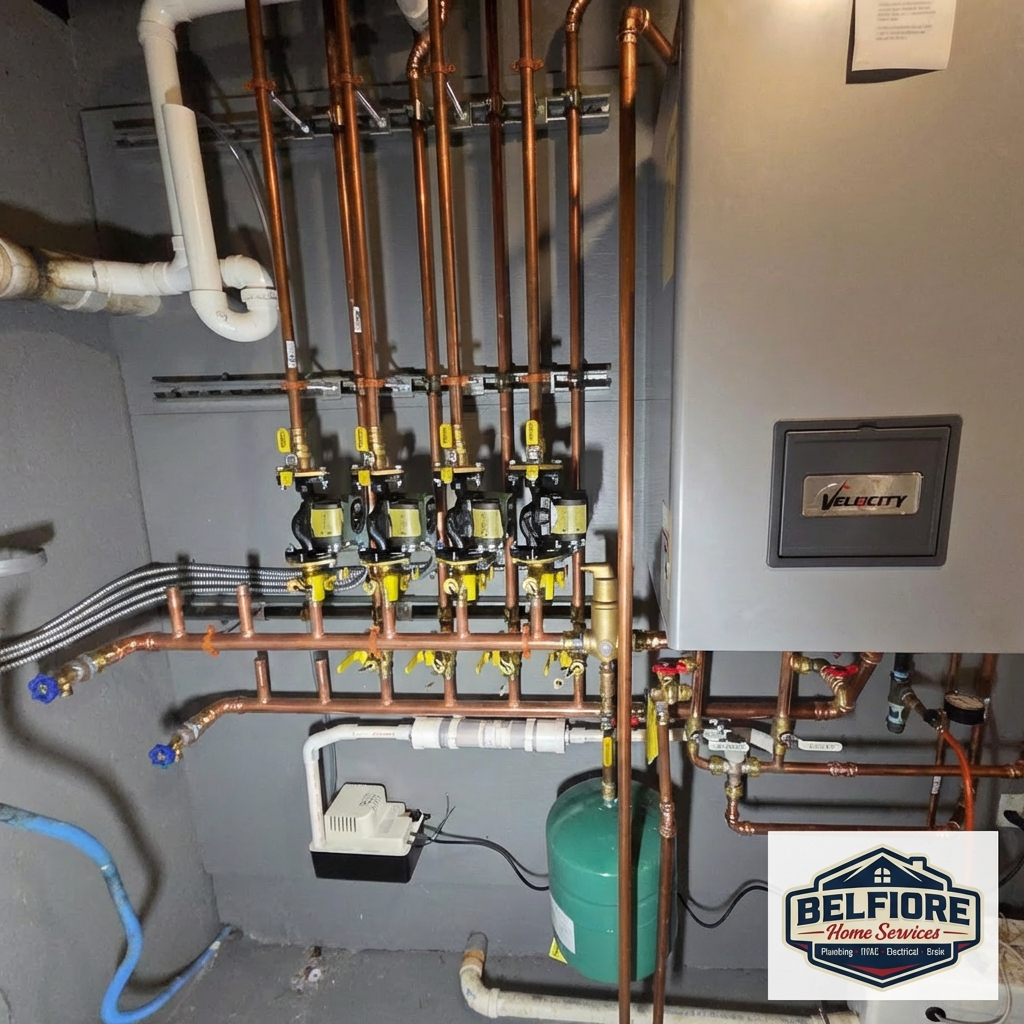
Installing a tankless unit starts with pulling the old tank, which means draining it fully and disconnecting the existing water and gas or electric connections. From there:
- Gas sizing: a tankless unit demands a much higher BTU input than a standard tank, often 150,000 to 199,000 BTU/h. That usually means checking the existing gas line diameter and, in a lot of older Rowley homes, upsizing it from the meter or running a new dedicated line.
- Venting: tankless units need sealed, direct venting rated for high-efficiency condensing appliances, typically PVC or stainless steel run to an exterior wall or through the roof. Old chimney venting built for an atmospheric tank won’t work here and has to be reworked or capped.
- Electrical: even gas units need a power connection for the control board and ignition. If Brandon’s on site for the electrical side, that’s a standard 120V circuit, but it needs to be on its own breaker.
- Water connections: isolation valves get installed on the unit so future service or descaling doesn’t require draining the whole system.
Most homes are without hot water for the better part of a day during the swap, sometimes less on a straightforward like-for-like gas replacement.
Repair or Replace
Not every water heater problem means you need a new system. If your existing tank is under ten years old and the issue is a bad thermocouple, a failed heating element, or a leaking valve, that’s a repair, and we’ll say so. Tankless units themselves can often be fixed rather than replaced too. A unit throwing an error code for flow restriction or ignition failure is frequently a descaling or sensor issue, not a full replacement.
Where replacement makes sense is when a tank is corroding from the inside, when the heat exchanger on a tankless unit has failed outright, or when the house has simply outgrown what the current setup can deliver. If you’re constantly running out of hot water with a growing family or a renovated bathroom that added fixtures, that’s a sizing problem no repair fixes. Chris will walk the house, look at what’s actually failing, and tell you straight which category you’re in before any work starts.
What It Costs
Cost depends on a few things: whether you’re going gas or electric, whether the existing gas line needs upsizing, how much new venting has to be run, and whether well water filtration is part of the job. A straightforward gas-to-gas swap with adequate existing line size costs less than a job that requires new gas piping, new venting through a wall, and a water treatment setup for well water. We’ll give you a firm number for your specific house after a walkthrough, not a phone quote based on square footage.
How Long It Takes
A standard tankless installation with existing gas line and vent path in reasonably good shape usually takes one day. Jobs that involve upsizing the gas line, running new venting to an exterior wall, or adding a filtration system for well water can run into a second day. We’ll tell you which situation your house is in before we start, not after.
Common Questions
Can I install a tankless water heater if my house is on well water?
Yes, but well water in Rowley often has more sediment and hardness than town water, so a filtration or softening setup is usually recommended alongside the unit to protect the heat exchanger and keep the warranty intact.
Do I need a bigger gas line for a tankless water heater?
Often, yes. Tankless units draw significantly more BTU input than a standard tank, and a lot of older Rowley homes have gas lines sized for the old tank only. We check this during the estimate, not after the unit is already on the wall.
Is tankless a good fit for a house without natural gas?
If there's no gas line nearby, a propane-fired tankless unit or a high-efficiency electric tank are the practical alternatives. We'll look at your home's setup and tell you honestly which makes more sense.
How do I know if I should repair my water heater instead of replacing it?
If the tank is relatively young and the failure is a single part like a thermocouple, element, or valve, repair is usually the right call. We'll tell you plainly when that's the case instead of pushing a replacement.
How long will my house be without hot water during the swap?
Reach Out for Tankless Water Heater Installation
Whether you’re on town gas near the center of Rowley or running propane out toward the marshes, we can walk you through what a tankless conversion actually involves in your house. Call {PHONE} to set up a time for Chris to take a look.
Contact information
Talk to Chris
Chris handles the plumbing side of Belfiore and has walked through his share of Rowley basements and mechanical rooms. If you’re deciding between repairing what you have and moving to tankless, or you just want someone to look at your gas line and venting before you commit to anything, call {PHONE}. Straight answers, no upsell script.