
Tankless Water Heater Installation in Newburyport, MA
A lot of Newburyport homes are running a water heater that was sized for a smaller household, or a boiler that’s doing double duty for space heat and hot water and not doing either job especially well anymore. If you’re on well water out past the downtown grid, that’s its own conversation before we ever talk tankless. This page walks through what a tankless conversion actually involves in this town, when it makes sense, and when it doesn’t.
Tankless Water Heater Installation in Newburyport
Going tankless in Newburyport usually comes up one of two ways. Either your tank water heater is failing and you want to look at the alternative before replacing like for like, or you’re renovating a kitchen or bathroom and the extra hot water demand is exposing how marginal your current setup already was. Either way it’s a real upgrade, not a swap. A tankless unit needs the right gas supply, the right venting, and in some cases an electrical circuit it didn’t have before. Chris will look at your actual house before quoting anything.
What Newburyport Homes Typically Have
Downtown and the historic districts are full of federal-era and Greek Revival homes, plenty of them from the 1800s, with additions and updates layered in over decades. That building stock has real character and real limits. Knob-and-tube wiring still turns up in older sections, plaster walls don’t love new penetrations, and mechanical rooms are often tight, low-ceilinged, and never designed with a tankless unit’s venting in mind.
Heating leans toward older steam and hot water boilers, a lot of them oil-fired, especially in the older neighborhoods where natural gas never made it to the street. Closer to the business district and in newer construction you’ll find gas service, which changes the tankless conversation entirely, since gas-fired tankless units need a defined BTU input and a vent path that a lot of these older mechanical closets simply can’t offer without modification. Water source varies too. In-town properties are almost all on municipal water, but out toward the edges of town and along the river you’ll find private wells, which usually means a filtration or softening conversation needs to happen before or alongside the tankless install, not after.
Repair or Replace
Not every failing water heater needs to become a tankless project, and Chris will tell you when that’s true. If your tank unit is a few years old, the issue is a bad thermocouple, a failed heating element, or a leaking valve, that’s usually a repair, not a reason to spend thousands converting your whole system. If the tank itself is corroded and leaking from the bottom, or you’re on your second repair in two years, that’s when replacement makes sense, and that’s the point where it’s worth deciding between another tank and going tankless. The honest version of this conversation is short: if it’s fixable, we fix it. If it’s not, we talk options.
What the Work Involves
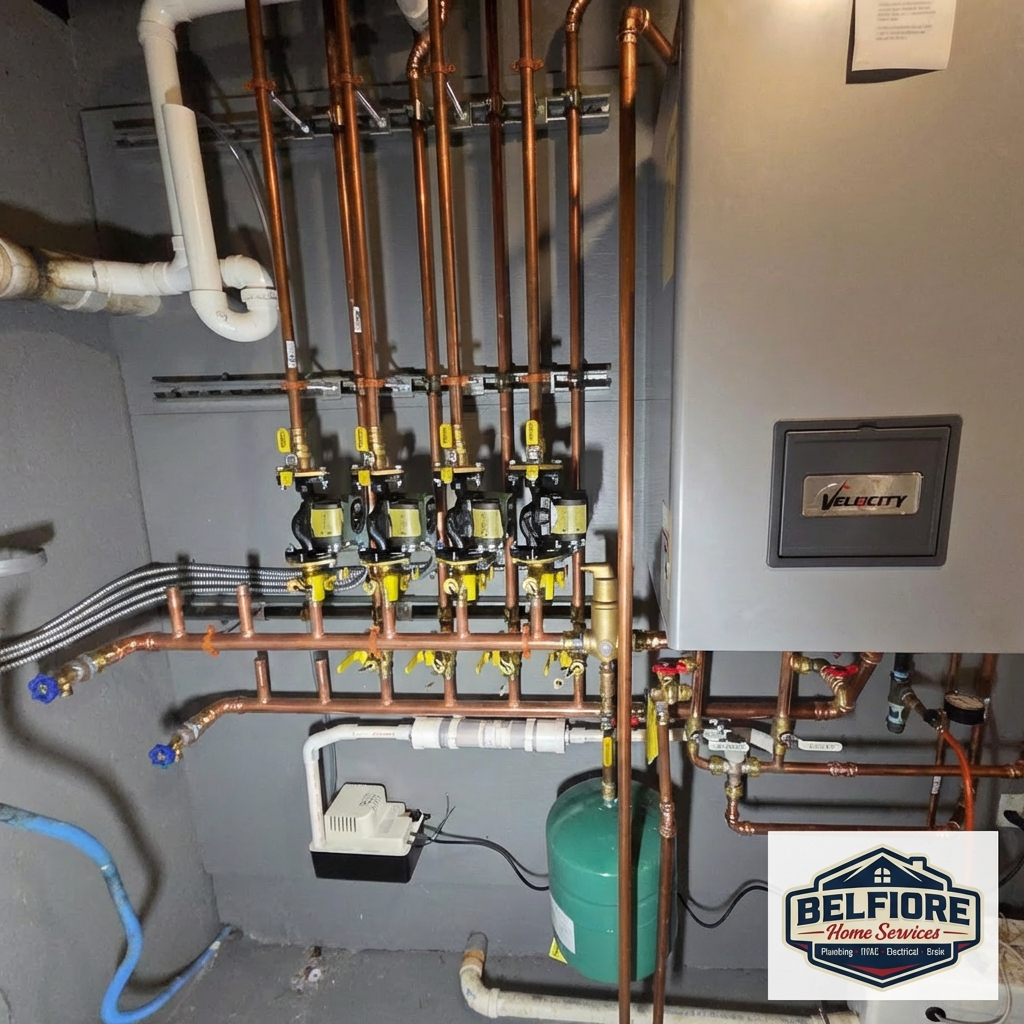
A tankless conversion starts with pulling and draining the old tank, which usually takes an hour once access is sorted. From there the real work is gas and venting. Most residential tankless units need a 3/4 inch gas line minimum, and if your existing line was sized for a 40,000 BTU tank water heater, it’s often undersized for a tankless unit pulling 150,000 to 199,000 BTU on demand. That can mean upsizing the gas line from the meter or manifold, not just at the appliance.
Venting is the other technical piece. Tankless units are almost always direct vent, meaning they need a sealed intake and exhaust run in PVC, CPVC, or stainless steel depending on the manufacturer and BTU rating, terminated through an exterior wall or roof at a specific clearance from windows, doors, and grade. In a historic Newburyport house, finding a vent path that doesn’t cut through a finished ceiling or a period-correct facade takes some planning before the unit ever gets mounted. Most installs also need a dedicated electrical outlet or circuit for the unit’s control board and ignition, which is where Brandon gets looped in if your panel needs attention too. On a straightforward job, you’re looking at losing hot water for the better part of a day. Add gas line upsizing or venting complications and it can run longer.
What It Costs
Cost depends on unit size, whether your gas line needs upsizing, how far the vent run has to travel, and whether electrical work is part of the job. A straightforward swap where the gas and vent already support a tankless unit costs less than a job where we’re running new gas line through a finished basement or fighting a vent path through a historic exterior. Chris will give you a number after he’s actually looked at your mechanical room, not before. {PRICE}
How Long It Takes
Most tankless installations in Newburyport run one full day for a home that already has adequate gas supply and a workable vent location. Add a day if the gas line needs upsizing or if venting has to be routed through framing rather than a direct exterior wall. Homes where we’re also addressing electrical for the unit or coordinating with a wider renovation take longer, and Chris will walk you through the realistic timeline before work starts, not after.
Common Questions
Can I install a tankless water heater if my house runs on oil heat?
Yes, but it depends on whether you have gas service to the house at all. Some Newburyport homes have oil for space heat but gas for cooking or a gas water heater already, which usually means gas is available at the street. If your home is all-oil with no gas service, a gas-fired tankless unit isn't an option without bringing gas to the property, which is a separate and larger project.
Do I need to upgrade my electrical panel for a tankless water heater?
Gas-fired tankless units typically need a standard outlet or small dedicated circuit for the control board and ignition, not a major panel upgrade. Electric tankless units are a different story and can require a large dedicated circuit, sometimes 40 to 60 amps, which is worth checking against your panel's available capacity before you commit to that route.
Is tankless a good fit for a historic Newburyport home?
Often yes, but the venting path is the deciding factor, not the age of the house. If we can run a direct vent through an exterior wall in the mechanical space without cutting through finished or period-sensitive areas, it's usually straightforward. If the mechanical room is landlocked, it takes more planning.
How do I know if my water heater problem is a repair or a real replacement?
Age, symptoms, and history matter more than any single rule. A unit under 8 to 10 years old with an isolated part failure is usually worth fixing. A unit that's leaking from the tank body itself, or that's needed repeat repairs, is usually past the point of throwing more money at it.
Do I need a water filtration system before going tankless if I'm on a well?
Reach Out for Tankless Water Heater Installation
Call {PHONE} to talk through your water heater, your gas line, and what a tankless conversion would actually take in your Newburyport home. We work across Newburyport and the rest of the North Shore, and we’ll tell you plainly if a repair is the smarter move before we talk about replacing anything.
Contact information
Talk to Chris
Chris runs the plumbing side of Belfiore and handles tankless installs across Newburyport directly, including the gas sizing and venting decisions that make or break the job. If you’re not sure whether your house is a good candidate for tankless, or you just want an honest read on repair versus replace, that’s a conversation worth having before you buy anything.