Gas Line Installation and Repair in Salem, MA
A lot of Salem homes are still running on boilers and water heaters older than the people living in them. If your house has a steam radiator system from the 1950s or a gas line that was sized for a stove and nothing else, adding a new appliance or replacing an old one usually means the gas piping has to be looked at too. That is not an upsell. It is code, and it is how you avoid a house that smells like gas every time the wind blows the wrong way.
Gas Line Installation and Repair in Salem
Belfiore does gas fitting for the appliances and heating equipment that actually run a house: ranges, dryers, water heaters, and boilers. Chris runs the plumbing side of the business and gas work is licensed work, full stop. There is no shortcut version of running or repairing a gas line, and there should not be one. Every job gets sized, pressure tested, and signed off the way the state requires, not the way is fastest for us.
We work across Salem, from the streets near downtown to the newer construction further out toward the Route 107 corridor. The gas work here tends to fall into two buckets: repairing an old line that is undersized or corroded, and installing new line for an appliance or system upgrade that the existing piping was never built to handle.
What Salem Homes Typically Have
Salem’s housing stock skews old. A large share of the city, especially anything near the historic district, was built before 1940, and a good number of those houses have been converted from single family into two or three unit buildings over the decades. That conversion history matters for gas work because it usually means the gas piping was extended piecemeal over the years, one appliance at a time, by whoever was doing the job at that moment. We find plenty of lines that were sized correctly for a single stove in 1962 and have had a dryer, then a water heater, then a boiler added on since, without anyone recalculating the load.
Heating in Salem is a mix. You will find old steam boilers in the pre-war triple deckers, hot water systems in homes that were converted or updated at some point, and a fair number of oil-fired systems that have never touched gas at all. Natural gas is available on most streets in the city proper, but it is not universal, and whether gas actually runs down your specific street is one of the first things we check before we talk about converting a boiler or installing a tankless unit. Town water is standard in Salem, so private well filtration is not the local issue it is in outlying towns, but old galvanized and even some remaining lead service lines still show up in the oldest housing stock, which is a separate conversation from gas but often comes up in the same visit.
What the Work Involves
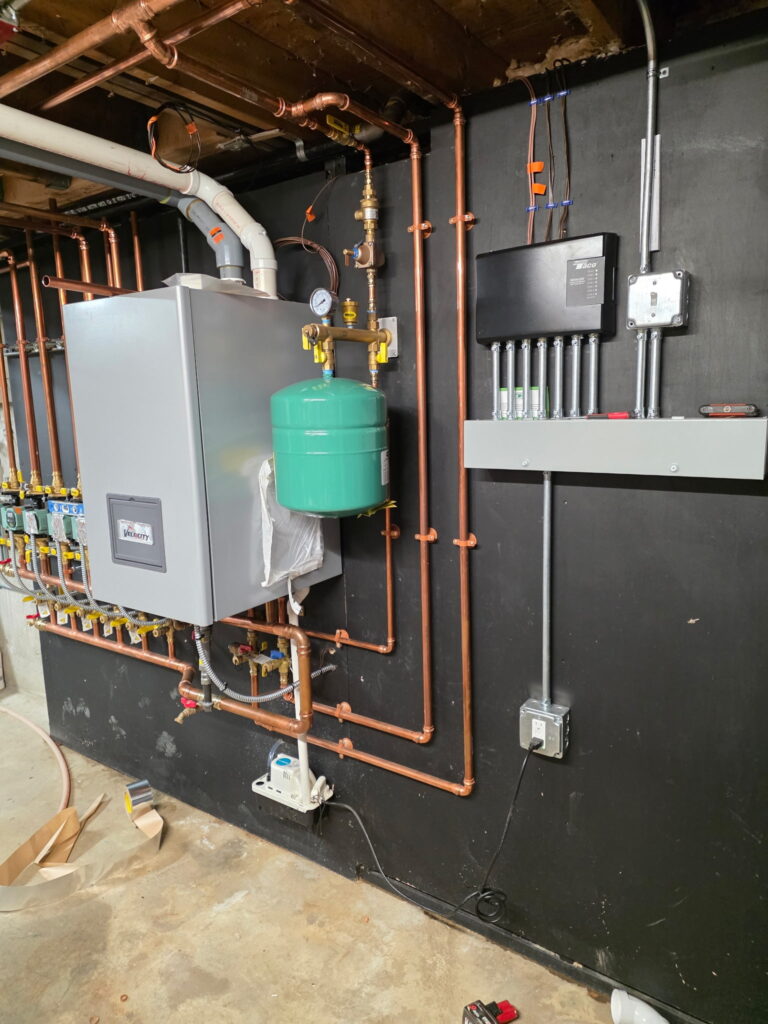
Gas line work breaks down into a few real steps, and the scope depends on whether we are running new pipe or fixing what is there. For an installation, we calculate total gas load in BTUs across every appliance on the line, size the pipe accordingly (this is where a lot of old Salem houses get corrected from undersized 1/2 inch to 3/4 inch or larger), run the line in black iron or corrugated stainless tubing depending on the application, and pressure test the whole system before anything gets connected.
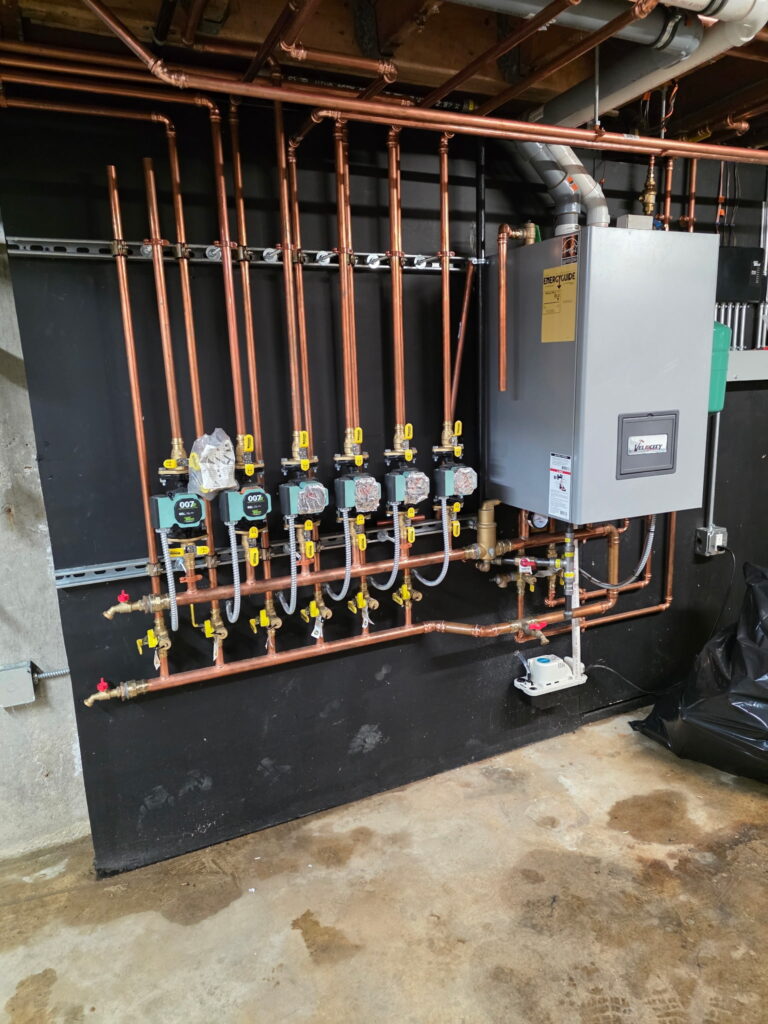
For appliance connections, that means shutting off gas to the affected line, disconnecting the old appliance, running or modifying pipe as needed, and venting correctly, whether that is a direct vent for a modern boiler or a traditional flue for an older unit. A water heater or boiler swap on an existing gas line, once the sizing checks out, typically means the house is without hot water or heat for a matter of hours, not days. A full new gas line for something like a boiler conversion from oil takes longer because it usually involves coordination with the gas utility for the meter and service line, which is outside our control on timing.
Every job ends with a pressure test and, where required, an inspection sign-off. We do not skip that step to save time on a Friday afternoon.
Repair or Replace
Here is the honest version, not the sales version. If a gas line is leaking at a fitting or a valve has failed, that is almost always a repair, not a replacement. Swapping a bad shutoff valve or re-fitting a joint that was never sealed correctly takes an hour, not a full re-pipe. We tell customers that straight, even though a bigger job pays more.
Replacement makes sense in a narrower set of cases: when the existing pipe is undersized for the load you are adding, when you have old black iron pipe that is visibly corroded or scaled from the inside, or when you are converting a system from oil to gas and there simply is not existing gas infrastructure to build from. If your line passes a pressure test and is sized correctly for what is on it, we are not going to tell you to replace it. That is the whole point of testing before we quote anything.
What It Costs
Cost depends on length of run, pipe material, whether we are working through finished walls or an open basement, and whether the job needs a permit and utility coordination or not. A straightforward appliance reconnection on existing correctly-sized pipe is a different cost tier than a new line run from the meter to a boiler on the far side of the house. We give you a number for {PLACEHOLDER: pricing figure} after we see the actual line and load, not a phone estimate, because gas sizing is not something you can eyeball over the phone.
How Long It Takes
A single appliance repair, like a leaking valve or a corroded fitting, is usually a same-visit fix measured in hours. A new gas line install for a single appliance runs a half day to a full day depending on the length of the run and whether we are opening walls or working in an accessible basement or crawlspace. Larger jobs, like converting an oil boiler system to gas, take longer mainly because of utility scheduling for the new meter or upgraded service, which is a step we do not control the timeline on. We will tell you upfront which category your job falls into before work starts, not after.
Common Questions
Do I need a permit for gas line work in Salem?
Yes. Any new gas line installation or significant modification requires a permit and inspection. We handle the permitting as part of the job so you are not left chasing paperwork.
Is my house even set up for a gas conversion?
It depends on whether natural gas runs down your street and whether your home currently has any gas service at all. We check with the utility and inspect your setup before quoting a boiler or water heater conversion from oil to gas.
How do I know if I have a gas leak versus just smelling gas from a stove pilot?
If you smell gas anywhere other than briefly at a burner ignition, treat it as a possible leak. Shut off the gas supply if you know how, ventilate the area, and call us or the gas utility right away rather than waiting to see if it clears.
Can you just add a gas dryer to my existing line?
Sometimes, if the existing pipe was sized with extra capacity. Often in older Salem homes it was not, since lines were extended appliance by appliance over the years without recalculating total load. We measure the existing line's capacity before connecting anything new.
Will old black iron gas pipe need to be replaced eventually?
Reach Out for Gas Line Installation and Repair
Belfiore is a Salem-based company doing licensed gas fitting for appliances and heating systems across the city and the wider North Shore. Call {PHONE} to talk through what is going on with your gas line or your plans for a new install, and we will walk you through what it actually involves for your specific house.
Contact information
Talk to Chris
Chris has been through enough of these old Salem gas lines to know what he is looking at within the first few minutes of a walkthrough. If you are smelling gas, hearing a hiss near a fitting, or just planning ahead for a boiler that is on its last season, call and describe what you are seeing. He will tell you plainly whether it sounds like a repair or a bigger job, and why, before anyone steps foot in your basement.