
Gas Line Installation and Repair in Newburyport, MA
A lot of the housing stock in Newburyport predates gas heat entirely. That means old steam and hot water boilers that have been converted at least once, water heaters sized for a smaller household than the one living there now, and in some pockets, no gas main on the street at all. Gas line work here has to account for what the house already has before anyone talks about what it needs.
Gas Line Installation and Repair in Newburyport
Chris and the team run gas line installation and repair jobs across Newburyport, from downtown federal-period homes to the newer construction out toward the Route 1 corridor. That covers new appliance hookups for ranges, dryers, and outdoor fire pits or grills, gas line extensions to feed a new boiler or water heater, and repair of aging black iron or steel pipe that’s corroding, undersized, or was never permitted correctly in the first place.
Gas work in Massachusetts requires a licensed plumber and a permit with an inspection. That’s not paperwork for its own sake. It’s the check that confirms the line is sized right, vented right, and pressure tested before anything gets connected to a flame.
What Newburyport Homes Typically Have
Downtown Newburyport is dense, historic, and built on federal-era construction that predates almost every modern heating and gas standard. Basements are often low and tight, joists are original, and running new gas line means working around framing that wasn’t built to accommodate it. That constrains routing and sometimes adds labor that a newer home wouldn’t need.
Heating systems skew older here. Steam boilers converted from coal or oil to gas are common, and some homes still run oil where a gas main was never extended to the street. That last point genuinely varies block by block in this town, and it’s worth confirming before you plan a boiler or tankless water heater swap around gas. Most of the historic downtown and the surrounding neighborhoods are on town water, though there are pockets on private wells, particularly toward the edges of town, where filtration ahead of a water heater or boiler is a real consideration and not an add-on sale.
What the work involves
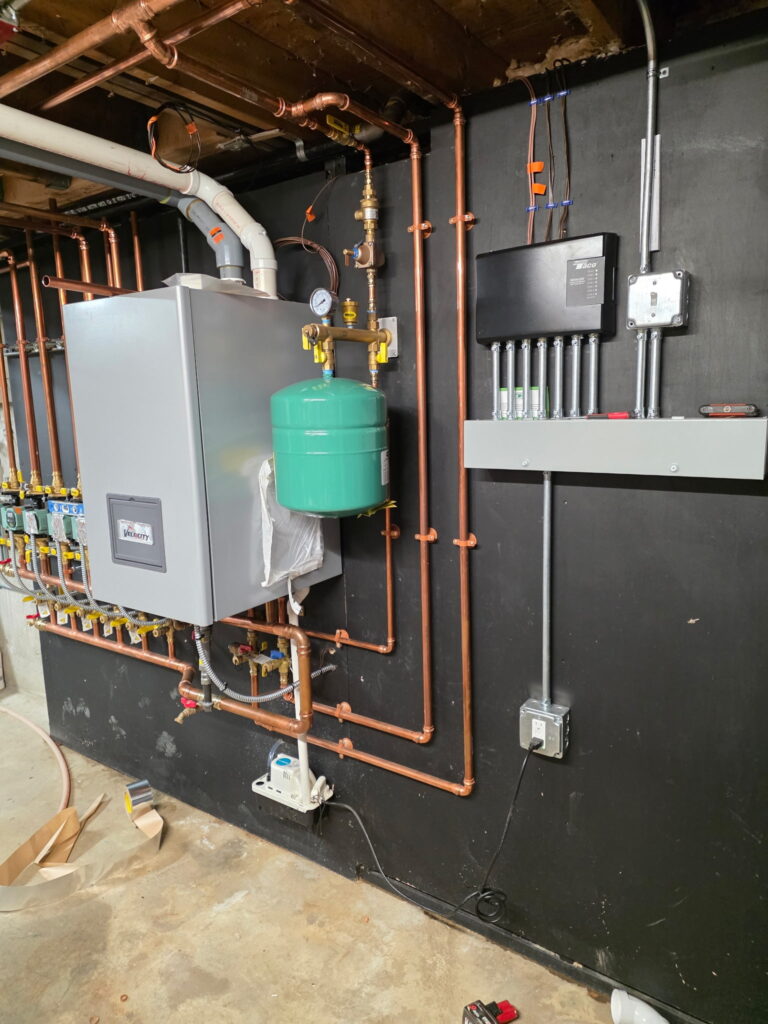
For a new appliance hookup, the job usually starts with sizing. Gas line is sized by BTU load and distance from the meter, not guesswork, and undersized pipe is one of the most common problems we find on service calls in older Newburyport homes. We’ll calculate the load for the appliance, run properly sized black iron or corrugated stainless tubing, and pressure test the line before it’s connected.
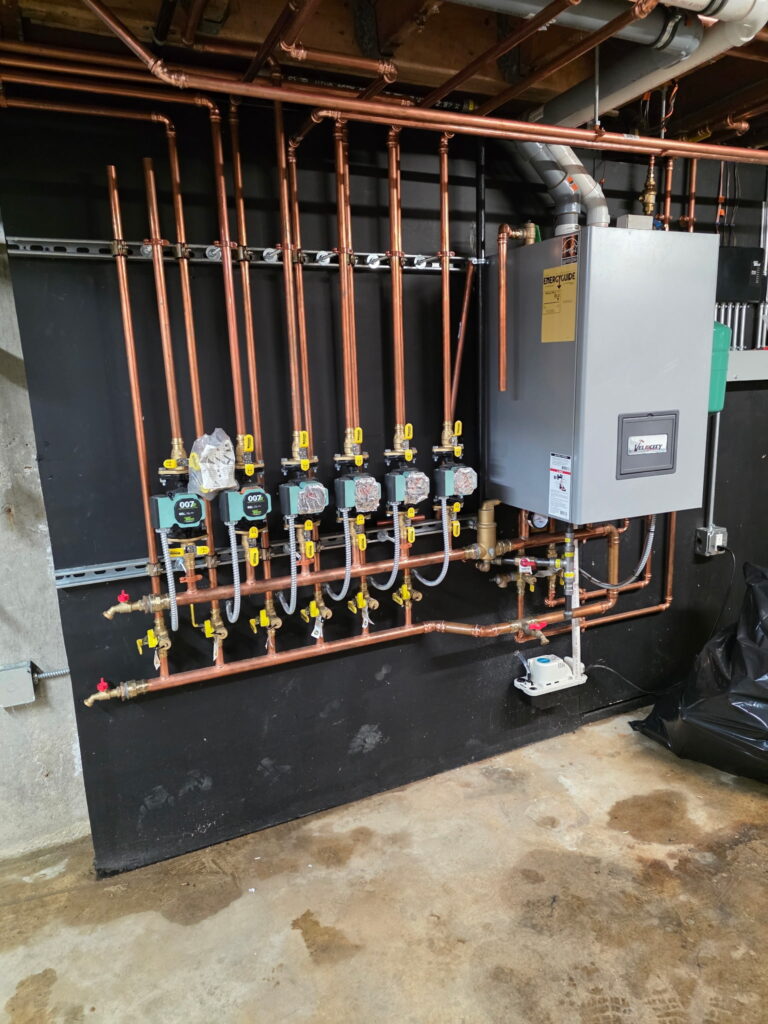
For a boiler or water heater replacement that involves gas line work, the old unit gets drained and disconnected, the flue or venting gets evaluated (many older Newburyport homes have venting that was fine for an oil-fired unit but doesn’t meet code for a new gas appliance), and the gas line gets extended or resized to match the new unit’s input rating. Depending on the scope, a house can be without heat or hot water for part of a day. We’ll walk you through the timeline before we start, not after.
Repair or replace
Not every gas line issue means tearing out pipe. If you’ve got a slow leak at a fitting, corrosion isolated to one section of black iron, or a valve that’s failing, that’s often a straightforward repair. Chris will tell you plainly when fixing what’s there is the right call, because in this trade people expect to be sold a full replacement they don’t need, and that’s not how this company works.
Replacement makes sense when the line is undersized for a new appliance load, when corrosion has spread through multiple sections, or when older galvanized pipe (still found in some of Newburyport’s older homes) has degraded from the inside in ways you can’t fully inspect without opening walls. If we recommend replacing a line, we’ll show you why, not just tell you.
What it costs
Gas line pricing depends on length of run, pipe material, how accessible the route is, and whether a permit and inspection are required, which they are for any new gas work. A single appliance hookup with an easy basement run costs less than extending gas to a detached garage or running new line for a boiler conversion in a house with finished walls. We’ll give you a number for your specific job, in writing, before work starts, at {PRICE_RANGE_OR_PLACEHOLDER}.
How long it takes
A single appliance hookup, like a gas range or dryer, is usually a same-day job. Extending a line for a new boiler or water heater, including the permit inspection, typically takes longer once you factor in scheduling the town inspector. We’ll lay out a realistic timeline when we quote the job so you’re not guessing about how long you’ll be without heat or hot water.
Common Questions
Do I need a permit for gas line work in Newburyport?
Yes. Any new gas line installation or extension requires a permit and inspection under Massachusetts state plumbing and gas code. This applies whether you're hooking up a new range or extending line for a boiler conversion. We handle the permit and coordinate the inspection as part of the job.
Is gas available everywhere in Newburyport?
Not uniformly. Most of downtown and the surrounding neighborhoods have gas mains, but some areas, particularly toward the edges of town, still run on oil because a gas main was never extended to the street. We'll confirm what's available at your address before recommending a conversion.
Can my old black iron gas pipe be repaired instead of replaced?
Often, yes. If corrosion or a leak is isolated to a section of pipe or a fitting, a targeted repair is usually the right call. We'll tell you plainly if replacement is actually needed rather than defaulting to the bigger job.
How do you size a gas line for a new appliance?
Sizing is based on the appliance's BTU input rating and the distance from the gas meter, following the sizing tables in the fuel gas code. Undersized line is a common issue we find in older Newburyport homes where an appliance was swapped without re-checking the line.
Will I lose heat or hot water during the work?
Reach Out for Gas Line Installation and Repair
Call {PHONE} to talk through a gas line repair, a new appliance hookup, or a boiler conversion in Newburyport. We’re a Salem-based company and we work across Newburyport regularly, so we know the housing stock and the permitting process with the town.
Contact information
Talk to Chris
Chris runs the plumbing side of this company and has handled enough gas line work in Newburyport’s older housing stock to know where the surprises usually are, from converted steam boilers to venting that’s due for an update. If you’re weighing a repair against a replacement, or trying to figure out whether your gas main can support a new appliance, that’s a conversation worth having before any work is scheduled.