
Gas Line Installation and Repair in Marblehead, MA
A lot of Marblehead houses are older than the gas lines running to them. That means retrofitted piping, boilers that have been repaired more times than replaced, and water heaters sized for a family that moved out decades ago. If your house is on well water, filtration ahead of a gas appliance is not an add-on, it is part of doing the job correctly.
Gas Line Installation and Repair in Marblehead
Gas work in Marblehead comes with a few extra layers most towns don’t have. Narrow streets and tight lots near the harbor make it hard to get equipment close to the house, so a lot of jobs start with a conversation about access before anyone touches a pipe. Old Town and the neck have some of the tightest setbacks in the footprint. Chris’s crew plans around that instead of surprising you with it on the day of the job.
Whether it’s a new gas line for a range, a generator hookup, or a repair on piping that’s been patched one too many times, the work has to meet code for the appliance, the meter, and the house itself. In a town with this much older housing stock, that’s rarely a copy-paste job.
What Marblehead Homes Typically Have
Marblehead has one of the highest concentrations of 18th and 19th century homes on the North Shore, especially around the Old Town historic district. That history is part of what makes the town desirable, and it’s also why the mechanical systems inside these houses need a trained eye. Steam boilers are still common here, along with hot water systems that were converted from coal or oil decades ago. Water heaters are frequently undersized for the household they now serve.
Gas availability varies block by block. Some streets have had gas mains for generations, others still run on oil, and a fair number of homes near the water are on private wells rather than town water. None of that is unusual here, but it changes what a gas line project actually involves, from where the meter can go to whether a conversion from oil is even practical for a given house.
What the work involves
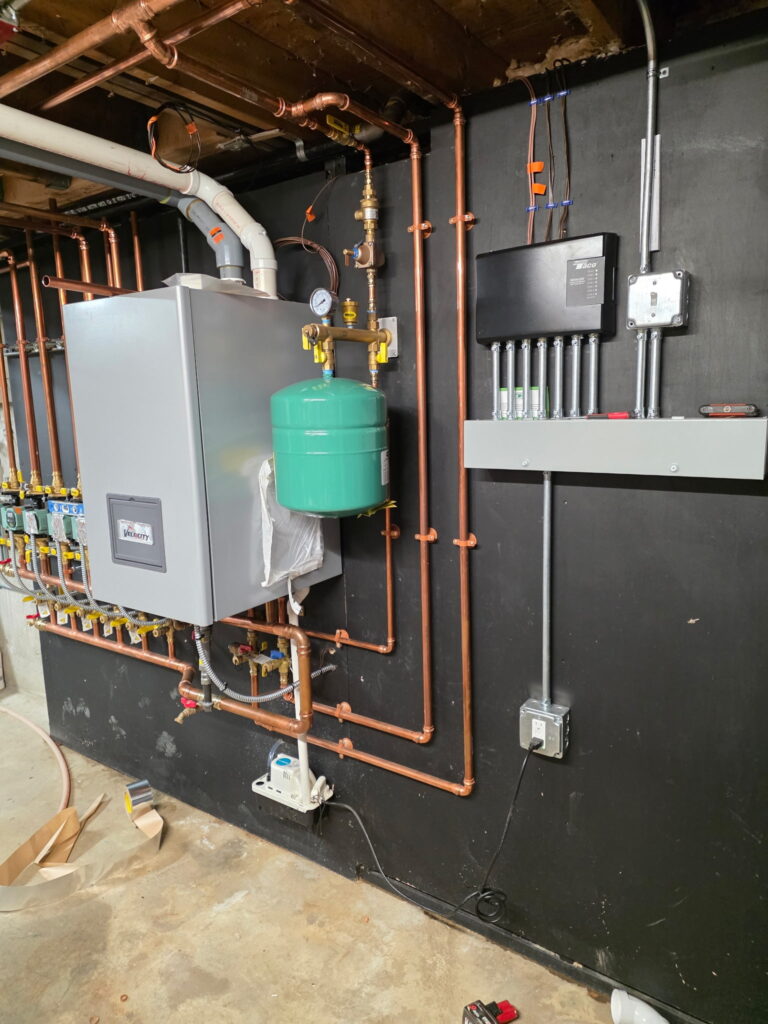
A gas line installation starts with sizing. The line has to be rated for total BTU load across every appliance it feeds, not just the one you’re adding. That means checking the existing supply line diameter, the length of run to the appliance, and whether the meter itself has capacity for the increase. Undersized gas lines are a common finding in older Marblehead homes where a boiler, water heater, and range were all added at different points over the years.
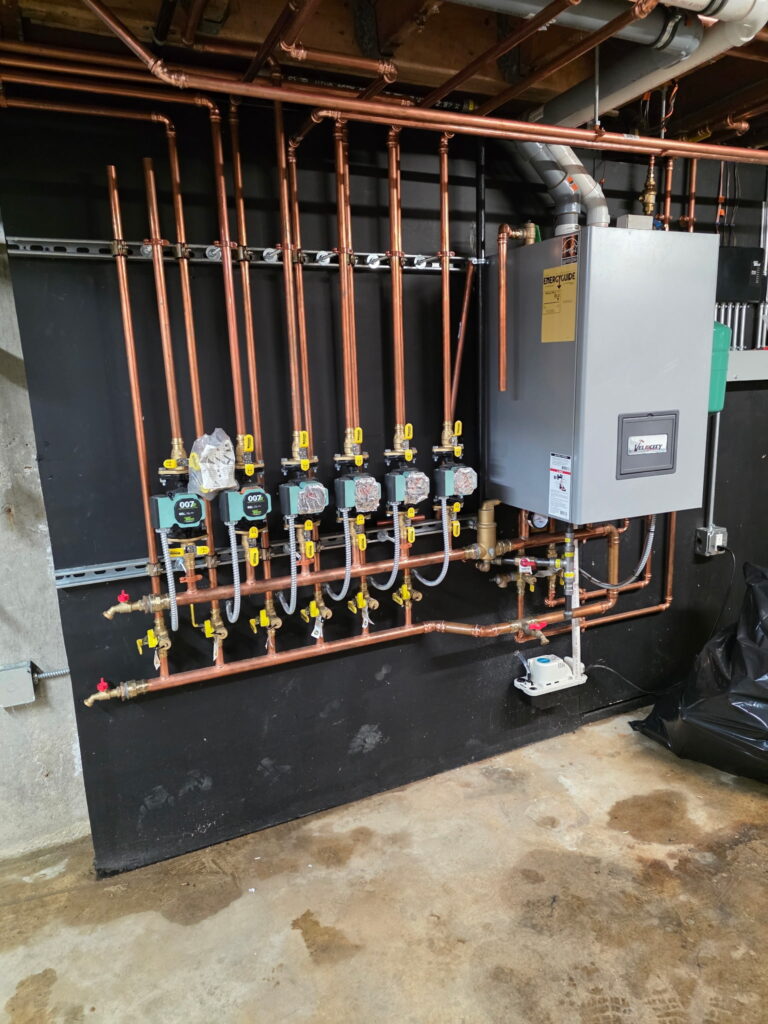
Venting is checked at the same time. Older houses often have shared chimney flues or vent configurations that don’t meet current code once a new appliance is added. Depending on the job, we may need to drain and disconnect an existing boiler or water heater, run and pressure test new black iron or CSST piping, and coordinate the gas utility for a meter upgrade or new tap. For most single-appliance jobs, the house is without heat or hot water for a matter of hours, not days, but a full boiler swap with venting changes runs longer.
Repair or replace
Most gas line problems are not a reason to replace the whole system. A failed fitting, a corroded shutoff valve, or a small leak found during a pressure test can usually be repaired in place without touching the rest of the line. Chris’s plumbing crew will tell you flat out when a repair is the right call, even though a replacement is the bigger job.
Replacement makes sense when the line itself is undersized for what the house now runs, when black iron pipe has deteriorated from age, or when you’re adding enough new load, a generator plus a range plus a boiler upgrade, that the existing supply can’t keep up no matter how many small repairs you make. If a repair will hold, we say so. If it won’t, we explain exactly why before any work starts.
What it costs
Cost depends on the length of pipe run, whether it’s exposed or has to be routed through finished walls or tight crawlspaces common in older Marblehead homes, and whether the job needs a meter upgrade from the gas utility. A single appliance hookup with an accessible run costs less than a full house repipe or a new service for a generator. {PRICE} We’ll walk the job with you and give you a number before anything is opened up, not after.
How long it takes
A straightforward repair, like replacing a valve or fixing a fitting found during testing, is often finished same day. A new gas line for a single appliance, say a range or a generator, typically takes one work day including pressure testing. Larger jobs, like converting a boiler system or running new supply through an older home with tight access, can take longer, and we’ll tell you that up front rather than mid-project.
Common Questions
Is gas line work in Marblehead different from other North Shore towns?
The core code requirements are the same, but Marblehead's older housing stock and tight lots near the harbor mean access and venting checks take more planning than in newer construction. A lot of homes also have shared flues or converted heating systems that need a closer look before any new line goes in.
Does my whole house need to be on gas to add a gas line?
No. We regularly run a single gas line to one appliance, like a range or a generator, on a home that's otherwise on oil heat. The line just needs to be sized correctly for that appliance and tie into a meter with enough capacity.
Can a gas line leak be repaired instead of replaced?
Often, yes. Most leaks come from a specific fitting, valve, or section of corroded pipe rather than the whole line failing. If a repair will hold up under pressure testing, that's what we recommend.
Do older Marblehead homes need a meter upgrade for a generator?
Sometimes. It depends on the generator's BTU draw and what else is already running off that meter. We check total load before recommending an upgrade so you're not paying for capacity you don't need.
How long is the house without hot water during a water heater gas hookup?
Reach Out for Gas Line Installation and Repair
We work across Marblehead and the rest of the North Shore. Call {PHONE} to talk through what’s going on with your gas line, your boiler, or a new appliance you’re planning to add, and we’ll tell you straight what it involves.
Contact information
Talk to Chris
Chris runs the plumbing side of the business and has seen enough Marblehead basements to know that no two are laid out the same. If you’re not sure whether your gas line needs a repair, a full replacement, or just a second opinion, that’s a conversation worth having before you commit to anything.